


x
 BronzeSculptureNew Sculpture
 1877
1877 98.0 x 174.0 cm
 Tate Britain
Acquérez une image numérique haute résolution et optimisée, d'une qualité bien supérieure à l'aperçu en ligne.
Chaque fichier est méticuleusement préparé par nos spécialistes internes à l'aide d'outils avancés et d'une retouche manuelle experte. Nous garantissons que chaque image possède une clarté exceptionnelle, une précision des couleurs irréprochable et un niveau de détail fin.
Le fichier final est livré par e-mail sous 72 heures, optimisé pour une utilisation immédiate dans des contextes professionnels, éditoriaux et d'impression. Il offre la même qualité de confiance que celle utilisée par les plus grands studios de création, éditeurs et galeries.
Téléchargez un fichier haute résolution pour votre usage personnel, l'impression et vos projets créatifs. ( Commander l'impression Commander la reproduction peinte à la main)
En choisissant Most-Famous-Paintings.com, vous n'obtenez pas seulement une simple image : vous recevez une œuvre numérique sublimée avec professionnalisme, conçue avec précision et accompagnée d'une garantie de satisfaction. Voici tout ce qui accompagne automatiquement votre commande :

Votre fichier d'image numérique haute résolution vous sera envoyé par e-mail sous 72 heures après votre commande — prêt à un usage immédiat.

Votre œuvre d'art bénéficie d'une optimisation professionnelle grâce à des outils d'IA avancés et une retouche manuelle, garantissant un niveau maximal de détail, de clarté et de fidélité chromatique.

Vous avez accidentellement supprimé ou perdu votre fichier ? Pas d'inquiétude — nous vous le renverrons gratuitement, quand vous le souhaitez.

Profitez de votre œuvre d'art instantanément sans frais de douane ni de livraison — les téléchargements numériques sont toujours exonérés de taxes.

Nous garantissons que votre image numérique reproduit les couleurs de l'original aussi fidèlement que possible grâce à des outils professionnels et une gestion rigoureuse des couleurs.

Si vous n'êtes pas satisfait de votre image numérique, nous la retoucherons ou vous rembourserons 100% sous 60 jours — sans poser de questions.

Pas satisfait ? Obtenez un remboursement intégral dans les 60 jours suivant la réception de votre fichier numérique — sans aucune question posée.

Achetez 3 images, économisez 10% - Achetez 5, économisez 15% - Achetez 10+, économisez 20%. Idéal pour les projets créatifs, les galeries et les agences.
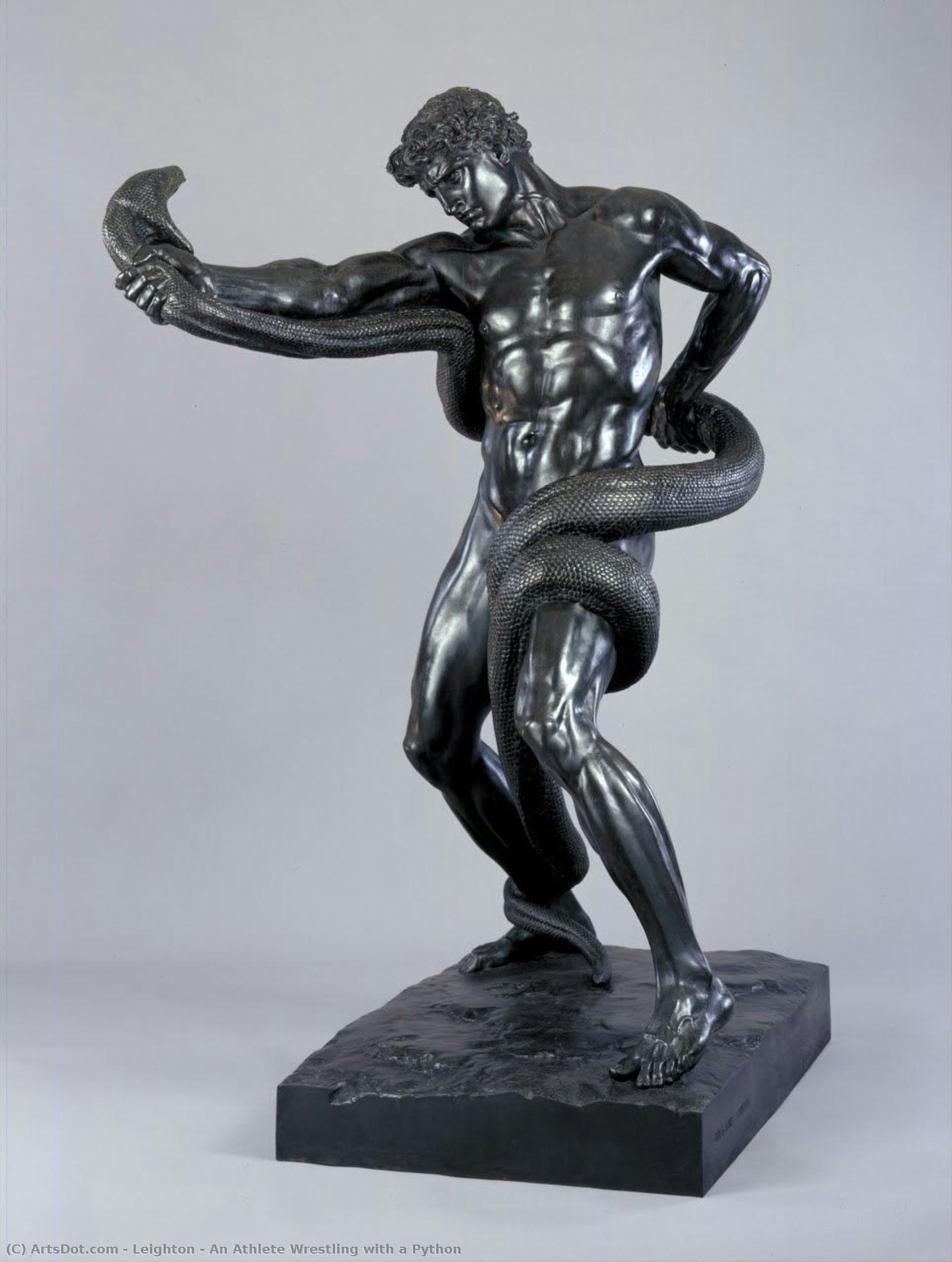
Frederic Leighton's “An Athlete Wrestling with a Python,” completed in 1877, isn’t merely a depiction of physical combat; it’s a profound meditation on the human condition, a dialogue between strength and vulnerability, and a pivotal moment in the evolution of British sculpture. Leighton, deeply influenced by the grandeur of Italian Renaissance art – particularly the meticulous realism and dramatic narratives found in works by Michelangelo – sought to bridge the gap between the idealized forms of classical antiquity and the burgeoning currents of modern artistic expression. This ambitious undertaking marked a deliberate departure from the prevailing academic style, signaling a shift towards a more emotionally resonant and psychologically complex approach to sculpture.
The painting’s subject matter is rooted in both mythology and allegory. The athlete, powerfully rendered with an almost brutal physicality, embodies human determination and resilience. He's not a heroic figure of triumphant conquest, but rather one locked in a desperate struggle – a wrestling match against a serpentine embodiment of primal instinct, temptation, or perhaps even the very forces of nature itself. The python’s coils, meticulously detailed, evoke both danger and a strange, unsettling beauty, hinting at the seductive allure of chaos and the potential for destruction that lies within seemingly harmless forms.
Leighton's decision to cast “An Athlete Wrestling with a Python” in bronze was revolutionary. Prior to this, monumental sculptures were predominantly executed in marble, offering a cool, enduring permanence that often prioritized formal perfection over emotional depth. Bronze, however, possessed a remarkable capacity for capturing texture and nuance – the glistening scales of the snake, the strained muscles of the athlete, the rough-hewn surface of the base. The artist skillfully employed lost-wax casting, a complex process allowing for intricate detail and a sense of weight and solidity rarely achieved with marble.
The sculpture’s scale – measuring nearly two meters in height – further amplified its impact. It was designed to be viewed in the round, encouraging viewers to contemplate the scene from multiple perspectives and immersing themselves fully within the drama unfolding before them. Leighton's attention to anatomical accuracy, combined with his masterful use of light and shadow, created a remarkably lifelike representation of human form and animal movement – a testament to his rigorous training and artistic vision.
Beyond its literal depiction of a wrestling match, “An Athlete Wrestling with a Python” is laden with symbolic meaning. The struggle can be interpreted as a metaphor for the challenges inherent in life—the constant battles we face against our own weaknesses, external obstacles, or even our darker impulses. The athlete’s determined expression conveys not just physical strength but also an underlying sense of vulnerability and resolve. The coiled python, often associated with wisdom and healing in ancient traditions, here represents a force that threatens to overwhelm the individual, demanding courage and perseverance to overcome.
Furthermore, the sculpture's placement on a rectangular base adorned with carved details resembling waves or rocks subtly reinforces this theme of struggle against nature. It’s a visual reminder of humanity’s ongoing interaction with the wild, untamed forces that shape our world. The work’s emotional impact is profound—a captivating blend of tension, drama, and ultimately, a celebration of human spirit.
The sculpture was created by Clare Leighton, who was the daughter of Robert Leighton (author) and Marie Connor Leighton (author). She studied at Brighton College of Art and later trained at the Slade School of Fine Art and Central School of Arts and Crafts. Her artistic career spanned decades, during which she produced a wealth of wood engravings depicting rural life and social themes. Leighton’s work is characterized by its meticulous detail, evocative storytelling, and profound empathy for her subjects. “An Athlete Wrestling with a Python” stands as a testament to her exceptional talent and her ability to capture the essence of human experience through art.


1898 - 1989 , Royaume-Uni


Restez informé(e) des dernières actualités artistiques, des offres exclusives et des idées de décoration.
Parlez-nous de votre projet et nos experts en art vous proposeront 3 suggestions d'œuvres personnalisées.
Laissez-nous sélectionner 3 œuvres rien que pour vous – Gratuit !


 Envoyer
 Partager
 Détails de l'œuvre

 Télécharger
 Articles similaires
 Diaporama
 Lire la suite


