Vendez vos œuvres
Ma liste de souhaits Panier Cart
Aperçu en situationAperçu en situation Visualiser en RAVisualiser en RA Commander l'impression Commander l'impressionTélécharger l'image haute résolution Télécharger l'image haute résolution EnvoyerEnvoyer
Détails de l'œuvreDétails de l'œuvre Ajouter aux favoris Ajouter aux favoris TéléchargerTélécharger Articles similairesArticles similaires RadiographieRadiographie DiaporamaDiaporama

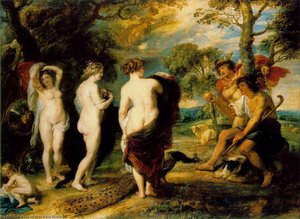
Temperance

Admire 'Temperance' by Cornelis van Haarlem! This stunning oil painting depicts a lively gathering, showcasing the artist’s masterful technique and vibrant colors. Own a piece of art history today!

Découvrez Cornelis van Haarlem (1562-1638), figure clé du maniérisme néerlandais et précurseur de Frans Hals ! Explorez ses scènes mythologiques et portraits.

Reproduction à l'huile faite à la main

Huile sur toile peinte à la main, avec cadre et dimensions personnalisés, réalisée sur commande par nos artistes. (Commander l'impression Commander l'impressionTélécharger l'image haute résolution Télécharger l'image haute résolution)

P118B $10
P118H $10
P118W $10
P438Z $10
P508JH $12
P508YH $12
P805H $10
P805Z $10
P919BZ $10
P919G $10
P919XJ $10
P959ZH $10
P968JZ $12
W106C $8
W218G $10
W218JH $8
W218Y $10
W307PJ $10
W316G $10
W316PJ $8
W316Y $10
W398PJ $8
W4111J $10
W500HY $15
W500JH $15
W692G $12
W849H $8
W940BG $15
W953PJ $8

Standard
custom
CM
INCH

Choisissez parmi nos formats prédéfinis qui respectent les proportions originales de l’œuvre.

largeur
hauteur

Vous pouvez saisir vos propres dimensions pour l'adapter à un cadre ou à un espace spécifique. Si la taille sélectionnée ne correspond pas aux proportions de l'image d'origine, nous recadrerons l'œuvre ou prolongerons la peinture avec des éléments peints à la main supplémentaires. Une maquette numérique vous sera envoyée pour approbation avant le début de la production.
Veuillez noter que l'aperçu à l'écran ne reflète pas le recadrage ou l'extension réels. Seule la maquette montrera fidèlement la composition finale.
Bien que des tailles personnalisées soient disponibles, nous vous recommandons de sélectionner une dimension dans la liste prédéfinie afin de préserver les proportions d'origine.

Exemples de personnalisation possibles : remplacer un visage par la photo du client ; ajouter un animal de compagnie (par exemple, remplacer un chat par un chien) ; inclure un message caché en arrière-plan ; modifier le paysage ou les éléments de l'arrière-plan.
Après la commande, l’équipe Most-Famous-Paintings.com contactera le client par e-mail pour recueillir ses instructions et lui fournira une maquette d’aperçu

Livraison dans le monde entier () en 3 à 4 semaines au lieu des 5 semaines habituelles. (17 août). Aucun compromis sur la qualité.

why_choose_icon
Livraison express gratuite dans le monde entier
why_choose_icon
Toile de lin de qualité supérieure
why_choose_icon
Assurance transport complète
why_choose_icon
Garantie de remboursement des droits de douane
why_choose_icon
Garantie de fidélité des couleurs
why_choose_icon
Politique de retour de 60 jours (uniquement en cas de défaut)
why_choose_icon
Garantie de remboursement à 100%
why_choose_icon
Offre de tarifs dégressifs

Prix total

$ 272

reproduction

Temperance

Technique de reproduction

Format de la reproduction

-

Prix total

$ 272

Informations clés

  • Medium: Oil on canvas
  • Dimensions: 95 x 142 cm
  • Notable elements: Nude figures, social scene
  • Location: Schloss Sanssouci, Berlin
  • Artist: Cornelis van Haarlem
  • Year: 1600
  • Title: Temperance

Quiz d'art

Chaque question ne comporte qu'une seule bonne réponse.

Question 1:
What is the primary subject depicted in Cornelis van Haarlem’s ‘Temperance’?
Question 2:
In which museum is ‘Temperance’ currently housed?
Question 3:
What artistic style is most associated with Cornelis van Haarlem’s work?
Question 4:
What year was ‘Temperance’ painted?
Question 5:
The painting features a room with two benches and a bowl. What does this detail likely symbolize in the context of ‘Temperance’?

Description de l'œuvre

A Window into the Soul: Exploring Cornelis van Haarlem’s “Temperance”

Cornelis Cornelisz van Haarlem's "Temperance," painted in 1600, isn’t merely a depiction of nude figures; it’s a profound meditation on balance, restraint, and the delicate harmony within human experience. Housed today within the serene halls of the Schloss Sanssouci museum in Berlin, this oil-on-canvas masterpiece transcends its historical context to resonate powerfully with viewers centuries later. Van Haarlem, a pivotal figure bridging the late Mannerist period and the burgeoning Dutch Golden Age, masterfully employs a rich palette and dynamic composition to capture a scene brimming with both sensual allure and quiet contemplation. The painting immediately draws the eye into a warmly lit interior, furnished simply yet elegantly – two benches provide seating, while a bowl suggests nourishment and communal gathering. Yet, it’s the figures themselves that command attention; they are not presented as idealized beauties but rather as individuals engaged in various activities—some reclining languidly, others conversing or observing—creating an atmosphere of relaxed conviviality.

The Language of Mannerism and Early Baroque

Van Haarlem's style is deeply rooted in the traditions of Northern Mannerism, a movement characterized by its emphasis on stylized forms, complex compositions, and often, a sense of melancholy. However, unlike many of his contemporaries who embraced purely artificial beauty, Van Haarlem subtly infuses his work with a nascent realism, particularly evident in the careful rendering of textures – the folds of fabric, the smoothness of skin, and the subtle variations in light and shadow. This blending of stylistic influences—the elegance of Mannerism combined with an emerging naturalism—positions “Temperance” as a crucial transitional piece, foreshadowing the more vibrant and emotionally direct style that would define the Dutch Golden Age. The use of deep, saturated colors – rich reds, blues, and browns – contributes to the painting’s dramatic intensity, while carefully orchestrated diagonals create a sense of movement and dynamism within the relatively contained space.

Symbolism and the Virtue of Moderation

The title itself, “Temperance,” immediately directs our attention to the central theme of the work: moderation. In 17th-century Europe, temperance was not simply about abstaining from alcohol; it represented a broader concept of self-control, balance, and the cultivation of virtue. Within the painting’s narrative, each figure embodies a different aspect of this principle. The reclining figures represent indulgence, while those engaged in conversation suggest thoughtful reflection. The bowl, a symbol of abundance, serves as a reminder that even in moments of pleasure, restraint is essential. Van Haarlem doesn't offer a didactic moralizing message; instead, he presents a nuanced portrayal of human behavior, inviting the viewer to contemplate their own relationship with desire and self-discipline. The overall composition subtly suggests that true happiness lies not in unrestrained excess but in finding equilibrium within oneself and one’s surroundings.

A Legacy Preserved: Reproduction and Artistic Reverence

Today, high-quality reproductions of “Temperance” are available through platforms like Most-Famous-Paintings.com, allowing art lovers worldwide to experience the painting's captivating beauty firsthand. These meticulously crafted prints capture not only the visual details but also the emotional depth and atmospheric quality of Van Haarlem’s original masterpiece. The process involves skilled artisans painstakingly recreating every brushstroke, color nuance, and textural element, ensuring that the reproduction faithfully reflects the artist’s intent. Owning a “Temperance” reproduction is more than simply acquiring a decorative object; it's an act of honoring a significant work of art history and celebrating the enduring power of Van Haarlem’s vision. For those seeking to delve deeper into this remarkable artist, resources like the Frans Hals Museum in Haarlem and online databases such as Wikipedia offer invaluable insights into his life, techniques, and artistic influences.

Biographie de l'artiste

A Forerunner of the Dutch Golden Age: The Life and Art of Cornelis Cornelisz van Haarlem

Cornelis Cornelisz van Haarlem, born in Haarlem around 1562, stands as a pivotal figure bridging the late Mannerist period with the dawn of the Dutch Golden Age. His journey was one of stylistic evolution and significant influence, particularly on Frans Hals, cementing his place among the most celebrated artists of his time. Initially steeped in the highly stylized conventions prevalent at the time—influenced by masters like Bartholomeus Spranger whose drawings circulated throughout Europe—van Haarlem’s formative years were marked by a profound engagement with artistic innovation and cultural dynamism. His parents, fleeing Haarlem during the tumultuous siege of 1572-73 by Spanish forces—a defining moment in the Eighty Years' War—left young Cornelis under the tutelage of Pieter Pietersz., establishing him on a path toward mastering the techniques of his era. This early training instilled within him not only artistic skill but also an unwavering connection to Haarlem’s cultural identity, themes that would subtly permeate his later oeuvre. The siege itself served as a catalyst for artistic experimentation and a heightened awareness of political realities—a context crucial for understanding van Haarlem's evolving worldview.

From Mannerist Grandeur to Netherlandish Realism

Van Haarlem’s initial artistic output was characterized by large-scale compositions featuring dramatically posed figures—often Italianate nudes—with an emphasis on artifice and exaggerated anatomy. These works, while demonstrating considerable skill, reflected the prevailing Northern Mannerist aesthetic heavily influenced by artists like Bartholomeus Spranger whose drawings were introduced to Haarlem by Carel van Mander in 1585. However, a distinct shift began to emerge as van Haarlem matured. He gradually moved away from these highly stylized forms toward a more grounded and realistic approach rooted in the Netherlandish tradition—a movement mirroring broader societal changes towards greater naturalism and emotional depth. This transformation wasn’t abrupt but rather a considered evolution, reflecting not only his artistic growth but also a burgeoning interest in humanist ideals. His stylistic development mirrored the intellectual currents of the Renaissance, signaling a move away from purely formal concerns toward capturing human emotion and experience with unprecedented sensitivity.

Key Works and Civic Recognition

Throughout his prolific career—spanning roughly 1580-1638—van Haarlem secured numerous commissions that attest to his growing reputation and skill. One of his earliest significant achievements was The Banquet of the Haarlem Civic Guard (1583), a monumental depiction of Haarlem’s militia company showcasing his mastery of group dynamics and meticulous attention to detail. This ambitious undertaking solidified his position within the city’s artistic landscape and established him as a reliable artist capable of fulfilling prestigious civic obligations. Equally noteworthy is The Fall of the Titans (1588-1590)—a dramatic mythological scene demonstrating van Haarlem's command of complex compositions and narrative storytelling—a testament to his ability to convey grand themes with visual eloquence. These monumental paintings weren’t merely displays of technical prowess; they were statements of civic pride and artistic ambition, reflecting the spirit of Haarlem during its golden age. He became deeply involved in the Haarlem art community, participating in informal drawing groups with Hendrick Goltzius and Carel van Mander—a collective often referred to as the “Haarlem Mannerists”—where ideas were exchanged and new artistic directions explored.

Influence on Frans Hals and Beyond

Cornelis van Haarlem’s legacy extends far beyond his own impressive output, notably through his profound influence on Frans Hals—one of the most revered portrait painters of the Dutch Golden Age. While the precise nature of their relationship remains a subject of scholarly debate, it's undeniable that van Haarlem served as an important mentor and source of inspiration for Hals’ younger colleague. His emphasis on capturing individual character and psychological depth in his portraits likely paved the way for Hals’ groundbreaking approach to portraiture—characterized by spontaneity, vitality, and remarkable ability to convey personality. Van Haarlem’s role as city painter of Haarlem further solidified his artistic significance, ensuring that his vision continued to shape the cultural landscape of the region. His students included Salomon de Bray, Cornelis Jacobsz Delff, and Gerrit Pietersz Sweelink—continuing his influence into subsequent generations. His paintings remain powerful testaments to an era of artistic innovation and cultural transformation.
Cornelis Cornelisz van Haarlem

Cornelis Cornelisz van Haarlem

1562 - 1638 , Pays-Bas

L'essentiel de l'artiste

  • Artistes Influents:
    • Pieter Pietersz
    • Gillis Coignet
  • Date De Décès: 1638
  • Date De Naissance: 1562
  • Influence Sur L'Art: Frans Hals
  • Lieu De Naissance: Haarlem, Pays-Bas
  • Mouvement Artistique: Manierisme nordique
  • Nationalité: Néerlandais
  • Nom Complet: Cornelis Cornelisz van Haarlem
  • Œuvres Notables:
    • Le banquet de la garde civique
    • La chute des titans
Explorez des œuvres d'art classées par thèmes, styles et caractéristiques.