


x


 Vorticism
 1932Modern
 65.0 x 75.0 cm
 Salford Museum - Art Gallery
Impression giclée ou sur toile de qualité musée, avec une production rapide et des finitions au choix. ( Switch to hand made Painting Switch to Image)





























Choisissez parmi nos formats prédéfinis qui respectent les proportions originales de l’œuvre.

Vous pouvez saisir vos propres dimensions pour vous adapter à un cadre ou à un espace spécifique. Si la taille sélectionnée ne correspond pas aux proportions de l'image originale, nous recadrerons l'œuvre ou étendrons l'image avec une bordure en miroir ou une couleur unie. Une maquette numérique vous sera envoyée pour approbation avant le début de la production.
Veuillez noter que l'aperçu à l'écran ne reflète pas le recadrage ou l'extension réelle. Seule la maquette montrera avec précision la composition finale.
Bien que des tailles personnalisées soient disponibles, nous vous recommandons de choisir une dimension dans la liste prédéfinie afin de préserver les proportions originales.
Livraison dans le monde entier () en 2 semaines au lieu des 4/5 semaines habituelles. (28 juillet)


Storm Clouds
Format de reproduction
In the evocative landscape of David Bomberg, nature is never merely a backdrop; it is a living, breathing protagonist. His 1932 masterpiece, Storm Clouds, invites the viewer into a realm where the terrestrial and the celestial collide in a breathtaking display of raw power and quietude. The painting captures a majestic mountain range, draped in lush greenery, rising with silent strength against an expansive sky. Scattered clouds drift across the firmament, acting as brushstrokes of light and shadow that lend a profound sense of depth and dimension to the composition. This is not just a depiction of scenery, but a window into the very soul of the earth, where every peak and valley tells a story of endurance and timeless beauty.
The technique employed in this work reflects Bomberg’s sophisticated command over form and atmosphere. Through a masterful application of color and texture, the artist achieves a remarkable balance between movement and stillness. The palette is carefully curated to evoke a sense of tranquility; soft greens and earthy tones ground the viewer in the physical reality of the mountains, while the shifting grays and whites of the clouds introduce a dynamic, ethereal quality. For the discerning collector or interior designer, this piece offers a unique opportunity to introduce a focal point that possesses both weight and lightness—a work that commands attention through its subtle complexities rather than through overt spectacle.
To understand Storm Clouds, one must consider the artistic lineage of David Bomberg. As a prominent figure among the 'Whitechapel Boys,' Bomberg’s journey was shaped by the radical energies of early 20th-century modernism, including the influences of Cubism and the structural lessons of Cézanne. Yet, in this particular work, we see a departure from the purely geometric toward a more organic, emotive expressionism. The painting serves as a testament to his ability to synthesize the structured lessons of his training with a deep, spiritual connection to the natural world. It captures a moment of atmospheric tension—the breath held before a storm—creating an emotional resonance that is both unsettling and deeply peaceful.
For those seeking to curate a space of reflection and inspiration, this reproduction offers more than mere decoration; it provides an atmosphere. The interplay of light through the clouds and the solid permanence of the mountains create a sanctuary of serenity within any room. Whether placed in a contemporary gallery-style living area or a classic study, Storm Clouds acts as a meditative anchor, reminding us of the sublime beauty that exists in the fleeting moments of our natural world. It is an investment in artistry that brings the enduring spirit of the landscape into the intimacy of the home.
Né dans une famille immigrante polonaise-juive, Abraham et Rebecca Bomberg, à Birmingham. La famille a déménagé à Whitechapel, Londres, en 1895.
A étudié initialement à la City and Guilds Technical Art School avant de se former comme lithographe à Birmingham.
A étudié sous Walter Sickert à Westminster School of Art (1908-1910), où il a été influencé par l'accent mis par Sickert sur la forme et la vie urbaine.
Exposition significative à Paul Cézanne grâce à l'exposition de 1910 de Roger Fry "Manet et les post-impressionnistes".
A fréquenté la Slade School of Art (1911), remportant le prix Tonks pour son dessin du camarade étudiant Isaac Rosenberg.
Les expériences en tant que soldat pendant la Première mondiale ont profondément influencé sa vision artistique, conduisant à un éloignement de l'abstraction.
Dans les années 1920, Bomberg a adopté un style plus figuratif, se concentrant sur des portraits et des paysages tirés directement de la nature.
A développé une technique expressionniste de plus en plus marquée, caractérisée par un impasto texturé et une intensité émotionnelle.
De nombreux voyages à travers le Moyen-Orient (en particulier la Palestine) et l'Europe ont considérablement influencé son œuvre ultérieure. Ses représentations de Jérusalem sont particulièrement notables.

1890 - 1957 , Royaume-Uni
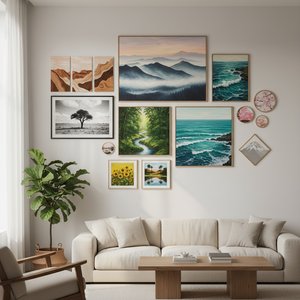
Découvrez les 10 plus beaux paysages de l'histoire de l'art : Monet, Van Gogh et bien d'autres. Explorez leur technique unique et trouvez l'inspiration pour votre décoration intérieure avec Most-Famous-Paintings.com. Œuvres exceptionnelles à découvrir !
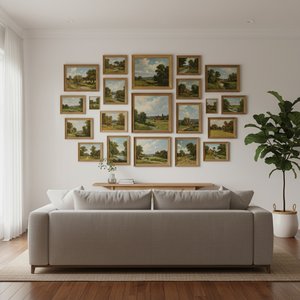
Plongez dans l'univers de John Constable avec les 25 œuvres incontournables du maître anglais. Découvrez l'histoire, la technique et l'émotion derrière ses paysages romantiques. Reproductions de qualité muséale sur Most-Famous-Paintings.com.

Plongez dans l'émotion du Romantisme avec les 10 plus beaux paysages de Friedrich, Turner & Delacroix. Découvrez leur histoire et trouvez l'inspiration déco idéale sur Most-Famous-Paintings.com !

Explorez l'histoire fascinante de la peinture de paysage à travers les chefs-d'œuvre du Romantisme. Découvrez Friedrich, Turner et Aivazovski et laissez-vous inspirer par la beauté sauvage et le sublime. Reproduction d'art de qualité chez Most-Famous-Paintings.
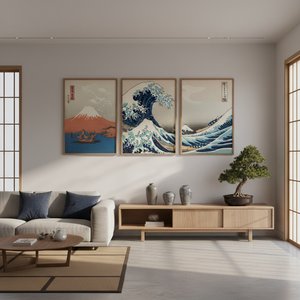
Plongez dans l'univers de Katsushika Hokusai avec les 25 œuvres incontournables du maître japonais. Découvrez l'histoire, les techniques d'ukiyo-e et la beauté intemporelle de 'La Grande Vague'. Reproductions tableaux de qualité muséale sur Most-Famous-Paintings.com.


Restez informé(e) des dernières actualités artistiques, des offres exclusives et des idées de décoration.
Parlez-nous de votre projet et nos experts en art vous proposeront 3 suggestions d'œuvres personnalisées.
Laissez-nous sélectionner 3 œuvres rien que pour vous – Gratuit !


 Preview
 Partager
 Partager
 Détails de l'œuvre

 Télécharger
 Articles similaires
 Radiographie
 Diaporama
 Afficher la suite







 L'option verre n'est disponible que pour les dimensions inférieures à 110 cm.


