x

Huile sur toile peinte à la main, avec cadre et dimensions personnalisés, réalisée sur commande par nos artistes. ( Commander l'impression Télécharger l'image haute résolution)





























Choisissez parmi nos formats prédéfinis qui respectent les proportions originales de l’œuvre.

Vous pouvez saisir vos propres dimensions pour l'adapter à un cadre ou à un espace spécifique. Si la taille sélectionnée ne correspond pas aux proportions de l'image d'origine, nous recadrerons l'œuvre ou prolongerons la peinture avec des éléments peints à la main supplémentaires. Une maquette numérique vous sera envoyée pour approbation avant le début de la production.
Veuillez noter que l'aperçu à l'écran ne reflète pas le recadrage ou l'extension réels. Seule la maquette montrera fidèlement la composition finale.
Bien que des tailles personnalisées soient disponibles, nous vous recommandons de sélectionner une dimension dans la liste prédéfinie afin de préserver les proportions d'origine.
Livraison dans le monde entier () en 3 à 4 semaines au lieu des 5 semaines habituelles. (19 août). Aucun compromis sur la qualité.


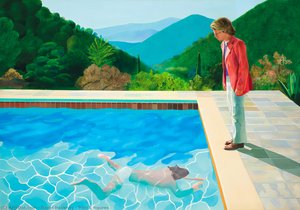
Unfinished self
Format de la reproduction
David Hockney's "Unfinished Self," painted in 1978, isn’t merely a depiction of a man asleep on his bed; it’s an exquisitely crafted meditation on perception itself. Created during Hockney’s prolific period exploring the effects of aging and distance – he famously undertook a series of ambitious Yorkshire Landscapes documenting the region's changing seasons – this portrait embodies his signature approach: capturing not just what is seen, but how it feels to see.
The painting utilizes Hockney’s distinctive optical mixing technique. Rather than layering colors conventionally, he applies thin washes of pigment that blend optically as they dry on the canvas. This method achieves remarkable luminosity and vibrancy, particularly noticeable in the blue blanket enveloping the sleeping figure. It's a deliberate choice reflecting Hockney’s fascination with how our eyes perceive color – blending hues rather than juxtaposing them to create an illusion of depth.
Despite its rich palette, “Unfinished Self” maintains a remarkable sense of calm. Hockney employs a minimalist compositional strategy, focusing on the central figure against a subtly textured background. The inclusion of other individuals – presumably Hockney’s family – adds an element of domestic intimacy and reinforces the idea that observation extends beyond the immediate subject to encompass relationships and surroundings.
The spatial arrangement is particularly noteworthy. Hockney cleverly utilizes perspective—though not in a rigorously accurate manner—to convey a feeling of depth and distance. The dining table and chairs, positioned slightly behind the bed, contribute to this illusion, suggesting a lived-in space where objects exist alongside each other in relation to one another.
The dominant color – blue – carries significant symbolic weight. Traditionally associated with tranquility, introspection, and spirituality, it underscores the painting’s contemplative mood. The sleeping figure represents restfulness and surrender to the rhythms of life, while simultaneously hinting at mortality—a recurring theme in Hockney's oeuvre.
The inclusion of a potted plant symbolizes growth and vitality, offering a counterpoint to the stillness of sleep. It subtly reminds us that even within moments of repose, life continues its inexorable march forward.
"Unfinished Self" transcends mere visual representation; it communicates a profound emotional resonance. Hockney's masterful handling of light—particularly the diffused glow illuminating the sleeping man—creates an atmosphere of warmth and tenderness. The painting invites viewers to contemplate not only the beauty of the scene but also the complexities of human experience – capturing a quiet dignity and accepting gaze that speaks volumes about Hockney’s enduring belief in the power of observation and the importance of embracing life's fleeting moments.
This artwork exemplifies Hockney’s unwavering commitment to capturing the essence of human existence through a deceptively simple yet profoundly perceptive lens.


1937 - , Royaume-Uni

Plongez dans l'univers fascinant des 10 plus beaux tableaux dominés par le bleu ardoise. Découvrez l'histoire, les artistes et les techniques de ces chefs-d'œuvre impressionnistes et contemporains. Inspirez votre décoration intérieure avec !

Transform your home with soulful blue art. From serene Monet impressions to modern textured sculptures, discover curated masterpieces designed to inspire calm. Explore expert art consultations and bespoke hand-painted reproductions to create your personal sanctuary.

Explore the rich history of blue in art! Discover its symbolism, from ancient pigments to modern masterpieces by Kandinsky & Seurat. Uncover the psychological impact and cultural meanings behind this captivating hue.
Plongez dans l'univers fascinant de René Magritte avec les 25 œuvres incontournables du maître surréaliste. Découvrez l'histoire, les techniques et la magie de tableaux célèbres comme 'L'Empire des Lumières'. Reproductions d'art de qualité muséale sur Most-Famous-Paintings.com.

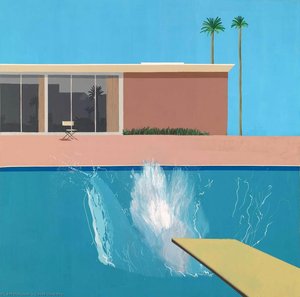
Explore the life & work of David Hockney, Pop Art's master chronicler. Discover his iconic paintings, Californian landscapes, and lasting influence on modern art. Expert analysis for collectors.


Restez informé(e) des dernières actualités artistiques, des offres exclusives et des idées de décoration.
Parlez-nous de votre projet et nos experts en art vous proposeront 3 suggestions d'œuvres personnalisées.
Laissez-nous sélectionner 3 œuvres rien que pour vous – Gratuit !


 Aperçu en situation
 Envoyer
 Partager
 Détails de l'œuvre

 Télécharger
 Articles similaires
 Radiographie
 Diaporama
 Lire la suite







 L'option verre n'est disponible que pour les dimensions inférieures à 110 cm.