
Vendez vos œuvres
Ma liste de souhaits Panier Cart
Aperçu en situationAperçu en situation Visualiser en RAVisualiser en RA Commander la reproduction peinte à la main Commander la reproduction peinte à la mainTélécharger l'image haute résolution Télécharger l'image haute résolution EnvoyerEnvoyer
Détails de l'œuvreDétails de l'œuvre Ajouter aux favoris Ajouter aux favoris TéléchargerTélécharger Articles similairesArticles similaires RadiographieRadiographie DiaporamaDiaporama

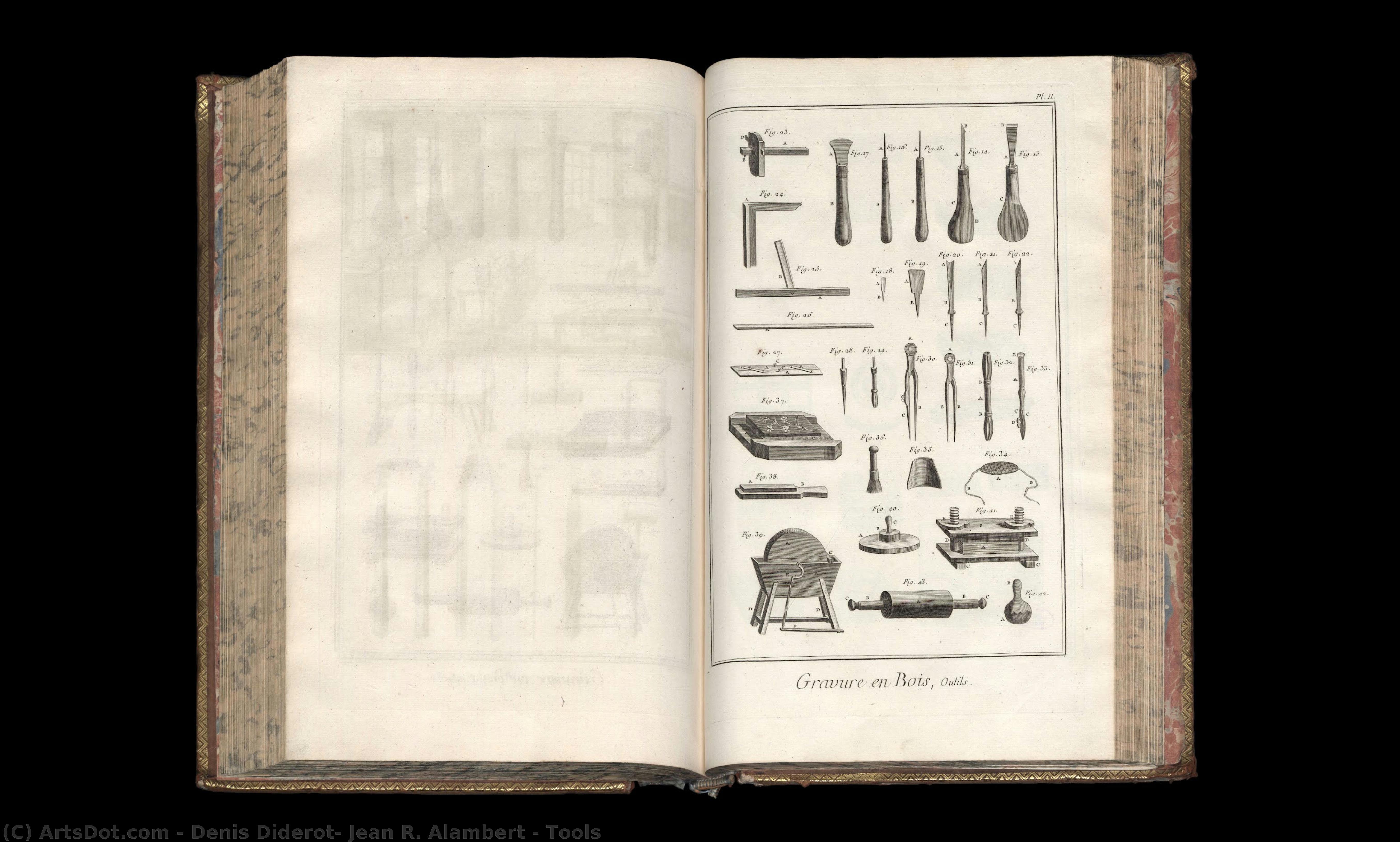
Tools

Denis Diderot & Jean R. Alambert : penseurs et artistes des Lumières françaises. Explorez leur œuvre encyclopédique, leurs techniques de marbrure et leur héritage parisien.

Giclées et impressions d'art

Impressions giclées ou sur toile de qualité musée, avec une production rapide et des finitions au choix. (Commander la reproduction peinte à la main Commander la reproduction peinte à la mainTélécharger l'image haute résolution Télécharger l'image haute résolution)

Standard
custom
CM
INCH

Choisissez parmi nos formats prédéfinis qui respectent les proportions originales de l’œuvre.

largeur
hauteur

Vous pouvez saisir vos propres dimensions pour vous adapter à un cadre ou à un espace spécifique. Si la taille sélectionnée ne correspond pas aux proportions de l'image originale, nous recadrerons l'œuvre ou étendrons l'image avec une bordure en miroir ou une couleur unie. Une maquette numérique vous sera envoyée pour approbation avant le début de la production.
Veuillez noter que l'aperçu à l'écran ne reflète pas le recadrage ou l'extension réelle. Seule la maquette montrera avec précision la composition finale.
Bien que des tailles personnalisées soient disponibles, nous vous recommandons de choisir une dimension dans la liste prédéfinie afin de préserver les proportions originales.

Livraison dans le monde entier () en 2 semaines au lieu des 4/5 semaines habituelles. (18 août)

why_choose_icon
Livraison express gratuite dans le monde entier

why_choose_icon
Toile de lin de qualité supérieure
why_choose_icon
Assurance transport complète
why_choose_icon
Garantie de remboursement des droits de douane
why_choose_icon
Garantie de fidélité des couleurs
why_choose_icon
Politique de retour de 60 jours (uniquement en cas de défaut)
why_choose_icon
Garantie de remboursement à 100%
why_choose_icon
Offre de tarifs dégressifs

Prix total

$ 68

reproduction

Tools

Giclées et impressions d'art

Format de la reproduction

-

Prix total

$ 68


Biographie de l'artiste

Denis Diderot & Jean R. Alambert: Pioneers of Enlightenment Art

Denis Diderot and Jean R. Alambert stand as monumental figures in the intellectual landscape of 18th-century France, inextricably linked by their collaborative pursuit of knowledge and their profound impact on artistic expression. Their partnership wasn’t merely professional; it was a crucible where philosophical ideals fueled creative endeavors, resulting in an unparalleled contribution to both art criticism and decorative arts – specifically, book edge marbling. This distinctive technique, championed by the duo, elevated printed books into objects of beauty and intellectual stimulation, reflecting the Enlightenment's commitment to reason and humanist values.

A Philosophical Duo Shaping Artistic Vision

Born in Langres in 1713, Denis Diderot possessed an inquisitive mind from a young age, nurtured by his father’s education in mathematics and natural philosophy. He pursued studies at Paris University, immersing himself in the burgeoning currents of Cartesian rationalism and preparing for a career as a playwright and philosopher. Simultaneously, Jean R. Alambert, born in Paris in 1717, excelled in mathematics and physics, earning membership to prestigious academies like the Royal Society of London and the Académie royale des sciences. Their shared intellectual fervor propelled them toward a common goal: to disseminate knowledge and transform society through reasoned discourse. This conviction fueled their involvement in the Encyclopédie, begun in 1745, where they envisioned a comprehensive compilation of human understanding – an ambitious project that demanded not only erudition but also meticulous attention to detail. The Encyclopédie wasn’t simply a collection of facts; it was conceived as an instrument for moral reform and intellectual enlightenment. Diderot and Alambert recognized the importance of visual representation in conveying complex ideas, prompting them to explore innovative decorative techniques. Book edge marbling – the application of pigment onto the edges of printed books – emerged as their favored medium. This painstaking process involved layering translucent inks onto the paper’s perimeter, creating mesmerizing patterns that captivated viewers and subtly enhancing the book's aesthetic appeal. They meticulously documented these methods, demonstrating a commitment to scientific observation alongside artistic experimentation. Their illustrations within the Encyclopédie showcased remarkable precision and artistry, reflecting the Enlightenment’s fascination with natural science and its belief in empirical investigation.

Technique & Legacy: Mastering Book Edge Marbling

Alambert's expertise in mathematics provided invaluable support for calculating pigment dispersion and optimizing marbling designs. Together, they perfected a method utilizing finely ground pigments mixed with binders like gum arabic, achieving astonishing color vibrancy and textural complexity. The resulting edges shimmered with intricate arabesques, geometric motifs, and floral patterns—a testament to their dedication to craftsmanship and aesthetic refinement. Their meticulous observations of the process were published in detail within the Encyclopédie, establishing a new standard for artistic documentation. This groundbreaking approach combined scientific rigor with artistic sensibility – embodying the Enlightenment’s core values.

Influence & Artistic Recognition

Diderot's influence extended beyond mere technique; he championed a radical rethinking of aesthetic judgment. He argued that beauty should inspire contemplation and elevate the human spirit—principles that resonated deeply with the broader Enlightenment movement. His writings encouraged artists to prioritize intellectual depth alongside visual splendor, fostering a dialogue between reason and imagination. Although Diderot’s artistic output was modest compared to his literary achievements, his advocacy for humanist ideals profoundly shaped the cultural landscape of his time. Jean le Rond d'Alembert, Alambert’s collaborator, further solidified the duo’s legacy by translating scientific texts into French, ensuring that Enlightenment knowledge reached a wider audience. Isaac Newton’s discoveries served as an inspiration to both thinkers, bolstering their conviction in the power of observation and mathematical reasoning.

A Lasting Impression on Artistic Expression

Diderot's death in 1784 marked the end of an era, but his legacy endured through Alambert’s continued artistic pursuits and the enduring influence of their collaborative vision. Book edge marbling, elevated to a celebrated art form during their lifetime, continues to inspire artists today—a tangible embodiment of the Enlightenment’s belief in reason, beauty, and the transformative power of knowledge. The meticulous documentation of this technique within the Encyclopédie stands as an unparalleled achievement of artistic scholarship and serves as a poignant reminder of the profound connection between philosophy and visual culture. Their contribution cemented their place among the most influential figures of the Enlightenment, shaping not only art but also intellectual discourse for generations to come.

L'essentiel de l'artiste

  • Artistic Movement Or Style: Éclaircissement
  • Artists Or Movements Influenced By This Artist: ['Romantisme']
  • Artists Who Influenced This Artist: ['Isaac Newton']
  • Date Of Birth: 5 octobre 1713
  • Date Of Death: 31 juillet 1784
  • Full Name: Denis Diderot & Jean R Alambert
  • Nationality: Français
  • Notable Artworks: ['Encyclopédie']
  • Place Of Birth: Langres, France





































