x

 Acrylic On CanvasWallArtEarly Renaissance
 1435
1435 218.0 x 168.0 cm
 Santa Croce
Acquérez une image numérique haute résolution et optimisée, d'une qualité bien supérieure à l'aperçu en ligne.
Chaque fichier est méticuleusement préparé par nos spécialistes internes à l'aide d'outils avancés et d'une retouche manuelle experte. Nous garantissons que chaque image possède une clarté exceptionnelle, une précision des couleurs irréprochable et un niveau de détail fin.
Le fichier final est livré par e-mail sous 72 heures, optimisé pour une utilisation immédiate dans des contextes professionnels, éditoriaux et d'impression. Il offre la même qualité de confiance que celle utilisée par les plus grands studios de création, éditeurs et galeries.
Téléchargez un fichier haute résolution pour votre usage personnel, l'impression et vos projets créatifs. ( Commander l'impression Commander la reproduction peinte à la main)
En choisissant Most-Famous-Paintings.com, vous n'obtenez pas seulement une simple image : vous recevez une œuvre numérique sublimée avec professionnalisme, conçue avec précision et accompagnée d'une garantie de satisfaction. Voici tout ce qui accompagne automatiquement votre commande :

Votre fichier d'image numérique haute résolution vous sera envoyé par e-mail sous 72 heures après votre commande — prêt à un usage immédiat.

Votre œuvre d'art bénéficie d'une optimisation professionnelle grâce à des outils d'IA avancés et une retouche manuelle, garantissant un niveau maximal de détail, de clarté et de fidélité chromatique.

Vous avez accidentellement supprimé ou perdu votre fichier ? Pas d'inquiétude — nous vous le renverrons gratuitement, quand vous le souhaitez.

Profitez de votre œuvre d'art instantanément sans frais de douane ni de livraison — les téléchargements numériques sont toujours exonérés de taxes.

Nous garantissons que votre image numérique reproduit les couleurs de l'original aussi fidèlement que possible grâce à des outils professionnels et une gestion rigoureuse des couleurs.

Si vous n'êtes pas satisfait de votre image numérique, nous la retoucherons ou vous rembourserons 100% sous 60 jours — sans poser de questions.

Pas satisfait ? Obtenez un remboursement intégral dans les 60 jours suivant la réception de votre fichier numérique — sans aucune question posée.

Achetez 3 images, économisez 10% - Achetez 5, économisez 15% - Achetez 10+, économisez 20%. Idéal pour les projets créatifs, les galeries et les agences.
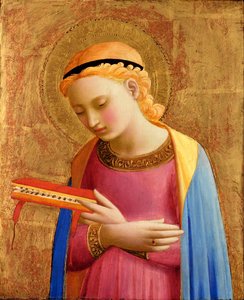
Donatello’s 1435 Annunciation, housed within the Basilica di Santa Croce in Florence, isn’t merely a depiction of a biblical moment; it’s a profound meditation on grace, humility, and the transformative power of faith. Commissioned during a pivotal period of artistic innovation – bridging the Gothic and Renaissance eras – this sculpture embodies Donatello's revolutionary approach to humanism and his masterful command of classical forms. The scene unfolds with an arresting immediacy: Mary, seated on a simple bench, receives the startling announcement from the radiant angel Gabriel. The composition isn’t one of grand theatricality but rather a quiet intimacy, capturing a pivotal moment of revelation within a remarkably restrained space.
Donatello's genius lies not just in his technical skill – evident in the exquisitely rendered drapery and the subtly expressive faces – but also in his ability to imbue the figures with palpable emotion. Mary’s posture, slightly turned away from Gabriel, conveys a mixture of surprise, apprehension, and burgeoning joy. Her hands are delicately positioned, reflecting both her modesty and her acceptance of God's will. Gabriel, too, is rendered with remarkable detail, his wings spread in a gesture of divine authority yet tempered by a gentle demeanor. The sculpture’s power resides in its ability to evoke a deeply human response to the extraordinary – a recognition of our own vulnerability and capacity for grace.
The Annunciation at Santa Croce represents a crucial step in Donatello's artistic evolution. Returning from his influential Roman sojourn, he brought back a renewed fascination with classical sculpture, particularly the idealized forms and serene expressions of ancient Greek and Roman figures. This influence is immediately apparent in Mary’s pose, which echoes the statues of goddesses found in Roman baths – a deliberate reference to her divine role as the Mother of God. However, Donatello doesn't simply replicate antiquity; he adapts it to his own Renaissance sensibilities, imbuing the sculpture with a sense of dynamism and psychological depth that was largely absent from earlier depictions of the subject.
The choice of *pietra serena*, a durable and subtly veined marble, further contributes to the work’s timeless quality. The use of gold highlights, particularly in the drapery and the angel's garments, adds a layer of luxuriousness and emphasizes the sacred nature of the event. Donatello’s decision to depict Mary seated rather than standing – a departure from traditional representations – reinforces her role as a humble recipient of divine grace. This subtle shift in perspective underscores the sculpture’s humanist focus, placing Mary within a domestic setting and emphasizing her humanity alongside her divinity.
Beyond its formal qualities, the Annunciation is rich in symbolic meaning. The angel Gabriel's trumpet – a small, almost understated detail – represents the herald of divine news. The simple bench upon which Mary sits symbolizes humility and her willingness to accept God’s plan. The overall composition creates a sense of quiet contemplation, inviting viewers to reflect on the profound implications of the Incarnation. Donatello masterfully captures the emotional core of the story: the moment when human destiny intersects with divine purpose.
The sculpture's enduring appeal lies in its ability to resonate with audiences across centuries and cultures. It speaks to themes of faith, hope, and love – universal values that transcend time and place. Donatello’s Annunciation remains a powerful testament to the transformative potential of art and its capacity to illuminate the deepest mysteries of human experience.


1386 - 1466 , Italie


Restez informé(e) des dernières actualités artistiques, des offres exclusives et des idées de décoration.
Parlez-nous de votre projet et nos experts en art vous proposeront 3 suggestions d'œuvres personnalisées.
Laissez-nous sélectionner 3 œuvres rien que pour vous – Gratuit !


 Aperçu en situation
 Envoyer
 Partager
 Détails de l'œuvre

 Télécharger
 Articles similaires
 Radiographie
 Diaporama
 Lire la suite