


x

 Preview
 Commander l'impression Acheter l'image haute résolution
 Partager
 Détails de l'œuvre
 Ajouter aux favoris
 Télécharger
 Articles similaires
 Radiographie
 Diaporama
Huile sur toile peinte à la main, avec cadre et dimensions personnalisés, réalisée sur commande par nos artistes.





























Choisissez parmi nos formats prédéfinis qui respectent les proportions originales de l’œuvre.

Vous pouvez saisir vos propres dimensions pour l'adapter à un cadre ou à un espace spécifique. Si la taille sélectionnée ne correspond pas aux proportions de l'image d'origine, nous recadrerons l'œuvre ou prolongerons la peinture avec des éléments peints à la main supplémentaires. Une maquette numérique vous sera envoyée pour approbation avant le début de la production.
Veuillez noter que l'aperçu à l'écran ne reflète pas le recadrage ou l'extension réels. Seule la maquette montrera fidèlement la composition finale.
Bien que des tailles personnalisées soient disponibles, nous vous recommandons de sélectionner une dimension dans la liste prédéfinie afin de préserver les proportions d'origine.
Livraison dans le monde entier () en 3 à 4 semaines au lieu des 5 semaines habituelles. (24 juillet). Aucune concession sur la qualité.


David
Format de reproduction
Michelangelo’s “David,” a colossal marble sculpture residing within the Galleria dell’Accademia in Florence, isn't merely a depiction of a biblical hero; it’s an embodiment of human potential, a testament to artistic innovation, and a profound meditation on strength and vulnerability. Completed between 1501 and 1504, this iconic work represents the pinnacle of Renaissance sculpture – a moment when classical ideals were reinterpreted through a distinctly humanist lens. The sheer scale of the statue, standing over seventeen feet tall, immediately commands attention, drawing the viewer into an intimate encounter with the figure’s intense gaze and palpable energy.
The sculpture captures David in the moments *before* his confrontation with Goliath, a crucial detail that elevates it beyond a simple narrative illustration. He's not triumphant, not yet victorious; instead, he embodies resolute contemplation, a young man grappling with immense responsibility and facing an overwhelming challenge. Notice the meticulous anatomical rendering – every muscle fiber, vein, and subtle curve of the body is painstakingly sculpted to achieve breathtaking realism. Michelangelo’s mastery lies in his ability to imbue this cold, hard marble with a sense of life, of movement, of deeply felt emotion. The contrapposto pose, where David's weight shifts subtly onto one leg, creates an exquisite balance and dynamism that seems to defy the static nature of stone.
Michelangelo’s approach to sculpting “David” was revolutionary for its time. He began with a massive block of Carrara marble – a flawed, uneven piece deemed unsuitable for other projects. This seemingly discarded material became the foundation for one of art history's most celebrated works. The process itself involved an extraordinary level of skill and patience. Michelangelo employed a technique known as *spaccatura*, exploiting existing cracks within the marble to guide his carving. He worked with remarkable precision, using chisels, rasps, and other hand tools to gradually reveal the form hidden beneath the stone. The surface is polished to a breathtaking sheen, reflecting light in a way that enhances the sculpture’s luminosity and brings out the subtle nuances of color within the marble.
Crucially, Michelangelo didn't simply carve *from* the stone; he worked *with* it, responding to its inherent qualities. The rougher textures around the hands and feet hint at the raw material, while the polished torso speaks to the artist’s transformative power. This interplay between form and substance is a hallmark of his style – a demonstration of both technical virtuosity and artistic intuition.
“David” is rich in symbolic meaning, reflecting Renaissance ideals of civic virtue and human dignity. The biblical David, the shepherd boy who felled the giant Goliath with nothing but a sling and five stones, represents courage, faith, and the triumph of the underdog against overwhelming odds. In Florence during the early 16th century, this narrative resonated deeply with the city’s republican government, which saw itself as defending its freedom from tyranny – mirroring David's victory over Goliath. The statue was originally intended for the exterior of the Florence Cathedral but was ultimately placed in the Galleria dell’Accademia due to its overwhelming scale and impact.
Beyond its political significance, “David” also embodies a broader spiritual message. The youthful figure represents humanity’s potential for greatness, a reminder that even the most ordinary individual can achieve extraordinary things through faith, determination, and moral strength. The statue's nudity is not intended to be overtly sexual but rather symbolizes vulnerability and purity – David stands exposed before God, relying on his own inner resources.
Michelangelo’s “David” remains one of the most recognizable and beloved sculptures in the world. Its enduring appeal lies in its perfect balance of anatomical realism, emotional intensity, and symbolic depth. It's a work that continues to inspire awe and admiration centuries after its creation, serving as a powerful reminder of the transformative power of art and the boundless capacity of the human spirit. Reproductions, such as those offered by Most-Famous-Paintings.com, allow viewers to experience this masterpiece in their own homes, bringing a touch of Renaissance grandeur into any space.


1386 - 1466 , Italie

Plongez dans l'univers fascinant des 10 chefs-d'œuvre en bronze qui ont marqué l'histoire de l'art. Découvrez Rodin, Degas et les secrets de ces sculptures iconiques. Reproductions d'art exceptionnelles sur Most-Famous-Paintings.com – Explorez la collection !

Explorez la vie et l'œuvre de Michel-Ange, titan de la Renaissance italienne. Découvrez ses sculptures iconiques, le plafond de la Chapelle Sixtine et son héritage artistique durable. Analyse approfondie et passionnée.

Explorez la Haute Renaissance italienne : ses artistes emblématiques (Léonard de Vinci, Michel-Ange), ses innovations artistiques et son héritage durable. Un guide expert pour les passionnés d'art.

Plongez au cœur de la Haute Renaissance avec les 10 chefs-d'œuvre incontournables de Léonard de Vinci, Michel-Ange et Raphaël. Découvrez l'histoire fascinante de ces tableaux emblématiques et trouvez l'inspiration pour une décoration intérieure d'exception sur .
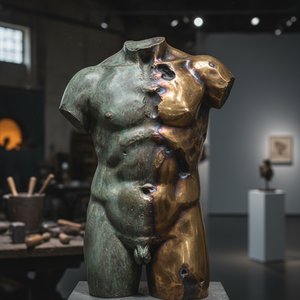
Explorez l'histoire fascinante de la sculpture en bronze, des techniques ancestrales aux créations contemporaines. Conseils d'experts pour collectionneurs et passionnés d'art.


Restez informé(e) des dernières actualités artistiques, des offres exclusives et des idées de décoration.
Parlez-nous de votre projet et nos experts en art vous proposeront 3 suggestions d'œuvres personnalisées.
Laissez-nous sélectionner 3 œuvres rien que pour vous – Gratuit !


 Partager


 Afficher la suite







 L'option verre n'est disponible que pour les dimensions inférieures à 110 cm.


