


x

 WatercolorWallArtContemporary Realism
 1924Modern
 34.0 x 49.0 cm
Huile sur toile peinte à la main, avec cadre et dimensions personnalisés, réalisée sur commande par nos artistes. ( Commander l'impression Télécharger l'image haute résolution)





























Choisissez parmi nos formats prédéfinis qui respectent les proportions originales de l’œuvre.

Vous pouvez saisir vos propres dimensions pour l'adapter à un cadre ou à un espace spécifique. Si la taille sélectionnée ne correspond pas aux proportions de l'image d'origine, nous recadrerons l'œuvre ou prolongerons la peinture avec des éléments peints à la main supplémentaires. Une maquette numérique vous sera envoyée pour approbation avant le début de la production.
Veuillez noter que l'aperçu à l'écran ne reflète pas le recadrage ou l'extension réels. Seule la maquette montrera fidèlement la composition finale.
Bien que des tailles personnalisées soient disponibles, nous vous recommandons de sélectionner une dimension dans la liste prédéfinie afin de préserver les proportions d'origine.
Livraison dans le monde entier () en 3 à 4 semaines au lieu des 5 semaines habituelles. (21 août). Aucun compromis sur la qualité.


Haskell
Format de la reproduction
In the vast tapestry of American modernism, few works capture the delicate tension between presence and absence as effectively as Edward Hopper’s 1924 watercolor, Haskell. This evocative piece transcends a mere architectural study, offering instead a profound meditation on solitude and the quiet observation of the landscape. At first glance, the viewer is presented with a deceptively simple scene: a modest white house perched gracefully atop a gentle hillside, bathed in the soft, diffused light of a clear day. Yet, beneath this tranquil surface lies a palpable sense of introspection. Hopper utilizes the watercolor medium to masterfully manipulate tonal variations, allowing the creamy whites of the house's siding to contrast with the muted, earthy greens of the surrounding foliage. The composition is anchored by strong horizontal lines that mirror the expansive vista, creating a feeling of openness that paradoxically emphasizes the isolation of the dwelling.
The technical brilliance of Haskell lies in Hopper’s ability to use light as a narrative force. Through careful brushstrokes and precise geometric delineations, he imbue the architecture with a textural richness that feels both grounded and ethereal. The way shadows stretch across the expansive windows suggests a passing of time, inviting the viewer to linger within the stillness. This mastery of light and shadow is a hallmark of Hopper’s style, a technique that would later define his most iconic oil paintings. By integrating subtle architectural details with the organic flow of the landscape, he creates a visual equilibrium that is both unsettling and deeply captivating, prompting a contemplation of what lies hidden behind those silent windows.
To understand Haskell, one must look toward the cultural landscape of post-World War I America. Painted during an era of rapid industrialization and burgeoning urbanization, the work aligns with the spirit of American Regionalism—a movement dedicated to portraying the authentic, unvarnished essence of everyday life. As cities grew more crowded and complex, a new sense of alienation began to permeate the collective psyche. Hopper captures this burgeoning modern loneliness not through grand tragedy, but through the quietude of a single hilltop home. The inclusion of two small figures near the base of the composition serves as a vital human element; they are observers within the frame, much like the viewer, yet their presence subtly disrupts the stillness, reminding us of the human connection to the vast, often indifferent, landscape.
For the discerning collector or interior designer, Haskell offers more than just aesthetic beauty; it provides a window into a pivotal moment in art history. The painting’s ability to evoke both peace and a subtle, underlying anxiety makes it a versatile masterpiece for modern spaces. It possesses a timeless quality that complements sophisticated, minimalist interiors, where its soft palette and structural clarity can serve as a focal point of contemplation. Whether viewed as a relic of early 20th-century realism or as a contemporary symbol of mindfulness and retreat, this watercolor remains an enduring testament to Hopper’s ability to find the extraordinary within the ordinary.


1931 - 1967 , États-Unis d'Amérique
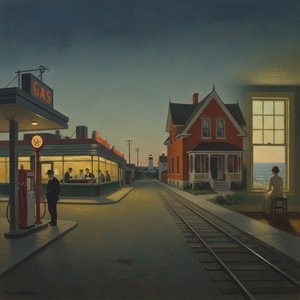
Plongez dans l'univers poignant d'Edward Hopper avec les 25 œuvres incontournables du maître américain. Découvrez la lumière, l'isolation et le réalisme unique de ses tableaux iconiques. Reproductions de qualité muséale sur Most-Famous-Paintings.com. Explorez la collection en ligne.

Plongez dans l'univers fascinant des 10 chefs-d'œuvre de l'aquarelle qui ont marqué l'histoire de l'art. Découvrez Turner, Monet, Goya et bien d'autres ! Retrouvez ces œuvres emblématiques en reproductions exceptionnelles sur Most-Famous-Paintings.com.

Explore the captivating world of watercolor painting! Discover its rich history, essential techniques, influential artists & collecting tips. A comprehensive guide for art enthusiasts from Most-Famous-Paintings.

Explorez l'histoire fascinante de l'aquarelle, des techniques ancestrales aux maîtres impressionnistes. Découvrez les artistes emblématiques et nos conseils pour apprécier et collectionner cette peinture lumineuse.
Plongez au cœur du Réalisme Américain avec 10 chefs-d'œuvre d'Edward Hopper, Andrew Wyeth et plus. Découvrez l'histoire et les techniques de ces artistes emblématiques. Reproductions de tableaux de qualité musée sur Most-Famous-Paintings.com !


Restez informé(e) des dernières actualités artistiques, des offres exclusives et des idées de décoration.
Parlez-nous de votre projet et nos experts en art vous proposeront 3 suggestions d'œuvres personnalisées.
Laissez-nous sélectionner 3 œuvres rien que pour vous – Gratuit !


 Aperçu en situation
 Envoyer
 Partager
 Détails de l'œuvre

 Télécharger
 Articles similaires
 Radiographie
 Diaporama
 Lire la suite







 L'option verre n'est disponible que pour les dimensions inférieures à 110 cm.


