x

 Oil On CanvasWallArtNew Realism
 1913Modern
 152.0 x 88.0 cm
Impressions giclées ou sur toile de qualité musée, avec une production rapide et des finitions au choix. ( Commander la reproduction peinte à la main Télécharger l'image haute résolution)





























Choisissez parmi nos formats prédéfinis qui respectent les proportions originales de l’œuvre.

Vous pouvez saisir vos propres dimensions pour vous adapter à un cadre ou à un espace spécifique. Si la taille sélectionnée ne correspond pas aux proportions de l'image originale, nous recadrerons l'œuvre ou étendrons l'image avec une bordure en miroir ou une couleur unie. Une maquette numérique vous sera envoyée pour approbation avant le début de la production.
Veuillez noter que l'aperçu à l'écran ne reflète pas le recadrage ou l'extension réelle. Seule la maquette montrera avec précision la composition finale.
Bien que des tailles personnalisées soient disponibles, nous vous recommandons de choisir une dimension dans la liste prédéfinie afin de préserver les proportions originales.
Livraison dans le monde entier () en 2 semaines au lieu des 4/5 semaines habituelles. (20 août)


Queensborough-Bridge
Format de la reproduction
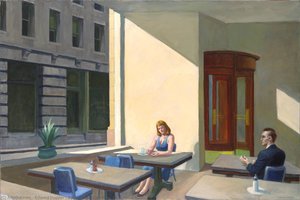
In the vast landscape of American modernism, few images capture the quiet tension of urban existence as poignantly as Edward Hopper’s Queensborough Bridge. Painted in 1913, this monumental oil on canvas serves as more than a mere architectural study; it is a profound meditation on the intersection of industrial progress and human isolation. As the eye travels across the expansive 152 x 88 cm frame, one is immediately struck by the sheer scale of the bridge, which spans the width of the composition like a heavy, structural heartbeat connecting two distant shores. Hopper, a master of capturing the psychological weight of a scene, uses the massive arches of the bridge to create a sense of both grandeur and enclosure, inviting the viewer into a world where the bustling energy of New York City is distilled into a single, breathless moment of stillness.
The technique employed in this masterpiece reveals Hopper’s early command of New Realism. Eschewing the fleeting, light-drenched whimsy of Impressionism, Hopper opts for a more deliberate and grounded approach. He meticulously renders the structural integrity of the bridge, using a masterful blending of light and shadow to sculpt its massive forms. The water beneath the arches is not merely a surface but a mirror, where broken brushstrokes capture the subtle, ethereal dance of reflected light, creating a soft contrast against the rigid, unyielding steel above. This interplay between the solidity of the man-made structure and the fluid, ever-changing nature of the river creates a visual rhythm that keeps the viewer’s gaze moving, searching for meaning within the shadows.
Beyond its technical brilliance, Queensborough Bridge is a deeply symbolic work that resonates with the anxieties of the early 20th century. During this era of rapid industrialization and urban expansion, the sense of the individual being dwarfed by the growing metropolis was palpable. Hopper captures this perfectly through his strategic placement of elements: two small boats glide silently through the water, acting as anchors for the composition while simultaneously emphasizing the vastness of the environment. A solitary house, perched quietly on the right side of the canvas, introduces a touch of human presence that feels both intimate and profoundly distant. This juxtaposition—the massive, impersonal bridge against the small, vulnerable signs of life—serves as a powerful metaphor for the alienation often found within the heart of a crowded city.
For the discerning collector or interior designer, this painting offers an unparalleled emotional depth that can transform a space. It does not merely decorate a wall; it establishes an atmosphere of contemplative tranquility and sophisticated melancholy. The muted palette and the careful balance of light and dark provide a neutral yet emotionally charged focal point that complements both contemporary and classic interiors. To possess a reproduction of this work is to invite a piece of American history into one's home—a piece that celebrates the beauty found in the quiet, overlooked moments of modern life and reminds us of the enduring power of solitude amidst the machine age.


1931 - 1967 , États-Unis d'Amérique

Explore the raw, evocative beauty of the Ashcan School. Discover how masters like Bellows and Glackens captured New York's urban soul through American Realism, and learn to bring this gritty, historical elegance into your modern art collection.

Explore the raw realism of Neue Sachlichkeit. Discover how German New Objectivity artists like Otto Dix and George Grosz captured the turbulent Weimar Republic through unflinching social critique and precise detail. A definitive guide for art historians and collectors.


Restez informé(e) des dernières actualités artistiques, des offres exclusives et des idées de décoration.
Parlez-nous de votre projet et nos experts en art vous proposeront 3 suggestions d'œuvres personnalisées.
Laissez-nous sélectionner 3 œuvres rien que pour vous – Gratuit !


 Aperçu en situation
 Envoyer
 Partager
 Détails de l'œuvre

 Télécharger
 Articles similaires
 Radiographie
 Diaporama
 Lire la suite







 L'option verre n'est disponible que pour les dimensions inférieures à 110 cm.