Liste de souhaits Mon panier Cart
Commander l'impression Commander l'impressionAcheter l'image haute résolution Acheter l'image haute résolution PartagerPartager
Détails de l'œuvreDétails de l'œuvre Ajouter aux favoris Ajouter aux favoris TéléchargerTélécharger Articles similairesArticles similaires RadiographieRadiographie DiaporamaDiaporama

Fuel Pump

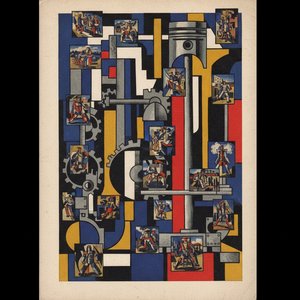
Fernand Léger’s "Fuel Pump" captures the energy of a vintage automobile navigating a bustling gas station scene, featuring a truck, traffic light, clock, and bench—a masterful blend of abstraction and observation reflecting the machine age.

Explorez l'art de Fernand Léger (1881-1955), un pionnier du Cubisme et du 'Tubisme'. Découvrez ses peintures audacieuses et figuratives célébrant la vie moderne, les machines et la forme humaine. Un précurseur du Pop Art !

Reproduction à l'huile faite à la main

Huile sur toile peinte à la main, avec cadre et dimensions personnalisés, réalisée sur commande par nos artistes.


P118B $10
P118H $10
P118W $10
P438Z $10
P508JH $12
P508YH $12
P805H $10
P805Z $10
P919BZ $10
P919G $10
P919XJ $10
P959ZH $10
P968JZ $12
W106C $8
W218G $10
W218JH $8
W218Y $10
W307PJ $10
W316G $10
W316PJ $8
W316Y $10
W398PJ $8
W4111J $10
W500HY $15
W500JH $15
W692G $12
W849H $8
W940BG $15
W953PJ $8

Standard
custom
CM
INCH

Choisissez parmi nos formats prédéfinis qui respectent les proportions originales de l’œuvre.

largeur
hauteur

Vous pouvez saisir vos propres dimensions pour l'adapter à un cadre ou à un espace spécifique. Si la taille sélectionnée ne correspond pas aux proportions de l'image d'origine, nous recadrerons l'œuvre ou prolongerons la peinture avec des éléments peints à la main supplémentaires. Une maquette numérique vous sera envoyée pour approbation avant le début de la production.
Veuillez noter que l'aperçu à l'écran ne reflète pas le recadrage ou l'extension réels. Seule la maquette montrera fidèlement la composition finale.
Bien que des tailles personnalisées soient disponibles, nous vous recommandons de sélectionner une dimension dans la liste prédéfinie afin de préserver les proportions d'origine.

Exemples de personnalisation : remplacer un visage par la photo du client ; ajouter un animal de compagnie (par exemple, remplacer un chat par un chien) ; inclure un message caché en arrière-plan ; modifier le paysage ou les éléments de l'arrière-plan.
Après la commande, l’équipe Most-Famous-Paintings.com contactera le client par e-mail pour obtenir ses instructions et lui fournira une maquette d’aperçu.

Livraison dans le monde entier () en 3 à 4 semaines au lieu des 5 semaines habituelles. (21 juillet). Aucune concession sur la qualité.

why_choose_icon
Livraison express gratuite dans le monde entier
why_choose_icon
Toile de lin de haute qualité
why_choose_icon
Assurance transport complète
why_choose_icon
Garantie de remboursement des frais de douane
why_choose_icon
Garantie de fidélité des couleurs
why_choose_icon
Politique de retour de 60 jours (uniquement en cas de défaut)
why_choose_icon
Garantie de remboursement à 100%
why_choose_icon
Réduction sur les achats groupés

Prix total

-

reproduction

Fuel Pump

Technique de reproduction

Format de reproduction

-

Prix total final

-

En bref

  • Notable elements or techniques: Geometric abstraction; Repetition of forms
  • Medium: Oil on Canvas
  • Title: Fuel Pump
  • Location: Musée d'Art Moderne de Paris
  • Artistic style: Constructivist
  • Movement: Cubism
  • Influences:
    • Picasso
    • Braque

Quiz d'art

Chaque question ne comporte qu'une seule bonne réponse.

Question 1:
What is the primary subject matter depicted in Fernand Léger's painting “Fuel Pump”?
Question 2:
Fernand Léger’s artistic style is characterized by:
Question 3:
The painting incorporates elements reflecting the influence of:
Question 4:
What is notable about the depiction of the vintage automobile in “Fuel Pump”?
Question 5:
“Fuel Pump” exemplifies Léger’s commitment to portraying the impact of:

Description de l'œuvre

Fernand Léger’s “Gas Station” – A Symphony of Form and Industrial Soul

The canvas explodes with geometric precision—a riot of interlocking cubes, cylinders, and planes that dominate Fernand Léger’s iconic 1925 painting, “Gas Station.” More than just a depiction of an everyday scene, it represents Léger's audacious attempt to distill the anxieties and exhilarations of the burgeoning industrial revolution into a powerfully abstract visual language. Standing before this artwork is akin to stepping onto the stage of a futurist opera—a bold declaration that form precedes function, and that beauty can be found even within the most utilitarian structures.

Style and Technique: Cubism Revisited

Léger’s approach to painting departs significantly from traditional representational methods, firmly establishing itself within the realm of Cubism, albeit with a distinctly Légerian twist. Influenced by Pablo Picasso and Georges Braque's pioneering explorations of fractured perspectives, Léger eschewed illusionistic depth, opting instead for a flattened surface that emphasizes spatial relationships through overlapping geometric shapes. Unlike Picasso’s more melancholic contemplation of fragmentation, Léger imbues his canvases with an energetic dynamism—a palpable sense of movement conveyed through the rhythmic repetition of cubes and planes. He meticulously applied thick impasto paint—heavy layers of pigment built up on the canvas—creating tactile surfaces that invite viewers to engage physically with the artwork.

Historical Context: The Machine Age Emerges

“Gas Station” was created during a period of profound societal transformation, mirroring the rapid advancements in industrial technology and urban sprawl characteristic of the 1920s. Léger’s fascination with machines—expressed not only in his painting but also in sculpture and graphic design—reflected the pervasive influence of engineering on daily life. The painting captures the unsettling beauty of a world increasingly dominated by steel, glass, and concrete—a visual embodiment of anxieties surrounding modernization and the displacement of traditional rural values. Léger’s artistic vision coincided with the rise of Surrealism, yet he resolutely rejected its dreamlike imagery, prioritizing instead the rational logic of geometric abstraction as a means of confronting the complexities of the modern condition.

Symbolism: Beyond Literal Representation

While ostensibly portraying a gas station—a symbol of burgeoning transportation and urban growth—the painting transcends literal representation to explore deeper thematic concerns. Léger’s use of color is deliberately muted, primarily employing shades of gray, ochre, and red, creating an atmosphere of understated tension. The dominant geometric forms—particularly the cubes—represent not merely physical objects but also conceptual ideas—stability, order, and the relentless march of progress. However, interspersed amongst these assertive shapes are smaller planes that hint at vulnerability and fragmentation—a subtle acknowledgment of the human cost associated with industrial expansion.

Emotional Impact: Capturing Industrial Anxiety

Ultimately, “Gas Station” succeeds in conveying a profound emotional resonance—a palpable sense of unease mingled with fascination. Léger’s masterful manipulation of form and color compels viewers to confront the anxieties inherent in embracing technological advancement while simultaneously celebrating its transformative potential. The painting's energetic dynamism and tactile surface invite contemplation—encouraging us to consider how we perceive and interpret the world around us. It remains a testament to Léger’s unwavering conviction that art could serve as both a mirror reflecting societal realities and a catalyst for intellectual and emotional engagement—a timeless masterpiece that continues to inspire awe and provoke discussion decades after its creation.

Biographie de l'artiste

jeune vie et formation

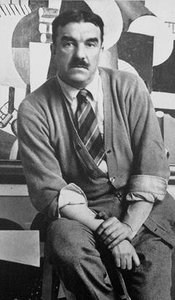
fernand léger, peintre, sculpteur et cinéaste français, est né le 4 février 1881 à Argentan, Orne, en Normandie inférieure. Son père élevait du bétail, et léger a initialement été formé à l'architecture de 1897 à 1899. Il s’est ensuite installé à Paris en 1900, se débrouillant comme dessinateur architectural.

développement artistique

Le travail précoce de léger a été influencé par l'impressionnisme, comme le montrent le jardin de ma mère (mon jardin) (1905). Après avoir fréquenté l'école des beaux-arts et l’académie Julian, il a commencé à travailler sérieusement comme peintre à 25 ans. Son style s'est développé en une forme personnelle de cubisme, que les critiques ont qualifié de "tubisme" pour son accent sur les formes cylindriques.

cubisme et le groupe des Puteaux

En 1910, léger a exposé au Salon d’automne aux côtés de jean metzinger et henri le fauconnier. Il a rejoint le groupe des Puteaux, également connu sous le nom de section d’or (la section dorée), avec d'autres artistes tels que francis picabia et marcel duchamp.

guerre et son influence sur le travail de léger

Les expériences de léger à la Première Guerre mondiale ont eu un impact significatif sur son œuvre. Pendant son séjour au front, il a produit des croquis d'artillerie, d'avions et de soldats. Sa peinture soldier avec un tuyau (1916) reflète cette période.

œuvre ultérieure et héritage

L'œuvre post-guerre de léger, caractérisée par des formes machine-like élégantes, le lia à la tradition de la peinture figurative française. Ses paysages animés de 1921 ont présenté des figures et des animaux dans des formes harmonieuses et rationalisées. œuvres clés: musées présentant l'œuvre de léger:
Fernand Léger

Fernand Léger

1881 - 1955 , France

En bref

  • Artistes Influents:
    • Cézanne
    • Impressionnisme
  • Date De Décès: 1955
  • Date De Naissance: 4 février 1881
  • Influences Artistiques: ['Pop Art']
  • Lieu De Naissance: Argentan, France
  • Mouvement Artistique: Cubisme, Tubisme
  • Nationalité: Française
  • Nom Complet: Fernand Léger
  • Oeuvres Notables:
    • La Grande Parade
    • Machine Élément
    • Femme assise
    • Paysages animés
Explorez des œuvres d'art classées par thèmes, styles et caractéristiques.