


x


 Acrylic On CanvasWallArtCubist Still Life
 1944Modern
 21.0 x 14.0 cm
Impression giclée ou sur toile de qualité musée, avec une production rapide et des finitions au choix. ( Switch to hand made Painting Switch to Image)





























Choisissez parmi nos formats prédéfinis qui respectent les proportions originales de l’œuvre.

Vous pouvez saisir vos propres dimensions pour vous adapter à un cadre ou à un espace spécifique. Si la taille sélectionnée ne correspond pas aux proportions de l'image originale, nous recadrerons l'œuvre ou étendrons l'image avec une bordure en miroir ou une couleur unie. Une maquette numérique vous sera envoyée pour approbation avant le début de la production.
Veuillez noter que l'aperçu à l'écran ne reflète pas le recadrage ou l'extension réelle. Seule la maquette montrera avec précision la composition finale.
Bien que des tailles personnalisées soient disponibles, nous vous recommandons de choisir une dimension dans la liste prédéfinie afin de préserver les proportions originales.
Livraison dans le monde entier () en 2 semaines au lieu des 4/5 semaines habituelles. (28 juillet)


New York
Format de reproduction
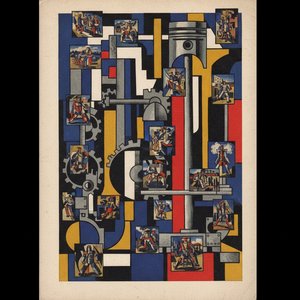
Fernand Léger's 1944 painting, "New York," is more than just a depiction of an American cityscape; it’s a vibrant declaration of the modern age. Executed in a moment of significant social and artistic change – following World War II and amidst the burgeoning industrial expansion of the United States – the work embodies Léger's signature style: a bold, geometric abstraction infused with a profound appreciation for the dynamism of machinery and urban life. Measuring 21 x 14 cm, this intimate scale allows for an intensely focused engagement with the painting’s complex composition.
Léger's artistic journey was profoundly shaped by his experiences during World War I, witnessing firsthand the devastating impact of industrial warfare. This experience fueled his desire to translate the raw power and geometric precision of machines into a new visual language. “New York” exemplifies this approach perfectly. The painting is deeply rooted in Cubism, particularly Léger’s own development of ‘Grob’, a style characterized by simplified forms, fragmented perspectives, and an emphasis on underlying structure. However, unlike traditional Cubist explorations, Léger wasn't primarily interested in dissecting objects; he sought to capture their *essence* – the inherent energy and mechanical logic that defined the modern world.
The use of bold, contrasting colors—primarily blues, reds, and yellows—further amplifies this sense of dynamism. These hues aren’t used for representational accuracy but rather to convey emotional intensity and visual impact, aligning with Léger's belief in art as a means of expressing fundamental truths about the universe.
“New York” was created during a period of immense transformation in American history. The post-war era saw unprecedented economic growth, technological innovation, and urbanization. The painting can be interpreted as a celebration of this progress – a visual testament to the nation’s industrial might and its role as a global superpower. The American flag itself carries significant symbolic weight, representing freedom, democracy, and national identity.
Furthermore, Léger's work reflects the broader artistic currents of the time, including Constructivism and Futurism, which similarly embraced machine aesthetics and celebrated technological advancement. His focus on geometric abstraction was a direct response to the perceived decadence of traditional art forms, advocating for a new visual language that reflected the realities of the 20th century.
"New York" possesses a powerful emotional resonance, capturing not just a physical scene but also a sense of energy, movement, and ambition. Léger’s masterful use of color and form creates a visually arresting image that continues to captivate viewers today. This painting represents a pivotal moment in the career of one of modern art's most innovative figures, solidifying his place as a pioneer of geometric abstraction and a visionary artist who dared to translate the language of machines into a profound artistic statement.

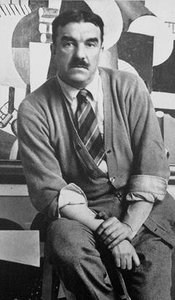
1881 - 1955 , France

Explorez l'évolution artistique de Willem de Kooning et son rôle clé dans l'expressionnisme abstrait américain. Analyse approfondie, influences européennes et héritage durable pour les collectionneurs avertis.
Plongez dans l'univers vibrant de Fernand Léger ! Découvrez les 25 œuvres majeures du cubisme et du tubisme, explorant formes géométriques et couleurs audacieuses. Retrouvez des reproductions d'art exceptionnelles sur Most-Famous-Paintings.com.

Explorez l'École d'Ashcan : un mouvement artistique révolutionnaire capturant la vie urbaine américaine au début du XXe siècle. Découvrez ses figures clés, thèmes et son héritage durable avec Most-Famous-Paintings.

Explore the art of transforming spaces with our comprehensive guide to wall decor. From historical movements to contemporary trends, discover how to curate impactful interiors and commission bespoke artwork for a truly personalized aesthetic.

Plongez au cœur du cubisme avec Most-Famous-Paintings ! Découvrez 10 chefs-d'œuvre révolutionnaires de Picasso, Braque et autres artistes majeurs. Explorez l'histoire, les techniques et les couleurs vibrantes de ce mouvement artistique unique. Retrouvez ces œuvres en reproduction sur Most-Famous-Paintings.com.


Restez informé(e) des dernières actualités artistiques, des offres exclusives et des idées de décoration.
Parlez-nous de votre projet et nos experts en art vous proposeront 3 suggestions d'œuvres personnalisées.
Laissez-nous sélectionner 3 œuvres rien que pour vous – Gratuit !


 Preview
 Partager
 Partager
 Détails de l'œuvre

 Télécharger
 Articles similaires
 Radiographie
 Diaporama
 Afficher la suite







 L'option verre n'est disponible que pour les dimensions inférieures à 110 cm.


