Sell Your Art
Liste de souhaits Mon panier Cart
PreviewPreview AR previewAR preview Switch to hand made Painting Switch to hand made PaintingSwitch to Image Switch to Image PartagerPartager
Détails de l'œuvreDétails de l'œuvre Ajouter aux favoris Ajouter aux favoris TéléchargerTélécharger Articles similairesArticles similaires RadiographieRadiographie DiaporamaDiaporama

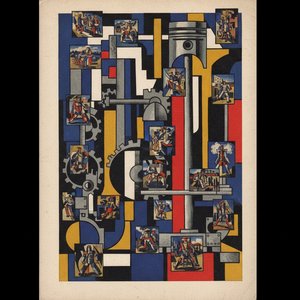
Study for Cinematic Mural, Study III

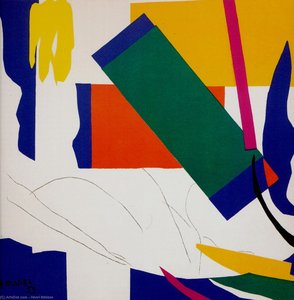
Fernand Léger’s Study for Cinematic Mural, Study III (1938–39) is a gouache painting depicting a cityscape dominated by a large red building amidst industrial forms and figures. Recognized anonymously at MoMA, it exemplifies Léger's exploration of modern aesthetics and anticipates Pop Art.

Explorez l'art de Fernand Léger (1881-1955), un pionnier du Cubisme et du 'Tubisme'. Découvrez ses peintures audacieuses et figuratives célébrant la vie moderne, les machines et la forme humaine. Un précurseur du Pop Art !

Giclée / Impression d'art

Impression giclée ou sur toile de qualité musée, avec une production rapide et des finitions au choix. (Switch to hand made Painting Switch to hand made PaintingSwitch to Image Switch to Image)

P118B $10
P118H $10
P118W $10
P438Z $10
P508JH $12
P508YH $12
P805H $10
P805Z $10
P919BZ $10
P919G $10
P919XJ $10
P959ZH $10
P968JZ $12
W106C $8
W218G $10
W218JH $8
W218Y $10
W307PJ $10
W316G $10
W316PJ $8
W316Y $10
W398PJ $8
W4111J $10
W500HY $15
W500JH $15
W692G $12
W849H $8
W940BG $15
W953PJ $8

Standard
custom
CM
INCH

Choisissez parmi nos formats prédéfinis qui respectent les proportions originales de l’œuvre.

largeur
hauteur

Vous pouvez saisir vos propres dimensions pour vous adapter à un cadre ou à un espace spécifique. Si la taille sélectionnée ne correspond pas aux proportions de l'image originale, nous recadrerons l'œuvre ou étendrons l'image avec une bordure en miroir ou une couleur unie. Une maquette numérique vous sera envoyée pour approbation avant le début de la production.
Veuillez noter que l'aperçu à l'écran ne reflète pas le recadrage ou l'extension réelle. Seule la maquette montrera avec précision la composition finale.
Bien que des tailles personnalisées soient disponibles, nous vous recommandons de choisir une dimension dans la liste prédéfinie afin de préserver les proportions originales.

Livraison dans le monde entier () en 2 semaines au lieu des 4/5 semaines habituelles. (30 juillet)

why_choose_icon
Livraison express gratuite dans le monde entier
why_choose_icon
Toile de lin de haute qualité
why_choose_icon
Assurance transport complète
why_choose_icon
Garantie de remboursement des frais de douane
why_choose_icon
Garantie de fidélité des couleurs
why_choose_icon
Politique de retour de 60 jours (uniquement en cas de défaut)
why_choose_icon
Garantie de remboursement à 100%
why_choose_icon
Réduction sur les achats groupés

Prix total

$ 68

reproduction

Study for Cinematic Mural, Study III

Giclée / Impression d'art

Format de reproduction

-

Prix total final

$ 68

En bref

  • Location: MoMA
  • Medium: Gouache, ink, colored pencil, and pencil on board
  • Title: Study for Cinematic Mural, Study III
  • Movement: Cubism
  • Artist: Fernand Léger
  • Dimensions: 51 x 38 cm
  • Notable elements or techniques: Bold simplification; Red building prominence

Quiz d'art

Chaque question ne comporte qu'une seule bonne réponse.

Question 1:
What artistic movement is Fernand Léger primarily associated with?
Question 2:
The painting depicts a prominent architectural element – what is it?
Question 3:
When was Fernand Léger born?
Question 4:
What is a key characteristic of Léger’s use of color in this artwork?
Question 5:
The painting reflects the influence of which historical period?

Description de l'œuvre

Fernand Léger: Embracing Industrial Rhythm

Fernand Léger’s “Study for Cinematic Mural Painting,” created in 1938–39, embodies the artist's singular vision of reconciling Cubism with the burgeoning influence of industrial aesthetics—a fusion that would foreshadow the rise of Pop Art decades later. Executed in gouache, ink, colored pencil, and pencil on cardboard, this artwork exemplifies Léger’s commitment to capturing not just visual reality but also the underlying pulse of modern life. Its dimensions – 20 x 14 7/8 inches (50.7 x 37.8 cm) – speak to a monumental ambition, reflecting Léger's desire to transform painting into a powerful tool for communicating ideas and emotions about the transformative era he inhabited.
  • Style: Léger’s style evolved dramatically throughout his career, initially rooted in Cubism’s fragmentation of form but gradually shifting towards a more expressive and simplified aesthetic. “Study for Cinematic Mural Painting” showcases this progression, retaining Cubist principles while prioritizing clarity and visual impact—a deliberate move away from the complex intellectual debates surrounding abstract art.
  • Technique: Léger employed a distinctive technique characterized by bold color palettes and geometric abstraction. He utilized gouache – an opaque watercolor medium – to achieve vibrant hues and create textured surfaces that conveyed movement and dynamism. Precise pencil lines delineated forms, reinforcing the artist’s commitment to structural integrity while simultaneously injecting visual energy into the composition.

A Reflection of Industrial Civilization

The artwork's historical context is inextricably linked to Léger’s fascination with industrial progress—a preoccupation that stemmed from his formative years spent observing the rhythms of rural life alongside the burgeoning factories and machinery of early 20th-century France. Léger saw in the machine age not merely a technological advancement but also a fundamental reshaping of human experience, prompting him to explore how painting could convey this profound transformation. The simplified geometric forms depicted—circles, squares, triangles—mirror the repetitive patterns found in industrial production, symbolizing the artist’s belief that art should engage with the realities of its time.
  • Symbolism: Léger's use of color is laden with symbolic significance. Dominant reds convey passion and energy, mirroring the heat generated by furnaces and engines—a visual metaphor for the transformative power of industrial forces. Blues represent stability and order, contrasting with the chaotic dynamism of the geometric shapes and reinforcing Léger’s conviction that beauty could coexist with functionality.

Emotional Resonance: Dynamism and Optimism

“Study for Cinematic Mural Painting” transcends mere visual representation; it communicates a palpable sense of optimism and vitality—a reflection of Léger's unwavering belief in the potential for human creativity to adapt to and celebrate the challenges posed by modernity. The artwork’s energetic composition captures the rhythm of industrial activity, inviting viewers to contemplate the transformative forces shaping the world around them. Léger’s bold aesthetic choices serve as a testament to his conviction that art could inspire awe and wonder while simultaneously fostering a deeper understanding of the complexities of contemporary life—a legacy that continues to resonate with artists and audiences alike.

Provenance & Reproduction Quality

This artwork, anonymously gifted, is housed at the Solomon R. Guggenheim Museum in New York. Scala Archives ensures the highest quality reproductions, faithful to the original colors and pictorial details that characterize Léger’s art. This commitment goes beyond simple documentation—it's about preserving the respect owed to the work and vision of one of the great masters of the twentieth century.

Biographie de l'artiste

jeune vie et formation

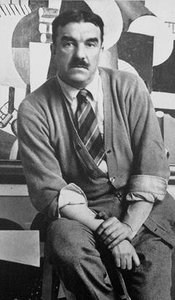
fernand léger, peintre, sculpteur et cinéaste français, est né le 4 février 1881 à Argentan, Orne, en Normandie inférieure. Son père élevait du bétail, et léger a initialement été formé à l'architecture de 1897 à 1899. Il s’est ensuite installé à Paris en 1900, se débrouillant comme dessinateur architectural.

développement artistique

Le travail précoce de léger a été influencé par l'impressionnisme, comme le montrent le jardin de ma mère (mon jardin) (1905). Après avoir fréquenté l'école des beaux-arts et l’académie Julian, il a commencé à travailler sérieusement comme peintre à 25 ans. Son style s'est développé en une forme personnelle de cubisme, que les critiques ont qualifié de "tubisme" pour son accent sur les formes cylindriques.

cubisme et le groupe des Puteaux

En 1910, léger a exposé au Salon d’automne aux côtés de jean metzinger et henri le fauconnier. Il a rejoint le groupe des Puteaux, également connu sous le nom de section d’or (la section dorée), avec d'autres artistes tels que francis picabia et marcel duchamp.

guerre et son influence sur le travail de léger

Les expériences de léger à la Première Guerre mondiale ont eu un impact significatif sur son œuvre. Pendant son séjour au front, il a produit des croquis d'artillerie, d'avions et de soldats. Sa peinture soldier avec un tuyau (1916) reflète cette période.

œuvre ultérieure et héritage

L'œuvre post-guerre de léger, caractérisée par des formes machine-like élégantes, le lia à la tradition de la peinture figurative française. Ses paysages animés de 1921 ont présenté des figures et des animaux dans des formes harmonieuses et rationalisées. œuvres clés: musées présentant l'œuvre de léger:
Fernand Léger

Fernand Léger

1881 - 1955 , France

En bref

  • Artistes Influents:
    • Cézanne
    • Impressionnisme
  • Date De Décès: 1955
  • Date De Naissance: 4 février 1881
  • Influences Artistiques: ['Pop Art']
  • Lieu De Naissance: Argentan, France
  • Mouvement Artistique: Cubisme, Tubisme
  • Nationalité: Française
  • Nom Complet: Fernand Léger
  • Oeuvres Notables:
    • La Grande Parade
    • Machine Élément
    • Femme assise
    • Paysages animés
Explorez des œuvres d'art classées par thèmes, styles et caractéristiques.