


x


 Preview
 Commander l'impression Acheter l'image haute résolution
 Partager
 Détails de l'œuvre
 Ajouter aux favoris
 Télécharger
 Articles similaires
 Radiographie
 Diaporama
Huile sur toile peinte à la main, avec cadre et dimensions personnalisés, réalisée sur commande par nos artistes.





























Choisissez parmi nos formats prédéfinis qui respectent les proportions originales de l’œuvre.

Vous pouvez saisir vos propres dimensions pour l'adapter à un cadre ou à un espace spécifique. Si la taille sélectionnée ne correspond pas aux proportions de l'image d'origine, nous recadrerons l'œuvre ou prolongerons la peinture avec des éléments peints à la main supplémentaires. Une maquette numérique vous sera envoyée pour approbation avant le début de la production.
Veuillez noter que l'aperçu à l'écran ne reflète pas le recadrage ou l'extension réels. Seule la maquette montrera fidèlement la composition finale.
Bien que des tailles personnalisées soient disponibles, nous vous recommandons de sélectionner une dimension dans la liste prédéfinie afin de préserver les proportions d'origine.
Livraison dans le monde entier () en 3 à 4 semaines au lieu des 5 semaines habituelles. (25 juillet). Aucune concession sur la qualité.


The acrobats polychrome
Format de reproduction
Fernand Léger's "The Acrobats," a vibrant polychrome painting, is more than just a depiction of figures engaged in a daring performance; it’s a profound meditation on the burgeoning spirit of modernity. Created by one of the most significant figures of early 20th-century art, this work encapsulates Léger’s revolutionary approach to representing the world – a synthesis of observation and abstraction that sought to capture the dynamism of industrial life and the human form within it. The painting's energy is palpable, radiating from the central interaction between the two principal acrobats, their postures suggesting both strength and vulnerability, mirroring the complex realities of a society undergoing rapid transformation.
Léger's artistic trajectory was profoundly shaped by his upbringing in rural Normandy. The stark geometries of farm machinery and the repetitive motions of agricultural labor instilled within him a fascination with form, which he later translated into a distinctly Cubist vocabulary. “The Acrobats” exemplifies this approach; the figures are not rendered with traditional representational accuracy but rather fragmented and reassembled, their bodies broken down into geometric shapes – cylinders, cones, and planes – that evoke the mechanical forms of the industrial age. This deliberate distortion isn’t merely stylistic; it's a conscious effort to convey movement and energy, capturing the fleeting moments of acrobatic performance with an unprecedented sense of immediacy. The use of bold, contrasting colors—primarily reds, blues, and yellows—further amplifies this effect, creating a visually arresting composition that demands attention.
Beyond its formal qualities, “The Acrobats” is laden with symbolic meaning. The acrobats themselves represent humanity’s adaptation to and engagement with the new industrial world. Their precarious poses – balancing on edges, defying gravity – can be interpreted as a metaphor for the challenges and uncertainties of this era. The figures are not presented as heroic or idealized; instead, they possess a raw, almost primitive quality, suggesting a return to fundamental human instincts in response to the overwhelming forces of modernity. Léger’s deliberate choice of subject matter—acrobats—was a pointed commentary on the changing role of man within society, reflecting the increasing influence of machines and technology.
Léger's technique in “The Acrobats” is characterized by its vigorous brushwork and layered application of paint. He built up his compositions through multiple layers, creating a textured surface that adds to the painting’s sense of dynamism. The artist’s use of color is particularly noteworthy, employing bright, saturated hues to heighten the visual impact and emphasize the geometric forms. “The Acrobats” cemented Léger's position as a leading figure in the development of Cubism and influenced generations of artists who followed. His bold experimentation with form and color paved the way for further explorations of abstraction and continues to resonate within contemporary art practice. This reproduction offers an exceptional opportunity to own a piece of art history, capturing the spirit of a pivotal moment in modern artistic innovation.


1881 - 1955 , France
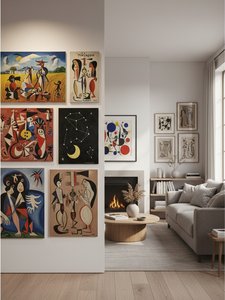
Plongez dans l'univers vibrant de Joan Miró ! Découvrez les 25 œuvres majeures du maître catalan, explorant le surréalisme et ses formes abstraites. Reproductions de qualité muséale & inspiration déco sur Most-Famous-Paintings.com.
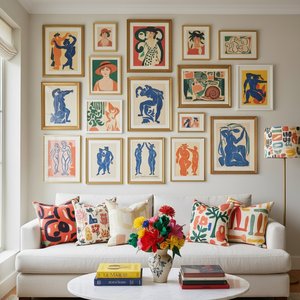
Plongez dans l'univers vibrant d'Henri Matisse ! Découvrez les 25 œuvres majeures du fauvisme et de la peinture moderne. Explorez La Danse, L'Atelier Rouge & plus encore. Reproductions de qualité musée sur Most-Famous-Paintings.com.
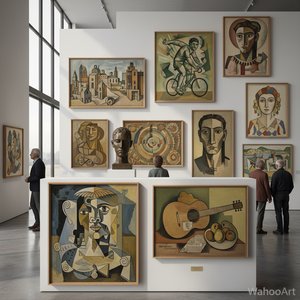
Plongez au cœur du cubisme avec ! Découvrez les 10 chefs-d'œuvre de Picasso, Braque et autres artistes révolutionnaires. Reproductions d'art haute qualité pour une décoration intérieure unique. Explorez la collection sur
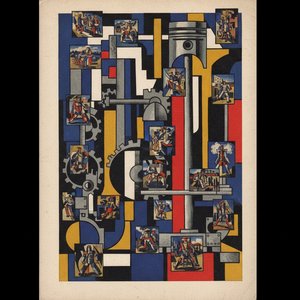
Plongez dans l'univers vibrant de Fernand Léger ! Découvrez les 25 œuvres majeures du cubisme et du tubisme, explorant formes géométriques et couleurs audacieuses. Retrouvez des reproductions d'art exceptionnelles sur Most-Famous-Paintings.com.
Plongez dans l'univers fascinant des 10 plus beaux tableaux dominés par le noir. Découvrez les histoires, techniques et symbolisme de chefs-d'œuvre intemporels. Reproductions d'art de qualité musée sur !


Restez informé(e) des dernières actualités artistiques, des offres exclusives et des idées de décoration.
Parlez-nous de votre projet et nos experts en art vous proposeront 3 suggestions d'œuvres personnalisées.
Laissez-nous sélectionner 3 œuvres rien que pour vous – Gratuit !


 Partager


 Afficher la suite







 L'option verre n'est disponible que pour les dimensions inférieures à 110 cm.


