


x


 Commander la reproduction Acheter l'image haute résolution
 Partager
 Détails de l'œuvre
 Ajouter aux favoris
 Télécharger
 Articles similaires
 Radiographie
 Diaporama
 AcryliqueDécoration muraleGerman Expressionism
 1913
1913 73.0 x 157.0 cm
Impression giclée ou sur toile de qualité musée, avec une production rapide et des finitions au choix.





























Choisissez parmi nos formats prédéfinis qui respectent les proportions originales de l’œuvre.

Vous pouvez saisir vos propres dimensions pour vous adapter à un cadre ou à un espace spécifique. Si la taille sélectionnée ne correspond pas aux proportions de l'image originale, nous recadrerons l'œuvre ou étendrons l'image avec une bordure en miroir ou une couleur unie. Une maquette numérique vous sera envoyée pour approbation avant le début de la production.
Veuillez noter que l'aperçu à l'écran ne reflète pas le recadrage ou l'extension réelle. Seule la maquette montrera avec précision la composition finale.
Bien que des tailles personnalisées soient disponibles, nous vous recommandons de choisir une dimension dans la liste prédéfinie afin de préserver les proportions originales.
Livraison dans le monde entier () en 2 semaines au lieu des 4/5 semaines habituelles. (23 juillet)


Stables
Format de reproduction
Franz Marc’s “Stables,” completed in 1913, stands as a cornerstone of German Expressionism—a movement that sought to convey raw emotion and subjective experience rather than objective representation. More than just a depiction of livestock within a barn, it's an exploration of primal beauty and spiritual contemplation, reflecting Marc’s unwavering belief in the transformative power of art.
Marc’s artistic journey was profoundly shaped by his time in Paris, where he encountered the groundbreaking innovations of Picasso, van Gogh, Gauguin, and Matisse—artists who championed expressive color and fractured perspectives. “Stables” embodies this influence, utilizing Cubism's characteristic geometric simplification to dissect forms and present multiple viewpoints simultaneously. However, unlike many Cubist predecessors, Marc abandons strict analytical rigor for a vibrant emotional resonance.
The painting explodes with hues of crimson, sapphire blue, lemon yellow, and verdant green—colors deliberately chosen not merely for visual appeal but as conduits for conveying profound feelings. These shades pulsate with energy, mirroring the dynamism inherent in the animal subjects themselves.
Marc’s fascination with animals stemmed from meticulous observation at the Berlin Zoo, where he spent countless hours sketching and studying their forms. Animals weren't simply subjects; they functioned as symbols—representing truth, purity, and beauty—concepts central to Marc’s philosophical worldview. In “Stables,” the horses are rendered in abstracted shapes that merge seamlessly with their surroundings, symbolizing a harmonious connection between humanity and nature.
The geometric abstraction serves not to diminish the animals' presence but rather to elevate them to a realm of spiritual significance. Each color contributes to this overarching message—red representing vitality and passion, blue embodying serenity and contemplation, yellow conveying optimism and illumination.
"Stables" was conceived during the tumultuous prelude to World War I, a period marked by anxieties about societal upheaval and impending conflict. Yet, despite this backdrop of apprehension, Marc retained an unwavering faith in art’s capacity to inspire regeneration—a conviction that would tragically prove premature when he succumbed to illness at the young age of 36.
Nevertheless, “Stables” continues to resonate powerfully today, securing its place as a seminal work within Expressionism and influencing subsequent movements like Abstract Expressionism. Artists such as Jackson Pollock and Willem de Kooning recognized Marc’s pioneering approach to color and emotion—a legacy that transcends time and reaffirms the enduring power of art to communicate profound spiritual truths.
Franz Marc's "Stables" remains a testament to his artistic vision—a bold declaration of faith in nature’s beauty and an exploration of the human spirit. Its vibrant colors, fractured forms, and symbolic depth continue to captivate viewers, inviting contemplation on themes of truth, purity, and harmony.

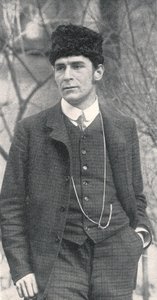
1880 - 1916 , Allemagne
Plongez au cœur de l'univers poétique de Marc Chagall. Découvrez 25 œuvres emblématiques, explorant couleurs vibrantes, rêves éthérés et une émotion universelle. Reproductions d’art de qualité supérieure disponibles sur Most-Famous-Paintings.com. Explorez la collection !
Plongez au cœur de l'Expressionnisme Allemand avec Most-Famous-Paintings. Découvrez 10 chefs-d'œuvre de Kandinsky, Munch et Kirchner. Explorez l'histoire, les couleurs et l'émotion derrière ces tableaux iconiques. Reproductions de qualité muséale disponibles sur Most-Famous-Paintings.com
Plongez au cœur du Cubisme Expressionniste ! Découvrez les 10 chefs-d'œuvre de Picasso, Braque et autres artistes majeurs. Histoire, techniques & émotions : trouvez l’inspiration déco sur Most-Famous-Paintings.com

Plongez dans l'univers impressionniste de Claude Monet ! Découvrez les 25 œuvres les plus célèbres du maître, de 'Impression soleil levant' aux 'Nymphéas'. Inspirez votre décoration intérieure avec Most-Famous-Paintings.com et trouvez la reproduction parfaite.

Explore the profound world of Franz Marc's Expressionist paintings. Discover his spiritual connection to animals, innovative use of color, and lasting impact on modern art history. Learn more at Most-Famous-Paintings.


Restez informé(e) des dernières actualités artistiques, des offres exclusives et des idées de décoration.
Parlez-nous de votre projet et nos experts en art vous proposeront 3 suggestions d'œuvres personnalisées.
Laissez-nous sélectionner 3 œuvres rien que pour vous – Gratuit !


 Partager

 Afficher la suite







 L'option verre n'est disponible que pour les dimensions inférieures à 110 cm.


