x

Impressions giclées ou sur toile de qualité musée, avec une production rapide et des finitions au choix. ( Commander la reproduction peinte à la main Télécharger l'image haute résolution)





























Choisissez parmi nos formats prédéfinis qui respectent les proportions originales de l’œuvre.

Vous pouvez saisir vos propres dimensions pour vous adapter à un cadre ou à un espace spécifique. Si la taille sélectionnée ne correspond pas aux proportions de l'image originale, nous recadrerons l'œuvre ou étendrons l'image avec une bordure en miroir ou une couleur unie. Une maquette numérique vous sera envoyée pour approbation avant le début de la production.
Veuillez noter que l'aperçu à l'écran ne reflète pas le recadrage ou l'extension réelle. Seule la maquette montrera avec précision la composition finale.
Bien que des tailles personnalisées soient disponibles, nous vous recommandons de choisir une dimension dans la liste prédéfinie afin de préserver les proportions originales.
Livraison dans le monde entier () en 2 semaines au lieu des 4/5 semaines habituelles. (18 août)


Cotopaxi
Format de la reproduction
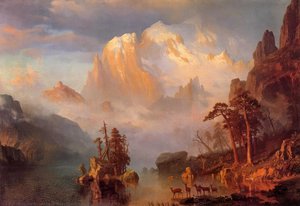
Frederic Edwin Church’s *Cotopaxi*, completed in 1862, stands as arguably the pinnacle of his prolific output and a cornerstone of the Hudson River School's artistic legacy. More than just a depiction of a towering volcano—the second highest peak in Ecuador—it embodies a profound engagement with scientific observation coupled with Romantic idealism, reflecting Church’s fascination with geological formations and his desire to convey awe at the grandeur of God’s creation.
Church embarked on an ambitious expedition to South America in 1853, driven by a fervent belief in the importance of experiencing nature firsthand. Before tackling the monumental canvas, he meticulously documented Cotopaxi through numerous preparatory sketches—a practice characteristic of the Hudson River School’s approach. These sketches weren't merely exercises in draughtsmanship; they served as crucial visual references, informing Church’s compositional decisions and ensuring accuracy in capturing the volcano’s imposing presence.
Church employed a masterful technique—primarily oil on canvas—characterized by layering glazes to achieve luminous effects. He meticulously blended pigments to reproduce the fiery hues of the volcanic eruption and the ethereal glow of the sunrise, demonstrating an unparalleled understanding of color theory. The painting’s style aligns perfectly with the Hudson River School's aesthetic principles: a deliberate rejection of Impressionistic fleetingness in favor of capturing enduring beauty and conveying spiritual contemplation. Church skillfully utilized atmospheric perspective—a technique pioneered by Cole—to create depth and realism, transporting viewers to the dramatic landscape.
*Cotopaxi* transcends its visual representation; it functions as a powerful allegory for confronting existential challenges. The volcano’s eruption symbolizes upheaval and transformation, mirroring the anxieties surrounding the American Civil War. Church deliberately positioned two suns—one on the left and one on the right—to represent divine illumination battling darkness, reinforcing the painting's thematic core. Furthermore, the inclusion of two figures gazing upon the vista underscores humanity’s insignificance against the immensity of nature while simultaneously celebrating its sublime splendor.
Today, *Cotopaxi* continues to captivate audiences worldwide. Its breathtaking depiction of Andean majesty—combined with Church's masterful artistic execution—solidifies its place as a masterpiece of Romantic landscape painting. Exhibited prominently at the Detroit Institute of Arts and other prestigious institutions, it serves as an enduring testament to the power of art to inspire wonder and contemplation about our relationship with the natural world.


1826 - 1900 , États-Unis d'Amérique

Explore the profound history and technical mastery of woodcut relief printing. From ancient origins to German Expressionism, discover how artists use the subtractive process to create iconic works. A definitive guide for art students, collectors, and historians.


Restez informé(e) des dernières actualités artistiques, des offres exclusives et des idées de décoration.
Parlez-nous de votre projet et nos experts en art vous proposeront 3 suggestions d'œuvres personnalisées.
Laissez-nous sélectionner 3 œuvres rien que pour vous – Gratuit !


 Aperçu en situation
 Envoyer
 Partager
 Détails de l'œuvre

 Télécharger
 Articles similaires
 Radiographie
 Diaporama


 Lire la suite







 L'option verre n'est disponible que pour les dimensions inférieures à 110 cm.