


x

 Oil On CanvasWallArtBaroque Rococo
 1760Early Modern
 87.0 x 108.0 cm
 Metropolitan Museum of Art
Impressions giclées ou sur toile de qualité musée, avec une production rapide et des finitions au choix. ( Commander la reproduction peinte à la main Télécharger l'image haute résolution)





























Choisissez parmi nos formats prédéfinis qui respectent les proportions originales de l’œuvre.

Vous pouvez saisir vos propres dimensions pour vous adapter à un cadre ou à un espace spécifique. Si la taille sélectionnée ne correspond pas aux proportions de l'image originale, nous recadrerons l'œuvre ou étendrons l'image avec une bordure en miroir ou une couleur unie. Une maquette numérique vous sera envoyée pour approbation avant le début de la production.
Veuillez noter que l'aperçu à l'écran ne reflète pas le recadrage ou l'extension réelle. Seule la maquette montrera avec précision la composition finale.
Bien que des tailles personnalisées soient disponibles, nous vous recommandons de choisir une dimension dans la liste prédéfinie afin de préserver les proportions originales.
Livraison dans le monde entier () en 2 semaines au lieu des 4/5 semaines habituelles. (22 août)


Untitled (D2X8MC)
Format de la reproduction
In the heart of the eighteenth century, the Neapolitan art scene pulsed with a unique energy, a blend of Venetian grandeur and a gritty, unyielding realism. At the center of this movement stood Gaspare Traversi, an artist whose brush possessed the rare ability to transform a simple domestic moment into a theatrical masterpiece. His work, particularly seen in pieces like The Concert, serves as a window into the Rococo era, capturing not just the elegance of the period but the profound psychological depth beneath the surface of social ritual. To behold a Traversi is to enter a space where light does not merely illuminate; it performs, carving figures out of the darkness with a precision learned from the great masters of the Caravaggist tradition.
Traversi’s technical prowess is rooted in his formative years under the legendary Francesco Solimena. From this mentorship, Traversi inherited a mastery of chiaroscuro—the dramatic interplay between light and shadow—which he utilized to instill his genre paintings with an almost palpable tension. In his compositions, the shadows are never empty; they are heavy with atmosphere, providing a velvety backdrop that pushes the brightly lit subjects toward the viewer. This technique creates a sense of intimacy and immediacy, making the observer feel less like a distant spectator and more like an uninvited guest standing at the edge of the room, witnessing a private moment of musical devotion or social intrigue.
What distinguishes Traversi from his contemporaries is his profound engagement with contemporary social realities. He was a master of genre painting, a style dedicated to depicting everyday life, yet he elevated these scenes through intricate detail and subtle social commentary. In works such as The Concert, we see more than just musicians; we see the hierarchy, the fashion, and the silent dialogues of the era. The placement of figures—the focused gaze of a young woman at the piano, the leaning postures of gentlemen engaged in hushed conversation—creates a rhythmic flow that mirrors the music being played. Every fold of silk, every glint of light on a violin, and every subtle facial expression contributes to a larger narrative about class, leisure, and the human condition.
For the discerning collector or interior designer, a reproduction of such a work offers more than mere decoration; it provides a focal point of intellectual and aesthetic depth. The painting’s ability to command attention through its complex composition makes it an ideal centerpiece for a sophisticated study, a grand salon, or a curated gallery wall. It brings with it a sense of historical weight and a timeless elegance that transcends modern trends. By integrating Traversi's dramatic vision into a contemporary space, one invites the soulful, theatrical spirit of Baroque Naples to reside within the home, offering a constant source of inspiration and a profound connection to the golden age of Italian painting.


1722 - 1770 , Italie
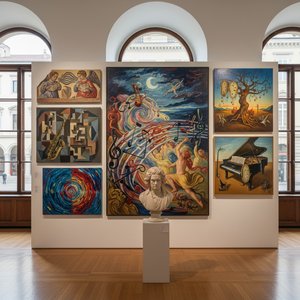
Explore the fascinating history of music's visual representation in art! From ancient symbolism to modern abstraction, discover how artists have captured sound and emotion on canvas. Expert insights & stunning examples.
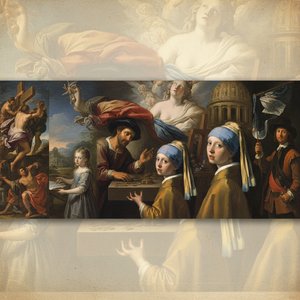
Plongez au cœur du baroque avec les 10 chefs-d'œuvre de Caravaggio, Rembrandt et Rubens. Découvrez l'histoire fascinante de ces artistes et leurs tableaux célèbres. Reproductions d'art de qualité muséale sur – Explorez la collection !

Explore the dramatic world of Baroque art! Discover iconic artists like Caravaggio & Rubens, defining techniques, and its lasting impact on art history. Expert insights for collectors & enthusiasts at Most-Famous-Paintings.

Explore the grandeur of Baroque portraiture! Discover Rubens, Van Dyck & the masters of 17th-century art. Uncover symbolism, techniques & lasting influence. Expert insights for collectors and enthusiasts.

Explore the captivating world of Pietro Longhi's Venetian scenes! Discover insightful analysis of his Rococo masterpieces & social commentary on 18th-century life. Learn about this 'Venetian Hogarth' and his lasting artistic legacy.


Restez informé(e) des dernières actualités artistiques, des offres exclusives et des idées de décoration.
Parlez-nous de votre projet et nos experts en art vous proposeront 3 suggestions d'œuvres personnalisées.
Laissez-nous sélectionner 3 œuvres rien que pour vous – Gratuit !


 Aperçu en situation
 Envoyer
 Partager
 Détails de l'œuvre

 Télécharger
 Articles similaires
 Radiographie
 Diaporama
 Lire la suite







 L'option verre n'est disponible que pour les dimensions inférieures à 110 cm.


