


x

Acquérez une image numérique haute résolution et optimisée, d'une qualité bien supérieure à l'aperçu en ligne.
Chaque fichier est méticuleusement préparé par nos spécialistes internes à l'aide d'outils avancés et d'une retouche manuelle experte. Nous garantissons que chaque image possède une clarté exceptionnelle, une précision des couleurs irréprochable et un niveau de détail fin.
Le fichier final est livré par e-mail sous 72 heures, optimisé pour une utilisation immédiate dans des contextes professionnels, éditoriaux et d'impression. Il offre la même qualité de confiance que celle utilisée par les plus grands studios de création, éditeurs et galeries.
Téléchargez un fichier haute résolution pour votre usage personnel, l'impression et vos projets créatifs. ( Acheter l'impression Acheter la peinture faite à la main)
En choisissant Most-Famous-Paintings.com, vous n'obtenez pas seulement une simple image : vous recevez une œuvre numérique sublimée avec professionnalisme, conçue avec précision et accompagnée d'une garantie de satisfaction. Voici tout ce qui accompagne automatiquement votre commande :

Votre fichier d'image numérique haute résolution vous sera envoyé par e-mail sous 72 heures après votre commande — prêt à un usage immédiat.

Votre œuvre d'art bénéficie d'une optimisation professionnelle grâce à des outils d'IA avancés et une retouche manuelle, garantissant un niveau maximal de détail, de clarté et de fidélité chromatique.

Vous avez accidentellement supprimé ou perdu votre fichier ? Pas d'inquiétude — nous vous le renverrons gratuitement, quand vous le souhaitez.

Profitez de votre œuvre d'art instantanément sans frais de douane ni de livraison — les téléchargements numériques sont toujours exonérés de taxes.

Nous garantissons que votre image numérique reproduit les couleurs de l'original aussi fidèlement que possible grâce à des outils professionnels et une gestion rigoureuse des couleurs.

Si vous n'êtes pas satisfait de votre image numérique, nous la retoucherons ou vous rembourserons 100% sous 60 jours — sans poser de questions.

Pas satisfait ? Obtenez un remboursement intégral dans les 60 jours suivant la réception de votre fichier numérique — sans aucune question posée.

Achetez 3 images, économisez 10% - Achetez 5, économisez 15% - Achetez 10+, économisez 20%. Idéal pour les projets créatifs, les galeries et les agences.
Georges Braque's “The Billiard Table,” painted in 1944, isn’t merely a depiction of an everyday scene; it’s a carefully constructed meditation on perception, memory, and the inherent instability of reality. This work, now housed at the Metropolitan Museum of Art, exemplifies the culmination of Braque's pioneering explorations within Cubism – specifically, Synthetic Cubism – offering a glimpse into his intensely personal approach to representing space and form. The painting immediately draws the viewer in with its muted palette dominated by deep greens, browns, and ochres, creating an atmosphere of quiet contemplation tinged with a subtle melancholy. It’s a world rendered not as it appears, but as it is *remembered*, or perhaps, as it feels.
Braque masterfully employs the core tenets of Synthetic Cubism to achieve this effect. The billiard table itself isn’t presented with photographic accuracy; instead, it's fractured into a series of interlocking planes and geometric shapes, mirroring the fragmented nature of experience. The surrounding objects – a vase, a chair, a clarinet, and various smaller items – are similarly deconstructed, their forms overlapping and intersecting in a way that defies traditional perspective. This deliberate distortion creates an unsettling yet compelling sense of spatial ambiguity; the table seems to float within a shallow space, while the objects around it appear to press in from multiple directions simultaneously. The artist’s visible brushstrokes, layered with thin washes of paint, contribute significantly to the painting's textural richness and add a tactile quality to the seemingly abstract forms.
Beyond its formal innovations, “The Billiard Table” is rich in symbolic potential. The billiard table itself has long been associated with games of chance, strategy, and the relentless passage of time – each shot a fleeting moment, each game an attempt to control an unpredictable outcome. The fragmented arrangement of objects suggests a collection of memories, each piece representing a specific experience or association. The clarinet, for instance, evokes musicality and perhaps a sense of nostalgia, while the vase hints at domestic tranquility disrupted by the chaotic composition. Some art historians have interpreted the painting as a reflection on the artist’s own struggles with creative block during World War II, suggesting that the fragmented forms represent the shattered state of his artistic vision.
Further research confirms Braque's deliberate approach to this work. As documented by Tate’s online collection page, he began creating a series of seven billiard tables in 1944, alongside eight related paintings. This project was undertaken during a period of intense personal and artistic reflection for the artist. The use of sand mixed with oil paint – as noted in WikiArt's analysis – adds an intriguing textural element to the surface, further enhancing the painting’s tactile quality. The Met Museum’s description highlights Braque’s meticulous process of relating the room’s space to the canvas, a testament to his dedication to capturing not just visual reality but also the subjective experience of perception.
Ultimately, “The Billiard Table” is more than just a still life; it's a profound exploration of the complexities of memory, time, and the nature of representation itself. Its evocative atmosphere and masterful execution make it a compelling work for collectors and interior designers seeking to infuse their spaces with a sense of intellectual depth and artistic intrigue.

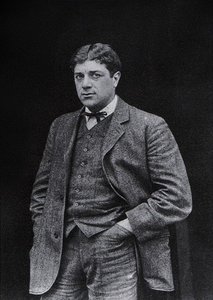
1882 - 1963 , France


Restez informé(e) des dernières actualités artistiques, des offres exclusives et des idées de décoration.
Parlez-nous de votre projet et nos experts en art vous proposeront 3 suggestions d'œuvres personnalisées.
Laissez-nous sélectionner 3 œuvres rien que pour vous – Gratuit !


 Aperçu en situation
 Partager
 Partager
 Détails

 Télécharger l'image
 Articles similaires
 Radiographie
 Voir le diaporama

 Afficher la suite


