


x

Acquérez une image numérique haute résolution et optimisée, d'une qualité bien supérieure à l'aperçu en ligne.
Chaque fichier est méticuleusement préparé par nos spécialistes internes à l'aide d'outils avancés et d'une retouche manuelle experte. Nous garantissons que chaque image possède une clarté exceptionnelle, une précision des couleurs irréprochable et un niveau de détail fin.
Le fichier final est livré par e-mail sous 72 heures, optimisé pour une utilisation immédiate dans des contextes professionnels, éditoriaux et d'impression. Il offre la même qualité de confiance que celle utilisée par les plus grands studios de création, éditeurs et galeries.
Téléchargez un fichier haute résolution pour votre usage personnel, l'impression et vos projets créatifs. ( Commander l'impression Commander la reproduction peinte à la main)
En choisissant Most-Famous-Paintings.com, vous n'obtenez pas seulement une simple image : vous recevez une œuvre numérique sublimée avec professionnalisme, conçue avec précision et accompagnée d'une garantie de satisfaction. Voici tout ce qui accompagne automatiquement votre commande :

Votre fichier d'image numérique haute résolution vous sera envoyé par e-mail sous 72 heures après votre commande — prêt à un usage immédiat.

Votre œuvre d'art bénéficie d'une optimisation professionnelle grâce à des outils d'IA avancés et une retouche manuelle, garantissant un niveau maximal de détail, de clarté et de fidélité chromatique.

Vous avez accidentellement supprimé ou perdu votre fichier ? Pas d'inquiétude — nous vous le renverrons gratuitement, quand vous le souhaitez.

Profitez de votre œuvre d'art instantanément sans frais de douane ni de livraison — les téléchargements numériques sont toujours exonérés de taxes.

Nous garantissons que votre image numérique reproduit les couleurs de l'original aussi fidèlement que possible grâce à des outils professionnels et une gestion rigoureuse des couleurs.

Si vous n'êtes pas satisfait de votre image numérique, nous la retoucherons ou vous rembourserons 100% sous 60 jours — sans poser de questions.

Pas satisfait ? Obtenez un remboursement intégral dans les 60 jours suivant la réception de votre fichier numérique — sans aucune question posée.

Achetez 3 images, économisez 10% - Achetez 5, économisez 15% - Achetez 10+, économisez 20%. Idéal pour les projets créatifs, les galeries et les agences.
“Trash Anemones,” painted by Georges Braque in 1925, isn't merely a depiction of marine life; it’s a meticulously constructed meditation on the transient nature of beauty, decay, and the very act of observation. This vibrant canvas, now housed within the collections of museums worldwide, offers a compelling glimpse into the heart of Cubism – a movement that fundamentally challenged traditional artistic representation and invited viewers to actively participate in constructing meaning.
The painting immediately arrests the eye with its bold palette: a swirling vortex of browns, ochres, greens, and yellows dominates the composition. Braque masterfully employs a technique reminiscent of both collage and oil paint, layering textures that mimic the rough surfaces of seaweed and decaying organic matter. The central figure – a stylized basket overflowing with what appears to be discarded anemones – is rendered in fragmented geometric shapes, characteristic of Cubism’s deconstructionist approach. Rather than striving for photographic realism, Braque breaks down forms into their essential components, presenting them simultaneously from multiple viewpoints. This creates an unsettling yet captivating sense of spatial ambiguity, forcing the viewer to actively piece together the image.
To fully appreciate “Trash Anemones,” it’s crucial to understand the historical context in which it was created. Braque, alongside Pablo Picasso, spearheaded the development of Cubism during the early 20th century – a radical departure from the prevailing artistic norms of the time. Influenced by Paul Cézanne's emphasis on geometric forms and his exploration of multiple perspectives, Braque and Picasso sought to represent objects not as they appear to the eye in a single moment, but as they exist within the mind’s perception. This involved dissecting subjects into their constituent parts, reassembling them in an abstract manner, and presenting them from various viewpoints simultaneously on a single canvas.
The influence of Paul Cézanne is particularly evident in Braque's use of flattened planes and simplified forms. However, unlike Cézanne’s focus on capturing the essence of nature, Cubism aimed to capture the *process* of seeing – the way our minds actively construct reality through perception. “Trash Anemones” embodies this principle perfectly, reflecting a world viewed not as a static entity but as a dynamic interplay of shapes and colors.
Beyond its formal innovations, "Trash Anemones" is rich in symbolic potential. The title itself immediately suggests a juxtaposition of beauty and decay – a deliberate provocation that invites contemplation on the ephemeral nature of existence. The discarded anemones, rendered with a delicate yet unsettling detail, could be interpreted as symbols of lost beauty, fleeting moments, or even the inevitable process of decomposition. The basket, acting as a container, might represent memory, preservation, or perhaps simply the act of collecting and categorizing the fragments of experience.
Furthermore, the inclusion of seemingly random elements – the fragmented shapes, the muted color palette – hints at the subjective nature of perception. Braque isn’t merely depicting an anemone; he's presenting a *representation* of it, filtered through his own artistic vision and influenced by his personal experiences. The presence of letters and numbers within the composition, echoing earlier Cubist experiments with typography, further underscores this idea – suggesting that art itself is a form of communication, a system of signs and symbols.
“Trash Anemones” continues to resonate with viewers today not only for its groundbreaking artistic innovations but also for its profound emotional depth. The painting’s unsettling beauty evokes a sense of melancholy, prompting us to consider the transient nature of all things and the inherent fragility of beauty itself. It's a testament to Braque's ability to transform ordinary subjects into extraordinary works of art – capturing not just what he saw but also what he felt.
Reproductions of this iconic painting offer an accessible way to experience its power and complexity, bringing its evocative imagery into any interior space. Whether displayed in a modern gallery or a private home, “Trash Anemones” remains a potent reminder of the transformative potential of art and its ability to challenge our perceptions of reality.

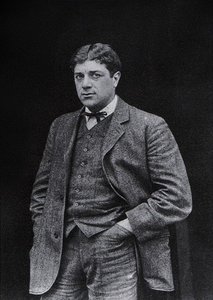
1882 - 1963 , France


Restez informé(e) des dernières actualités artistiques, des offres exclusives et des idées de décoration.
Parlez-nous de votre projet et nos experts en art vous proposeront 3 suggestions d'œuvres personnalisées.
Laissez-nous sélectionner 3 œuvres rien que pour vous – Gratuit !


 Aperçu en situation
 Envoyer
 Partager
 Détails de l'œuvre

 Télécharger
 Articles similaires
 Radiographie
 Diaporama
 Lire la suite


