


x

 Oil On CanvasWallArtEarly Netherlandish Painting
 1520
1520 40.0 x 32.0 cm
 Musée Städel
Impressions giclées ou sur toile de qualité musée, avec une production rapide et des finitions au choix. ( Acheter la peinture faite à la main Acheter l'image)





























Choisissez parmi nos formats prédéfinis qui respectent les proportions originales de l’œuvre.

Vous pouvez saisir vos propres dimensions pour vous adapter à un cadre ou à un espace spécifique. Si la taille sélectionnée ne correspond pas aux proportions de l'image originale, nous recadrerons l'œuvre ou étendrons l'image avec une bordure en miroir ou une couleur unie. Une maquette numérique vous sera envoyée pour approbation avant le début de la production.
Veuillez noter que l'aperçu à l'écran ne reflète pas le recadrage ou l'extension réelle. Seule la maquette montrera avec précision la composition finale.
Bien que des tailles personnalisées soient disponibles, nous vous recommandons de choisir une dimension dans la liste prédéfinie afin de préserver les proportions originales.
Livraison dans le monde entier () en 2 semaines au lieu des 4/5 semaines habituelles. (23 août)


The Annunciation
Format de la reproduction
Gerard David's "The Annunciation," painted in 1520, is more than just a depiction of a biblical narrative; it’s a profound meditation on faith, humility, and the transformative power of divine grace. Measuring 40 x 32 cm, this intimate work offers a remarkably detailed glimpse into the artistic sensibilities of one of the most significant figures of the early Netherlandish Renaissance. David's meticulous attention to detail, combined with his masterful understanding of light and shadow – hallmarks of what would become known as “Flemish Light” – elevates this scene beyond mere illustration, transforming it into a deeply moving experience for the viewer.
The painting portrays the pivotal moment when the Archangel Gabriel appears to Mary to announce her impending role as the mother of Jesus. The composition is carefully structured to emphasize the reverence and solemnity of the event. Mary, kneeling in prayer with a staff – a symbol of protection and devotion – occupies the lower portion of the canvas, while Gabriel stands above her, radiating an aura of celestial authority. The inclusion of the bed in the background subtly references the Virgin’s purity and virginity, central tenets of Christian belief. The book on the right side, often interpreted as representing Mary's acceptance of God's will, adds another layer of symbolic richness to the scene. David’s use of perspective, though not entirely linear, creates a believable three-dimensional space, drawing the viewer into the heart of this sacred encounter.
David was a master of oil painting, employing a technique characterized by smooth gradations of color and meticulous detail. His brushwork is remarkably delicate, particularly evident in the rendering of Mary’s garments and the angel's flowing robes. Influenced by early Italian Renaissance artists like Masaccio and Donatello, David skillfully utilized *chiaroscuro* – the dramatic contrast between light and dark – to model forms and create a sense of volume. This technique, combined with his deep understanding of Flemish artistic traditions, resulted in a painting that is both technically brilliant and emotionally resonant. The use of rich pigments, including vibrant blues and reds, further enhances the visual impact of the work.
"The Annunciation" was created during a period of significant religious and intellectual ferment in Europe. The rise of humanism encouraged a renewed interest in classical antiquity, while the Protestant Reformation challenged established Catholic doctrines. Despite these turbulent times, David remained committed to producing works that celebrated Christian faith and morality. His paintings were highly sought after by wealthy patrons – including members of Bruges’ merchant elite – who commissioned them for private devotion. Following a period of relative obscurity in the 17th century, Gerard David's work was rediscovered and championed by 19th-century art historians, solidifying his place as a pivotal figure in the Northern Renaissance and ensuring that "The Annunciation" continues to inspire awe and contemplation today.


1450 - 1523 , Netherlands

Explore the captivating world of Gerard David, a pivotal figure bridging late medieval artistry with the Early Renaissance. Discover his innovative techniques, religious masterpieces, and enduring legacy – a must-read for discerning art collectors.

Explorez le rôle stratégique des reproductions d'art dans les galeries d'élite. Expertise, qualité artisanale et conseils personnalisés pour enrichir votre collection ou sublimer votre intérieur. Découvrez l'art authentifié.

Découvrez des reproductions artistiques d'exception réalisées par des artistes talentueux. Qualité garantie, personnalisation sur mesure et conseils d'experts pour sublimer votre intérieur ou enrichir votre collection. Most-Famous-Paintings : l'art à portée de main.
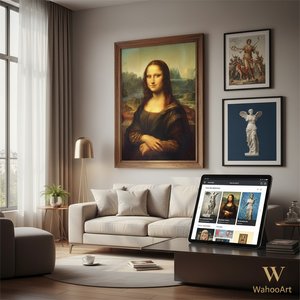
Plongez au cœur du Louvre avec les 25 œuvres incontournables : Mona Lisa, Venus de Milo et bien plus. Découvrez l'histoire fascinante des artistes, leurs techniques et trouvez l'inspiration déco idéale. Reproductions tableaux de qualité musée sur Most-Famous-Paintings.com

: Reproductions d'art de qualité muséale (peinture à l'huile, impressions sur toile). Personnalisation & livraison mondiale. Idéal pour décorateurs et amateurs d'art exigeants.


Restez informé(e) des dernières actualités artistiques, des offres exclusives et des idées de décoration.
Parlez-nous de votre projet et nos experts en art vous proposeront 3 suggestions d'œuvres personnalisées.
Laissez-nous sélectionner 3 œuvres rien que pour vous – Gratuit !


 Aperçu en situation
 Partager
 Partager
 Détails

 Télécharger l'image
 Articles similaires
 Radiographie
 Voir le diaporama
 Afficher la suite







 L'option verre n'est disponible que pour les dimensions inférieures à 110 cm.


