


x

 Acrylique sur toileArt muralRenaissance Mannerism
 1570
1570 53.0 x 41.0 cm
 Nationalmuseum
Acquérez une image numérique haute résolution et optimisée, d'une qualité bien supérieure à l'aperçu en ligne.
Chaque fichier est méticuleusement préparé par nos spécialistes internes à l'aide d'outils avancés et d'une retouche manuelle experte. Nous garantissons que chaque image possède une clarté exceptionnelle, une précision des couleurs irréprochable et un niveau de détail fin.
Le fichier final est livré par e-mail sous 72 heures, optimisé pour une utilisation immédiate dans des contextes professionnels, éditoriaux et d'impression. Il offre la même qualité de confiance que celle utilisée par les plus grands studios de création, éditeurs et galeries.
Téléchargez un fichier haute résolution pour votre usage personnel, l'impression et vos projets créatifs. ( Commander l'impression Commander la reproduction peinte à la main)
En choisissant Most-Famous-Paintings.com, vous n'obtenez pas seulement une simple image : vous recevez une œuvre numérique sublimée avec professionnalisme, conçue avec précision et accompagnée d'une garantie de satisfaction. Voici tout ce qui accompagne automatiquement votre commande :

Votre fichier d'image numérique haute résolution vous sera envoyé par e-mail sous 72 heures après votre commande — prêt à un usage immédiat.

Votre œuvre d'art bénéficie d'une optimisation professionnelle grâce à des outils d'IA avancés et une retouche manuelle, garantissant un niveau maximal de détail, de clarté et de fidélité chromatique.

Vous avez accidentellement supprimé ou perdu votre fichier ? Pas d'inquiétude — nous vous le renverrons gratuitement, quand vous le souhaitez.

Profitez de votre œuvre d'art instantanément sans frais de douane ni de livraison — les téléchargements numériques sont toujours exonérés de taxes.

Nous garantissons que votre image numérique reproduit les couleurs de l'original aussi fidèlement que possible grâce à des outils professionnels et une gestion rigoureuse des couleurs.

Si vous n'êtes pas satisfait de votre image numérique, nous la retoucherons ou vous rembourserons 100% sous 60 jours — sans poser de questions.

Pas satisfait ? Obtenez un remboursement intégral dans les 60 jours suivant la réception de votre fichier numérique — sans aucune question posée.

Achetez 3 images, économisez 10% - Achetez 5, économisez 15% - Achetez 10+, économisez 20%. Idéal pour les projets créatifs, les galeries et les agences.
Giuseppe Arcimboldo's "The Cook," painted around 1570 and now residing in the Nationalmuseum of Stockholm, isn’t merely a still life; it’s a meticulously constructed illusion, a vibrant testament to the Renaissance fascination with metamorphosis and symbolic representation. More than just a depiction of roasted meats arranged within a human form, this painting is an invitation into a world where art transcends the boundaries of realism and embraces the power of suggestion.
At first glance, the image presents a somewhat grotesque, yet undeniably compelling, male head. However, a subtle shift in perspective – turning the canvas upside down – reveals a startling transformation: the figure’s eye becomes the watchful gaze of a chicken, the nose morphs into a plump turkey, and the mouth is framed by a generous helping of sausages. This ingenious visual trickery, known as pareidolia, immediately draws attention to Arcimboldo's masterful manipulation of form and his profound understanding of how viewers perceive images. The arrangement isn’t random; each element – the glistening cuts of meat, the vibrant vegetables, the carefully positioned fruits – contributes to a larger narrative, hinting at abundance, feasting, and perhaps even the fleeting nature of earthly pleasures.
Arcimboldo’s work emerged during a period of intense intellectual ferment in Europe. The Renaissance witnessed a renewed interest in classical antiquity, alongside burgeoning scientific inquiry and philosophical speculation. The concept of *memento mori* – the reminder of mortality – was prevalent, prompting artists to explore themes of transience and decay. Arcimboldo’s “The Cook” can be interpreted through this lens, with its emphasis on perishable goods serving as a poignant meditation on the ephemeral nature of life.
Furthermore, the painting reflects the lavish tastes and conspicuous consumption of the European courts during the late 16th century. Emperors Rudolf II and Maximilian I were renowned for their extravagant collections of exotic objects – animals, plants, minerals, and artworks – which served as symbols of power and prestige. Arcimboldo’s portraits, often commissioned by these rulers, cleverly incorporated elements from their personal collections, transforming everyday items into elaborate allegories.
Arcimboldo's technique was remarkably innovative for his time. He employed a meticulous layering of oil paint on panel, painstakingly arranging each object to create the illusion of depth and volume. The use of vibrant colors – rich reds, browns, yellows, and greens – further enhances the painting’s visual impact. Crucially, he didn't simply glue or attach objects; he painted them directly onto the surface, seamlessly integrating them into the overall composition.
The artist’s skill lies not only in his technical proficiency but also in his ability to manipulate perspective and create a convincing illusion of three-dimensionality. The careful positioning of each element – from the glistening cuts of meat to the delicate arrangement of fruits – contributes to the painting's overall sense of realism, despite its fantastical nature. It’s a testament to Arcimboldo’s artistic vision that he could transform disparate objects into a cohesive and compelling portrait.
"The Cook" transcends mere visual spectacle; it evokes a complex range of emotions. The painting's humor, combined with its subtle melancholy, invites viewers to contemplate the beauty and fragility of life. There’s an element of playful trickery, but also a deeper sense of reflection on mortality and the transient nature of earthly pleasures.
Arcimboldo’s work continues to fascinate audiences today, demonstrating his enduring artistic genius and his ability to create images that are both intellectually stimulating and emotionally resonant. Whether viewed as a whimsical portrait or a profound meditation on life and death, “The Cook” remains a captivating masterpiece of the Renaissance era.

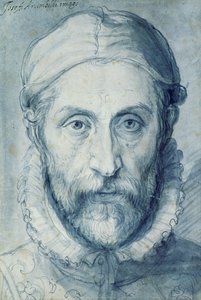
1527 - 1593 , Italie


Restez informé(e) des dernières actualités artistiques, des offres exclusives et des idées de décoration.
Parlez-nous de votre projet et nos experts en art vous proposeront 3 suggestions d'œuvres personnalisées.
Laissez-nous sélectionner 3 œuvres rien que pour vous – Gratuit !


 Aperçu en situation
 Envoyer
 Partager
 Détails de l'œuvre

 Télécharger
 Articles similaires
 Radiographie
 Diaporama
 Lire la suite


