x

Impressions giclées ou sur toile de qualité musée, avec une production rapide et des finitions au choix. ( Commander la reproduction peinte à la main Télécharger l'image haute résolution)
Choisissez parmi nos formats prédéfinis qui respectent les proportions originales de l’œuvre.

Vous pouvez saisir vos propres dimensions pour vous adapter à un cadre ou à un espace spécifique. Si la taille sélectionnée ne correspond pas aux proportions de l'image originale, nous recadrerons l'œuvre ou étendrons l'image avec une bordure en miroir ou une couleur unie. Une maquette numérique vous sera envoyée pour approbation avant le début de la production.
Veuillez noter que l'aperçu à l'écran ne reflète pas le recadrage ou l'extension réelle. Seule la maquette montrera avec précision la composition finale.
Bien que des tailles personnalisées soient disponibles, nous vous recommandons de choisir une dimension dans la liste prédéfinie afin de préserver les proportions originales.
Livraison dans le monde entier () en 2 semaines au lieu des 4/5 semaines habituelles. (13 août)


Red Jackson
Format de la reproduction
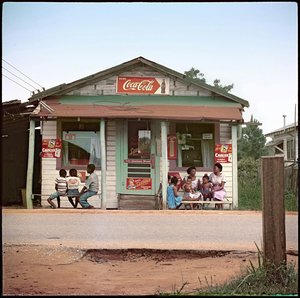
Gordon Parks’ “Red Jackson, Harlem, New York,” captured in 1948, stands as an enduring emblem of documentary photography and the profound ability to convey emotion through seemingly simple visual elements. Published initially in Life magazine during a pivotal moment in American history—the burgeoning Civil Rights Movement—this photograph transcends mere representation; it invites contemplation on themes of isolation, resilience, and the subtle complexities of human experience.
Parks’ masterful composition utilizes a close-up perspective, focusing intently on Red Jackson's face as he gazes out from behind a window. The deliberate framing emphasizes his solitude against the backdrop of an urban cityscape glimpsed through the glass—a visual metaphor for both separation and yearning for connection. Parks skillfully employs dramatic lighting, casting deep shadows that sculpt Jackson’s features and heighten the photograph’s melancholic mood.
The image is executed as a silver gelatin print, a technique rooted in traditional photographic practices. Parks meticulously controlled exposure and development processes to achieve a high contrast ratio—a deliberate choice that amplifies the visual impact of the photograph and underscores its emotional resonance. The grainy texture inherent in the print adds depth and materiality to the artwork, grounding it in the physicality of the medium.
Parks’ meticulous attention to detail extends beyond technical execution; he carefully considered the placement of elements within the frame—the window itself serving as a crucial compositional device—to create a balanced yet emotionally charged image. The diagonal lines formed by the window panes contribute dynamism and visual interest, subtly guiding the viewer's gaze.
“Red Jackson” operates on multiple symbolic levels. The window represents confinement and introspection, mirroring Jackson’s contemplative posture and expression—a silent witness to the world outside. Simultaneously, it symbolizes a desire for escape or transcendence, hinting at the broader aspirations of individuals confronting adversity. Parks' deliberate use of black and white reinforces the photograph’s solemn tone, stripping away distracting color palettes to concentrate on conveying raw emotion.
The photograph’s enduring power lies in its ability to capture a fleeting moment of human vulnerability—a quiet observation that speaks volumes about resilience and dignity. It serves as a poignant reminder of Parks' commitment to documenting marginalized communities with compassion and artistic integrity, cementing his legacy as one of the most influential photographers of the 20th century.
Published in Life magazine during the height of the Civil Rights Movement, “Red Jackson” reflects the urgent need for visual narratives that illuminate the realities faced by African Americans striving for equality. Parks’ work challenged prevailing stereotypes and fostered empathy for individuals grappling with systemic injustice—a contribution that continues to resonate today.
The photograph's impact extended beyond journalistic reporting; it became a cultural touchstone, sparking dialogue about identity, representation, and the transformative potential of art to inspire social change. Gordon Parks’ “Red Jackson” remains an unforgettable testament to his artistic vision and enduring influence on American culture.

En tant qu'artiste autodidacte, Parks a commencé sa carrière comme photographe, devenant finalement le premier Afro-Américain à travailler pour les magazines Life et Vogue. Ses photographies emblématiques des Américains démunis durant les années 1940, réalisées dans le cadre d'un projet gouvernemental fédéral, témoignent de son talent et de son dévouement.
L'héritage de Gordon Parks dépasse son impressionnant corpus d'œuvres, car il a ouvert la voie à des générations futures d'artistes afro-américains. Ses contributions au photojournalisme, au cinéma et à la musique continuent d'inspirer et d'influencer les artistes aujourd'hui.

1912 - 2006 , États-Unis d'Amérique

Explore the profound history of documentary photography. From early daguerreotypes to social reform movements, discover how the lens captures truth, preserves vanishing cultures, and shapes our global visual narrative through an expert art-historical lens.

Explore the profound artistry of black and white photography. From the chemistry of gelatin silver to the chiaroscuro of the Old Masters, discover how monochrome captures the eternal essence of light, form, and emotion for the discerning art collector.

Explore the profound evolution of photography from the camera obscura to the digital renaissance. Discover how light-sensitive chemistry paved the way for modern digital artistry and the enduring connection between lens and canvas in fine art.

Explore the profound history of Pictorialism, the movement that elevated photography to fine art. Discover the masters, techniques, and enduring legacy of this transformative era through an expert art-historical lens.


Restez informé(e) des dernières actualités artistiques, des offres exclusives et des idées de décoration.
Parlez-nous de votre projet et nos experts en art vous proposeront 3 suggestions d'œuvres personnalisées.
Laissez-nous sélectionner 3 œuvres rien que pour vous – Gratuit !


 Envoyer
 Partager
 Détails de l'œuvre

 Télécharger
 Articles similaires
 Diaporama


 Lire la suite




































 L'option verre n'est disponible que pour les dimensions inférieures à 110 cm.