x

Impressions giclées ou sur toile de qualité musée, avec une production rapide et des finitions au choix. ( Passer à la peinture faite à la main Passer à l'image)





























Choisissez parmi nos formats prédéfinis qui respectent les proportions originales de l’œuvre.

Vous pouvez saisir vos propres dimensions pour vous adapter à un cadre ou à un espace spécifique. Si la taille sélectionnée ne correspond pas aux proportions de l'image originale, nous recadrerons l'œuvre ou étendrons l'image avec une bordure en miroir ou une couleur unie. Une maquette numérique vous sera envoyée pour approbation avant le début de la production.
Veuillez noter que l'aperçu à l'écran ne reflète pas le recadrage ou l'extension réelle. Seule la maquette montrera avec précision la composition finale.
Bien que des tailles personnalisées soient disponibles, nous vous recommandons de choisir une dimension dans la liste prédéfinie afin de préserver les proportions originales.
Livraison dans le monde entier () en 2 semaines au lieu des 4/5 semaines habituelles. (11 août)


Composition Design pour
Format de la reproduction
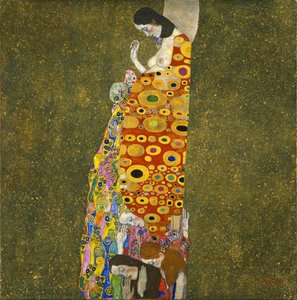
Gustav Klimt’s “Composition Design for” – a drawing executed in 1882 – offers an intimate and invaluable glimpse into the genesis of one of his most celebrated paintings. More than just a preparatory sketch, this work embodies Klimt's burgeoning artistic vision, revealing the meticulous process by which he translated abstract ideas onto canvas. Born in Baumgarten near Vienna in 1862, Klimt’s early life was shaped by both familial artistry – his father, Ernst, a gold engraver – and a series of moves that instilled within him a keen awareness of human interaction and a sensitivity to the nuances of urban landscapes. This drawing, created during his studies at the Vienna Kunstgewerbeschule, demonstrates a remarkable technical skill already present in his youth, honed by his father’s craft and an undeniable artistic talent.
The drawing itself is deceptively simple yet profoundly rich in detail. It depicts a group of figures – men and women – arranged around a bench outdoors. The composition isn't striving for dramatic narrative; instead, it focuses on capturing fleeting moments of conversation, contemplation, and shared experience. Klimt’s hand demonstrates an extraordinary ability to render texture and form with charcoal, hinting at the opulent surfaces he would later employ in his paintings. Notice particularly how he builds up layers of shading to suggest clothing, facial features, and the subtle contours of the figures' bodies. The placement of the chair, a seemingly minor detail, anchors the scene and invites the viewer into this private tableau.
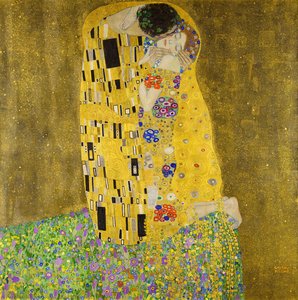
“Composition Design for” is crucial in understanding the evolution of Klimt’s distinctive style. It foreshadows his later embrace of decorative elements, particularly gold leaf, which would become synonymous with his work. The drawing reveals a fascination with patterns, textures, and the interplay of light and shadow – hallmarks that would dominate his mature paintings like “The Kiss.” While still rooted in academic training, Klimt is already experimenting with flattened perspectives and simplified forms, moving away from traditional representational techniques. The figures themselves are not rendered with photographic realism; rather, they possess a stylized quality, hinting at the symbolic weight he would later imbue them with.
Consider the potential symbolism embedded within this scene. The outdoor setting suggests a connection to nature and the ephemeral beauty of life. The gathering of individuals implies social interaction and the complexities of human relationships. Klimt’s use of charcoal, a material often associated with darkness and introspection, juxtaposed with the light-filled environment, creates a subtle tension that reflects the dualities inherent in human experience. The drawing isn't merely a study of figures; it’s an exploration of mood, atmosphere, and the unspoken dynamics between people.
This preparatory sketch offers a rare opportunity to witness Klimt at work – a moment captured before the final brilliance of his paintings emerged. It reveals the artist's initial conceptualization, his experimentation with composition and technique, and his dedication to capturing the essence of human emotion. The drawing is not a finished product but rather a vital step in the creative journey, demonstrating how Klimt built up layers of detail and refined his vision through repeated sketches and studies. The roughness of the charcoal suggests an immediacy and spontaneity that contrasts with the polished surfaces of his later masterpieces.
Most-Famous-Paintings is proud to offer meticulously crafted reproductions of “Composition Design for,” allowing art lovers, collectors, and interior designers alike to experience the beauty and depth of this significant work. Our hand-painted reproductions faithfully capture the nuances of Klimt’s technique and the emotional resonance of the original drawing, bringing a touch of Viennese artistic genius into your home or studio. Invest in a piece of art history – order your reproduction today.

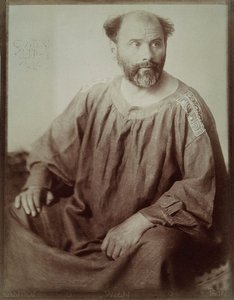
1862 - 1918 , Autriche

Explore the profound impact of the Vienna Secession movement. Discover how visionaries like Gustav Klimt revolutionized modern art through symbolism, gold leaf, and the concept of Gesamtkunstwerk in this expert-led historical guide.

Explore the opulent world of Erté and Art Deco. Discover how Romain de Tirtoff defined an era through geometric elegance, fashion illustration, and theatrical design. A deep dive into the history of 20th-century glamour for art lovers and collectors.


Restez informé(e) des dernières actualités artistiques, des offres exclusives et des idées de décoration.
Parlez-nous de votre projet et nos experts en art vous proposeront 3 suggestions d'œuvres personnalisées.
Laissez-nous sélectionner 3 œuvres rien que pour vous – Gratuit !


 Aperçu en situation
 Envoyer
 Partager
 Détails de l'œuvre

 Télécharger
 Articles similaires
 Radiographie
 Diaporama


 Lire la suite







 L'option verre n'est disponible que pour les dimensions inférieures à 110 cm.