x

Impressions giclées ou sur toile de qualité musée, avec une production rapide et des finitions au choix. ( Commander la reproduction peinte à la main Télécharger l'image haute résolution)





























Choisissez parmi nos formats prédéfinis qui respectent les proportions originales de l’œuvre.

Vous pouvez saisir vos propres dimensions pour vous adapter à un cadre ou à un espace spécifique. Si la taille sélectionnée ne correspond pas aux proportions de l'image originale, nous recadrerons l'œuvre ou étendrons l'image avec une bordure en miroir ou une couleur unie. Une maquette numérique vous sera envoyée pour approbation avant le début de la production.
Veuillez noter que l'aperçu à l'écran ne reflète pas le recadrage ou l'extension réelle. Seule la maquette montrera avec précision la composition finale.
Bien que des tailles personnalisées soient disponibles, nous vous recommandons de choisir une dimension dans la liste prédéfinie afin de préserver les proportions originales.
Livraison dans le monde entier () en 2 semaines au lieu des 4/5 semaines habituelles. (15 août)


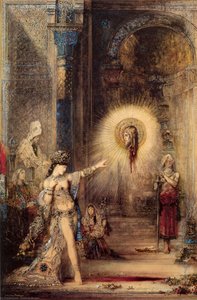
untitled (8118)
Format de la reproduction
Gustave Moreau's “Untitled (8118)” is not merely a depiction of a woman on a cliff; it’s an immersion into the turbulent heart of Symbolist emotion. Painted in 1898, just before his death, this work embodies the culmination of Moreau’s lifelong pursuit to translate inner experience onto canvas – a quest fueled by a fascination with mythology, religion, and the profound mysteries of the human psyche. The scene unfolds with an arresting intensity: a solitary figure, rendered with meticulous detail, sits poised on the precipice, her arms wrapped protectively around herself, suggesting a deep-seated distress or perhaps a moment of profound contemplation. The swirling clouds above aren’t simply atmospheric effects; they are visual metaphors for inner turmoil and uncertainty, mirroring the woman's emotional state.
Moreau was a pivotal figure in the Symbolist movement, rejecting the objective realism championed by his contemporaries. Instead, he sought to evoke moods and ideas through carefully constructed symbols and allegorical imagery. His technique involved layering translucent glazes—a hallmark of his style—to create an ethereal effect, imbuing the painting with a dreamlike quality. The use of rich, jewel-toned colors – deep blues, purples, and ochres – further contributes to this sense of otherworldly beauty and emotional depth. Notice the meticulous rendering of textures: the rough stone of the cliff, the flowing fabric of the woman’s garments, and the delicate feathers of the bird all contribute to a heightened sensory experience.
Born in Paris in 1826, Moreau's artistic development was profoundly shaped by his intellectual environment. His father, an architect and archivist, instilled in him a love for classical antiquity and the study of mythology – sources that would become central to Moreau’s artistic vocabulary. He initially received formal training at the École des Beaux-Arts, but quickly abandoned academic conventions in favor of exploring more esoteric themes. Influenced by artists like William Blake and Dante Gabriel Rossetti, Moreau sought to create works that were both beautiful and intellectually stimulating, inviting viewers to engage with complex ideas about spirituality, morality, and the human condition. The painting reflects a broader cultural shift towards valuing subjective experience over objective representation.
"Untitled (8118)" is laden with symbolic meaning. The woman’s posture suggests vulnerability and despair, while the bird soaring above represents hope or perhaps a fleeting escape from sorrow. The presence of multiple figures – some near, others distant – adds to the painting's complexity, hinting at the interconnectedness of human experience and the challenges of finding solace in isolation. Moreau’s masterful use of light and shadow further intensifies the emotional impact, creating a sense of dramatic tension and inviting viewers to contemplate their own feelings about loss, loneliness, and the search for meaning. This work continues to resonate with audiences today due to its timeless exploration of human emotion.

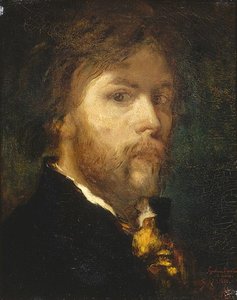
1826 - 1898 , France

Elevate your design projects with Most-Famous-Paintings's premium canvas prints and hand-painted reproductions. Discover affordable, museum-quality wall decor delivered worldwide, offering freelance decorators professional excellence, archival durability, and bespoke customization for every space.

Explore the evocative world of Symbolist painting. Discover how masters like Gustave Moreau rejected realism to capture dreams, myths, and the subconscious through fine art history and expert analysis.


Restez informé(e) des dernières actualités artistiques, des offres exclusives et des idées de décoration.
Parlez-nous de votre projet et nos experts en art vous proposeront 3 suggestions d'œuvres personnalisées.
Laissez-nous sélectionner 3 œuvres rien que pour vous – Gratuit !


 Aperçu en situation
 Envoyer
 Partager
 Détails de l'œuvre

 Télécharger
 Articles similaires
 Radiographie
 Diaporama

 Lire la suite







 L'option verre n'est disponible que pour les dimensions inférieures à 110 cm.