x

Huile sur toile peinte à la main, avec cadre et dimensions personnalisés, réalisée sur commande par nos artistes. ( Commander l'impression Télécharger l'image haute résolution)





























Choisissez parmi nos formats prédéfinis qui respectent les proportions originales de l’œuvre.

Vous pouvez saisir vos propres dimensions pour l'adapter à un cadre ou à un espace spécifique. Si la taille sélectionnée ne correspond pas aux proportions de l'image d'origine, nous recadrerons l'œuvre ou prolongerons la peinture avec des éléments peints à la main supplémentaires. Une maquette numérique vous sera envoyée pour approbation avant le début de la production.
Veuillez noter que l'aperçu à l'écran ne reflète pas le recadrage ou l'extension réels. Seule la maquette montrera fidèlement la composition finale.
Bien que des tailles personnalisées soient disponibles, nous vous recommandons de sélectionner une dimension dans la liste prédéfinie afin de préserver les proportions d'origine.
Livraison dans le monde entier () en 3 à 4 semaines au lieu des 5 semaines habituelles. (20 août). Aucun compromis sur la qualité.


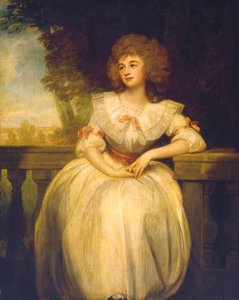
Mrs Charles Steuart
Format de la reproduction
Henry Raeburn’s “Mrs. Charles Steuart,” painted in 1794, is more than just a portrait; it's a meticulously crafted window into the social and artistic sensibilities of late 18th-century Britain. This captivating oil on canvas, currently residing within the hallowed halls of the Tate Gallery in London, exemplifies Raeburn’s mastery of capturing not only likeness but also the very essence of his subject – her poise, grace, and subtle air of wealth. The painting immediately draws the eye to Mrs. Steuart herself, a woman radiating an understated elegance through her carefully chosen attire and direct gaze. Her white gown, adorned with delicate pearl accents, speaks volumes about her social standing, while her brown hair, styled in a fashionable manner of the period, adds to the overall impression of refined beauty.
Raeburn’s technique is characterized by an extraordinary sensitivity to light and shadow. He employs soft, diffused colors – creams, browns, and subtle blues – to create a sense of warmth and intimacy within the scene. The background, featuring a carefully rendered landscape with trees and a sky, serves not merely as a backdrop but as an integral element of the composition, subtly enhancing the feeling of depth and tranquility. Notably, Raeburn’s skill lies in his ability to imbue the portrait with a sense of immediacy; it feels less like a formal depiction and more like a captured moment, inviting the viewer into Mrs. Steuart's world.
To fully appreciate “Mrs. Charles Steuart,” one must understand Henry Raeburn’s place within the broader context of 18th-century British art. Born in Stockbridge, Scotland, in 1756, Raeburn initially pursued a career as a goldsmith before dedicating himself to painting. His early training under James Gilliland honed his precision and attention to detail – skills that would prove invaluable in his later portraiture work. Raeburn’s rise to prominence was remarkable; he became the first native Scottish painter to achieve widespread acclaim and royal patronage, a testament to his talent and ambition.
The painting reflects Raeburn's growing confidence as an artist, moving beyond the more rigid conventions of earlier portraiture styles. He embraced a looser, more naturalistic approach, capturing not just the outward appearance of his subjects but also their personalities and inner lives. This shift towards realism was partly influenced by his time in Italy, where he studied the works of Michelangelo and other masters, absorbing their techniques and philosophies.
Beyond its aesthetic qualities, “Mrs. Charles Steuart” offers a glimpse into the social dynamics of the era. Portraits like this were not merely decorative; they served as powerful symbols of status, wealth, and lineage. The elaborate gown, the pearl necklace – these details communicated Mrs. Steuart’s position within the social hierarchy. The direct gaze of the subject also suggests a degree of self-assurance and confidence, qualities highly valued in women of her station.
Furthermore, Raeburn's decision to portray Mrs. Steuart in such a dignified manner reflects the prevailing attitudes towards women during this period – they were often idealized as virtuous, gentle, and refined. However, beneath the surface of elegance lies a subtle complexity; the painting invites us to contemplate not just her outward appearance but also her inner world.
For those captivated by “Mrs. Charles Steuart,” a wealth of resources is available for further exploration. The Tate Gallery's website offers detailed information about the painting, including high-resolution images and scholarly essays. Additionally, the Kendal Museum in the United Kingdom houses an impressive collection of artworks by Elias V. Coe, providing a broader context for understanding Raeburn’s artistic influences. Reproductions of “Mrs. Charles Steuart” are available through various sources, offering collectors and interior designers alike the opportunity to bring this timeless masterpiece into their own spaces.
The enduring appeal of “Mrs. Charles Steuart” lies in its ability to transport us back to a bygone era – a time of elegance, refinement, and artistic innovation. It is a testament to Henry Raeburn’s genius as a portrait painter and a valuable window into the social and cultural landscape of 18th-century Britain.

Henry Raeburn a connu une enfance difficile, orphelin à un jeune âge. Il fut pris en charge par son frère William et placé à l'Heriot's Hospital, où il reçut une éducation de base. À 15 ans, il devint apprenti chez James Gilliland, un joaillier et orfèvre d'Édimbourg. Cette expérience lui permit de développer ses compétences en dessin précis et en gravure sur ivoire, des techniques essentielles pour la réalisation de miniatures.
Raeburn a progressivement évolué vers la peinture à l'huile, abandonnant les miniatures pour se consacrer au portrait. Son style est caractérisé par une approche directe du sujet, sans esquisses préparatoires, ce qui confère à ses œuvres une spontanéité et une vitalité remarquables. Il utilisait une technique de "touché carré", un terme désignant sa manière distinctive d'appliquer la peinture en touches visibles et angulaires, créant ainsi des textures riches et dynamiques. Son utilisation innovante de la lumière et de l’ombre contribue à donner du volume et de la profondeur à ses portraits.
Raeburn a rapidement acquis une grande renommée en Écosse, devenant le peintre officiel des principaux personnages de la société écossaise. Ses portraits ornent les galeries nationales et les demeures nobles à travers le pays.
Sir Henry Raeburn a laissé une empreinte durable sur l'art écossais. Son approche novatrice du portrait, son style unique et sa capacité à capturer la personnalité de ses sujets en font un artiste majeur du XVIIIe siècle. Il est considéré comme un pionnier dans le domaine de la peinture de portraits en Écosse et a influencé de nombreux artistes qui l'ont suivi. Son œuvre continue d’être admirée pour sa qualité artistique, son réalisme et sa contribution à la documentation visuelle de l’histoire écossaise.

1756 - 1823 , Royaume-Uni
Plongez dans l'univers de Sir Joshua Reynolds ! Découvrez les 25 œuvres incontournables du maître anglais, ses portraits rococo et son héritage artistique. Inspirez votre décoration intérieure avec Most-Famous-Paintings.com : reproductions haute qualité & collectionneur d'art.

Plongez dans l'élégance intemporelle avec notre sélection de 10 chefs-d'œuvre classiques. Découvrez les histoires des artistes, leurs techniques et trouvez l'inspiration pour une décoration raffinée. Reproductions haute qualité sur !
Explorez l'évolution de l'élégance artistique à travers les grands mouvements : Rococo, Néoclassicisme et plus encore. Découvrez l'histoire, les artistes clés et trouvez l'œuvre parfaite pour sublimer votre intérieur.

Explore the elegant world of Charles-André van Loo, a master of Rococo portraiture at the French court. Discover his life, techniques, and enduring influence on 18th-century art. Hand-painted reproductions available.

Explore the exquisite world of Rococo art! Discover its history, masters (Watteau, Boucher & more), and defining elegance. Expert insights for collectors seeking museum-quality reproductions & custom portraits.


Restez informé(e) des dernières actualités artistiques, des offres exclusives et des idées de décoration.
Parlez-nous de votre projet et nos experts en art vous proposeront 3 suggestions d'œuvres personnalisées.
Laissez-nous sélectionner 3 œuvres rien que pour vous – Gratuit !


 Aperçu en situation
 Envoyer
 Partager
 Détails de l'œuvre

 Télécharger
 Articles similaires
 Radiographie
 Diaporama


 Lire la suite







 L'option verre n'est disponible que pour les dimensions inférieures à 110 cm.