x


Huile sur toile peinte à la main, avec cadre et dimensions personnalisés, réalisée sur commande par nos artistes. ( Passer au tirage Passer à l'image)
Choisissez parmi nos formats prédéfinis qui respectent les proportions originales de l’œuvre.

Vous pouvez saisir vos propres dimensions pour l'adapter à un cadre ou à un espace spécifique. Si la taille sélectionnée ne correspond pas aux proportions de l'image d'origine, nous recadrerons l'œuvre ou prolongerons la peinture avec des éléments peints à la main supplémentaires. Une maquette numérique vous sera envoyée pour approbation avant le début de la production.
Veuillez noter que l'aperçu à l'écran ne reflète pas le recadrage ou l'extension réels. Seule la maquette montrera fidèlement la composition finale.
Bien que des tailles personnalisées soient disponibles, nous vous recommandons de sélectionner une dimension dans la liste prédéfinie afin de préserver les proportions d'origine.
Livraison dans le monde entier () en 3 à 4 semaines au lieu des 5 semaines habituelles. (30 juillet). Aucune concession sur la qualité.


Painted Bronze
Dimensions de la reproduction
Jasper Johns' Painted Bronze, created in 1960 but cast and painted the following year, is deceptively simple. At first glance, it presents as two unassuming twelve-ounce beer cans – rendered in bronze and meticulously painted to mimic their metallic counterparts – resting upon a stark, rectangular base. Yet, this apparent banality belies a profound engagement with American iconography, artistic tradition, and the very nature of representation. The genesis of this work is famously attributed to a seemingly offhand remark from Willem de Kooning, a fellow Abstract Expressionist, who reportedly suggested Johns “give that son-of-a-bitch two beer cans” – an observation that highlighted the burgeoning commercialization of art and the potential for transforming everyday objects into compelling subjects.
The anecdote, though perhaps embellished, underscores a key element of Johns’s artistic strategy: his ability to elevate the mundane to the level of significance. He wasn't interested in grand narratives or abstract explorations; instead, he sought to distill meaning from the familiar – the commonplace objects that populate our daily lives. This approach aligns with a broader shift within American art during the 1960s, moving away from the emotionally charged landscapes and figures of Abstract Expressionism towards a more direct engagement with recognizable imagery.
The technical execution of Painted Bronze is remarkably precise. Johns meticulously cast the beer cans in bronze, ensuring their form was faithfully replicated. However, rather than leaving them to their inherent materiality, he then applied a layer of paint – a muted gold-brown hue – that deliberately obscures and distorts the metallic surface. This act of painting isn’t merely decorative; it's a deliberate disruption of the material’s natural appearance, creating a fascinating dialogue between the cold solidity of bronze and the ephemeral qualities of paint.
The choice of bronze itself is significant. Bronze, historically associated with antiquity and permanence, lends an air of gravitas to the seemingly trivial subject matter. It elevates the beer cans from mere consumer goods to objects imbued with a sense of historical weight and symbolic resonance. The uneven application of paint further emphasizes this tension – suggesting a process of deliberate imperfection, mirroring the artist’s own approach to representation.
Beyond its technical merits, Painted Bronze is deeply rooted in American iconography. Beer cans, ubiquitous symbols of post-war prosperity and consumer culture, immediately evoke a specific historical context. The reference to “ale” – a term associated with a more refined and established social class – adds another layer of meaning, subtly referencing the hierarchies and distinctions that defined American society at the time.
Furthermore, Johns’s decision to depict beer cans rather than, say, flags or maps—other recurring motifs in his work—is particularly revealing. Flags and maps are inherently symbolic, representing national identity and geopolitical power. Beer cans, on the other hand, represent a more intimate and personal experience – a shared ritual of consumption that connects individuals across diverse social groups. In this way, Johns transforms an everyday object into a potent symbol of American culture and its complex relationship with commerce and consumerism.
Despite its seemingly simple composition, Painted Bronze possesses a remarkable emotional resonance. The work invites contemplation on the nature of representation, the blurring of boundaries between art and life, and the enduring power of everyday objects to evoke profound meaning. It’s a testament to Johns's ability to distill complex ideas into deceptively straightforward forms, leaving the viewer with a lingering sense of ambiguity and wonder.
Painted Bronze stands as a pivotal work in Jasper Johns’s oeuvre, exemplifying his innovative approach to subject matter and technique. It remains a compelling example of American art's engagement with contemporary culture and its exploration of the symbolic potential within the mundane.
Né à Augusta, en Géorgie, en 1930, Jasper Johns est un artiste américain d’une influence considérable, reconnu pour ses œuvres innovantes et provocatrices qui ont redéfini l’art moderne. Sa carrière s’étend sur plusieurs décennies, marquée par une exploration constante de la forme, du symbolisme et de la nature même de la représentation.
Johns a connu une enfance difficile après le divorce de ses parents. Il a fréquenté plusieurs écoles avant d’étudier à l’Université de Caroline du Sud pendant trois semestres en 1948-1949. Il s'est ensuite installé à New York City en 1949, où il a brièvement étudié à la Parsons School of Design et a ensuite servi dans l’armée américaine pendant la guerre de Corée. Cette période a eu un impact significatif sur son développement artistique.
Initialement influencé par l'Expressionnisme Abstrait, Johns a rapidement commencé à s'éloigner de cette approche purement non-représentative. Il recherchait une nouvelle langue visuelle qui incorporait des images reconnaissables, remettant en question les normes esthétiques dominantes de son époque. Ses influences clés comprenaient :
Le style artistique de Johns est caractérisé par son audace, sa simplicité, son ironie et une ambiguïté délibérée. Il a souvent utilisé des techniques telles que l’encaustique (pigments mélangés à de la cire chaude) et le collage, créant des surfaces texturées qui ajoutaient des couches de signification à ses œuvres.
Jasper Johns a joué un rôle crucial dans la transition de l'Expressionnisme Abstrait vers le Pop Art. Son utilisation d'images reconnaissables a remis en question l'idée que l'art devait être purement abstrait ou expressif émotionnellement. Il a ouvert la voie à une nouvelle génération d’artistes qui ont embrassé la culture populaire et les objets du quotidien comme sujets.
Son influence peut être observée dans le travail de :
Les œuvres de Johns sont conservées dans les principales collections muséales du monde, notamment :
Il a été l'objet de nombreuses expositions individuelles tout au long de sa carrière et continue d’être une figure respectée et influente dans le monde de l’art.
Jasper Johns est toujours actif aujourd'hui. Son exploration continue des limites artistiques et son impact durable sur l'art contemporain solidifient sa position en tant qu'un des artistes les plus importants du 20e et du 21e siècle.
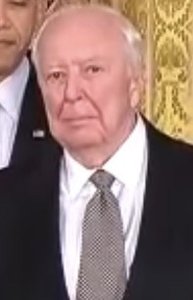
1930 - , États-Unis d'Amérique

Explore the life & work of Jacob Kainen, a pivotal figure in American Abstract Expressionism and Color Field painting. Discover his journey from Social Realism to vibrant abstraction and lasting influence on 20th-century art.

Explorez l'évolution artistique de Willem de Kooning et son rôle clé dans l'expressionnisme abstrait américain. Analyse approfondie, influences européennes et héritage durable pour les collectionneurs avertis.

Explore the captivating world of Richard Lindner, a pivotal Pop Art figure. Discover his unique style, symbolic depth, collecting insights & lasting influence on contemporary art. Expert analysis for collectors.

Explore the captivating world of Jim Dine – Pop Art pioneer & master of autobiographical expression. Discover his iconic tools, robes, and hearts. Expert insights for art collectors.

Explore the captivating world of Abbott Handerson Thayer, a pioneer of American realism & Symbolism. Discover his ethereal angel paintings, innovative techniques, and lasting influence on art history. Learn about his scientific pursuits & Transcendentalist spirit.


Restez informé(e) des dernières actualités artistiques, des offres exclusives et des idées de décoration.
Parlez-nous de votre projet et nos experts en art vous proposeront 3 suggestions d'œuvres personnalisées.
Laissez-nous sélectionner 3 œuvres rien que pour vous – Gratuit !


 Envoyer
 Partager
 Détails de l'œuvre

 Télécharger l'image
 Articles similaires
 Voir le diaporama
 Lire la suite




































 L'option verre n'est disponible que pour les dimensions inférieures à 110 cm.