


x

 Oil On CanvasWallArtNorthern Renaissance
 1570
1570 158.0 x 215.0 cm
 National Gallery
Impressions giclées ou sur toile de qualité musée, avec une production rapide et des finitions au choix. ( Commander la reproduction peinte à la main Télécharger l'image haute résolution)





























Choisissez parmi nos formats prédéfinis qui respectent les proportions originales de l’œuvre.

Vous pouvez saisir vos propres dimensions pour vous adapter à un cadre ou à un espace spécifique. Si la taille sélectionnée ne correspond pas aux proportions de l'image originale, nous recadrerons l'œuvre ou étendrons l'image avec une bordure en miroir ou une couleur unie. Une maquette numérique vous sera envoyée pour approbation avant le début de la production.
Veuillez noter que l'aperçu à l'écran ne reflète pas le recadrage ou l'extension réelle. Seule la maquette montrera avec précision la composition finale.
Bien que des tailles personnalisées soient disponibles, nous vous recommandons de choisir une dimension dans la liste prédéfinie afin de préserver les proportions originales.
Livraison dans le monde entier () en 2 semaines au lieu des 4/5 semaines habituelles. (14 août)


The Four Elements: Fire
Format de la reproduction
Joachim Beuckelaer's "The Four Elements: Fire" isn’t merely a depiction of a bustling 16th-century kitchen; it’s a carefully constructed tableau, a microcosm of daily life imbued with subtle symbolism and a burgeoning artistic ambition. Born in Antwerp around 1533, Beuckelaer emerged from the vibrant artistic milieu of his family – his father, Mattheus Beuckeleer, and uncle, Pieter Aertsen – to become a master of scenes that elevated the commonplace to an extraordinary level. Unlike earlier depictions of domesticity, which often prioritized religious narrative, Beuckelaer’s kitchen scenes, and indeed this particular “Fire,” began to shift the focus towards observing and celebrating the tangible realities of existence itself. This wasn't simply painting what he saw; it was a deliberate act of elevation, laying crucial groundwork for the eventual development of still life as an independent genre within art history.
The painting immediately draws the eye with its astonishing detail – twelve figures are present, engaged in a symphony of activity: cooking, eating, preparing ingredients. Bowls overflow with produce, knives gleam on tables, and the presence of an oven and sink anchors the scene to the practicalities of daily life. However, it’s not just the abundance that captivates; it's the arrangement, the carefully considered placement of objects, and the subtle interplay of light and shadow that create a sense of palpable realism. Beuckelaer’s skill lies in his ability to render textures – the rough grain of wood, the sheen of polished metal, the plumpness of fruit – with an almost photographic precision.
“Fire” is one of a set of four paintings exploring the classical elements—Earth, Water, Air, and Fire—and Beuckelaer masterfully integrates these themes into his everyday subject matter. The title itself immediately establishes this elemental framework. Beyond the immediate depiction of a kitchen scene, the painting operates as a complex allegory. The central focus – the preparation of food over an open fire – is inherently linked to the element of Fire, but Beuckelaer doesn’t stop there. Look closely, and you'll notice subtle references to the other elements woven throughout the composition. The abundance of fruits and vegetables speaks to Earth, while the presence of water (in the sink and implied in the cooking process) represents Water. Even the figures themselves contribute to the overall narrative – their actions and gestures subtly reinforce the elemental themes.
Crucially, Beuckelaer doesn’t simply depict these elements; he juxtaposes them with a dramatic backdrop: a meticulously constructed architectural scene featuring Christ, Martha, and Mary in the House of Bethany. This pairing is not arbitrary. It represents a deliberate contrast between the earthly pleasures of the senses – represented by the kitchen scene—and the spiritual realm. The inclusion of biblical figures serves as a moral compass, reminding viewers to temper their desires with faith and virtue. The arrangement of objects within the kitchen itself can be interpreted as a symbolic representation of temptation and restraint.
What truly distinguishes “The Four Elements: Fire” is Beuckelaer’s innovative use of perspective and illusionistic techniques. The scene feels remarkably three-dimensional, despite being painted on a relatively flat wooden panel. He employs multiple vanishing points to create the impression of depth and space, drawing the viewer into the heart of the kitchen. This masterful manipulation of perspective was groundbreaking for its time, pushing the boundaries of realism in Northern European painting. The sheer number of objects depicted – bowls, utensils, foodstuffs—further enhances this illusionistic effect, creating a sense of overwhelming abundance that is both captivating and slightly disorienting.
Furthermore, Beuckelaer’s attention to detail extends beyond mere representation; he imbues his figures with a remarkable degree of personality. Each individual seems engaged in their own activity, contributing to the overall dynamism of the scene. This level of realism was unprecedented for its time and demonstrates Beuckelaer's exceptional skill as an artist.
“The Four Elements: Fire” is more than just a painting; it’s a snapshot of a rapidly changing world. As the Renaissance progressed, artists began to move away from solely religious subjects and towards depicting scenes of everyday life with increasing realism and attention to detail. Beuckelaer's work stands as a pivotal moment in this transition, marking a shift towards a more secular and humanistic approach to art. Reproductions of this captivating piece offer a unique glimpse into the domestic life of 16th-century Antwerp, while simultaneously revealing the burgeoning artistic ambition that would ultimately shape the course of Western art history. It’s a testament to Beuckelaer's ability to transform the mundane into the magnificent.

Joachim Beuckelaer était un peintre flamand éminent, spécialisé dans les scènes de marché et de cuisine, reconnu pour ses représentations détaillées de la nourriture, du matériel ménager et l'intégration de récits bibliques dans la vie quotidienne. Son œuvre a considérablement influencé le développement de l'art des natures mortes non seulement en Europe du Nord mais aussi en Italie.
Né au sein d’une famille d’artistes, le père de Beuckelaer, Mattheus Beuckeleer, était enregistré comme maître dans la guilde Saint-Luc d'Anvers. Cette connexion familiale lui a offert une exposition précoce au monde de l'art. Il a probablement reçu sa formation initiale auprès de son père et de son oncle, Pieter Aertsen, un peintre renommé pour avoir ouvert la voie aux scènes de marché et de cuisine. Son frère, Huybrecht Beuckelaer, a également suivi leurs traces en tant que peintre.
Joachim Beuckelaer est devenu maître indépendant au sein de la guilde Saint-Luc d'Anvers en 1560, marquant son entrée formelle dans la communauté artistique. Tout au long de sa carrière, il est resté actif à Anvers, s’appuyant et affinant constamment les thèmes établis par Aertsen.
Les innovations artistiques de Beuckelaer ont eu un impact durable sur les générations futures de peintres. Il a considérablement influencé des artistes tels que Frans Snyders, qui a développé davantage le genre des natures mortes élaborées, et Vincenzo Campi en Italie. La série "Les Quatre Éléments" témoigne de son talent pour mélanger harmonieusement des scènes quotidiennes avec un symbolisme religieux, contribuant ainsi de manière significative à l'évolution tant de la peinture de marché/cuisine que du domaine naissant de l'art des natures mortes.
Joachim Beuckelaer a joué un rôle crucial dans la transition de l’art flamand d’un thème principalement religieux vers des sujets plus séculiers. Ses représentations détaillées de la vie quotidienne – marchés, cuisines et natures mortes – reflétaient un intérêt croissant pour le réalisme et l'observation au sein de la communauté artistique. En intégrant des récits bibliques dans ces scènes, il a créé des œuvres à la fois visuellement captivantes et riches de sens, consolidant ainsi sa place en tant que figure essentielle de l’art flamand du XVIe siècle.

1533 - 1573 , Belgique

Explore the rich history of still life painting with Most-Famous-Paintings. Discover Dutch Masters, decode vanitas symbolism & learn about collecting timeless art. Expert insights and museum-quality reproductions.

Explore the rich history & symbolism of still life painting with Most-Famous-Paintings. Discover masterpieces from the Dutch Golden Age, learn about vanitas art, and find expert guidance for collecting timeless artworks.
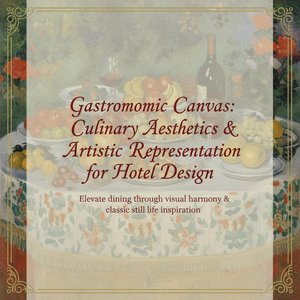
Explorez l'art de la nature morte : histoire, symbolisme et inspiration déco. Conseils d'experts pour intégrer ces chefs-d'œuvre chez vous. Reproductions de qualité par Most-Famous-Paintings.

Explore the profound world of Clyfford Still's Abstract Expressionism with Most-Famous-Paintings. Discover his unique style, existential themes & investment potential. Expert analysis for discerning collectors.

Explore the captivating world of Dutch Golden Age still life with Abraham van Beyeren. Discover his innovative techniques, symbolic banquet scenes & lasting influence on art history. Learn about collecting these masterpieces.


Restez informé(e) des dernières actualités artistiques, des offres exclusives et des idées de décoration.
Parlez-nous de votre projet et nos experts en art vous proposeront 3 suggestions d'œuvres personnalisées.
Laissez-nous sélectionner 3 œuvres rien que pour vous – Gratuit !


 Aperçu en situation
 Envoyer
 Partager
 Détails de l'œuvre

 Télécharger
 Articles similaires
 Radiographie
 Diaporama
 Lire la suite







 L'option verre n'est disponible que pour les dimensions inférieures à 110 cm.


