


x

Huile sur toile peinte à la main, avec cadre et dimensions personnalisés, réalisée sur commande par nos artistes. ( Acheter l'impression Acheter l'image)
Choisissez parmi nos formats prédéfinis qui respectent les proportions originales de l’œuvre.

Vous pouvez saisir vos propres dimensions pour l'adapter à un cadre ou à un espace spécifique. Si la taille sélectionnée ne correspond pas aux proportions de l'image d'origine, nous recadrerons l'œuvre ou prolongerons la peinture avec des éléments peints à la main supplémentaires. Une maquette numérique vous sera envoyée pour approbation avant le début de la production.
Veuillez noter que l'aperçu à l'écran ne reflète pas le recadrage ou l'extension réels. Seule la maquette montrera fidèlement la composition finale.
Bien que des tailles personnalisées soient disponibles, nous vous recommandons de sélectionner une dimension dans la liste prédéfinie afin de préserver les proportions d'origine.
Livraison dans le monde entier () en 3 à 4 semaines au lieu des 5 semaines habituelles. (23 août). Aucun compromis sur la qualité.


Ada Brown
Format de la reproduction

In the delicate, sun-drenched era of the American Victorian period, few artists captured the quiet dignity of a changing nation quite like John Henry Brown. Born in Philadelphia in 1818, Brown emerged from the heart of one of America's most vibrant cultural hubs to become a master of the portrait miniature. His life and work serve as a window into a bygone age, where art was not merely observed on distant walls but held close to the heart, often tucked into a locket or worn as a cherished keepsake. Brown’s specialty lay in the demanding medium of watercolor on ivory, a choice that allowed him to exploit the natural translucency of the substrate to create skin tones that seemed to glow with an inner, lifelike warmth.
The artistry of Brown was defined by a profound marriage of technical precision and emotional resonance. While his training was rooted in the classical traditions of Neoclassical elegance—characterized by meticulous rendering of textures, the soft fold of fine silk, and the precise geometry of facial features—he was not immune to the shifting winds of the nineteenth century. There is a subtle, burgeoning awareness of evolving aesthetic sensibilities in his work, a hint of the light-driven observations that would later define Impressionism. This unique blend allowed him to uphold the formal standards required by his high-society patrons while imbuing his subjects with a psychological depth that transcended mere likeness.
To understand Brown’s contribution to American art, one must appreciate the immense technical difficulty of his chosen craft. Working on such a minuscule scale required an almost superhuman level of focus and a steady hand capable of executing microscopic details. His process involved layering delicate washes of color to build depth, using the ivory base to reflect light back through the pigment. This technique was particularly effective for capturing the subtle nuances of expression that define his most celebrated works. Whether he was depicting the soft features of a young girl or the weathered gravity of a statesman, Brown’s ability to convey character through minute variations in shade was unparalleled.
His repertoire of subjects often included the very architects of American history and the elite of Philadelphia society. Some of his most notable achievements include:
Though the era of the portrait miniature eventually gave way to larger-scale oil paintings and the advent of photography, the historical significance of John Henry Brown remains undiminished. His work provides an invaluable visual record of the social hierarchy and the aesthetic values of 19th-century America. Through his eyes, we see a world that valued permanence, grace, and the meticulous preservation of identity. Today, much of his legacy is preserved within prestigious institutions such as the Smithsonian American Art Museum, where his portraits continue to offer scholars and art lovers alike a glimpse into the soul of the Victorian age.
Brown’s ability to bridge the gap between the formal requirements of a commission and the intimate reality of a human face ensures his place in the canon of American portraitists. He did not merely paint faces; he captured the essence of an era, leaving behind a luminous trail of ivory and watercolor that continues to shine with the dignity of the past.

1818 - 1891
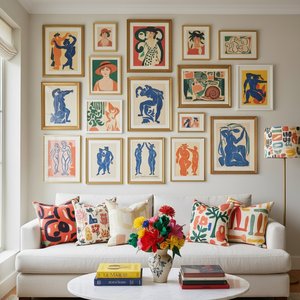
Plongez dans l'univers vibrant d'Henri Matisse ! Découvrez les 25 œuvres majeures du fauvisme et de la peinture moderne. Explorez La Danse, L'Atelier Rouge & plus encore. Reproductions de qualité musée sur Most-Famous-Paintings.com.

Plongez dans l'univers de John Singer Sargent : découvrez les 25 œuvres qui ont marqué l'histoire de l'art. Portraits impressionnants, réalisme exquis et couleurs vibrantes. Retrouvez ces chefs-d'œuvre en reproduction haute définition sur Most-Famous-Paintings.com.
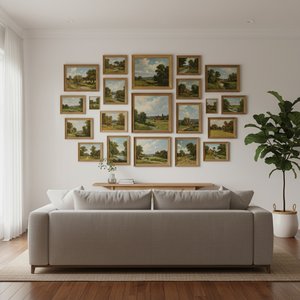
Plongez dans l'univers de John Constable avec les 25 œuvres incontournables du maître anglais. Découvrez l'histoire, la technique et l'émotion derrière ses paysages romantiques. Reproductions de qualité muséale sur Most-Famous-Paintings.com.

Explore the captivating genre paintings of John George Brown, celebrated for his realistic depictions of 19th-century American life. Discover his legacy & find museum-quality reproductions at Most-Famous-Paintings.

Explore the life & art of Hablot Knight Browne ('Phiz'), Dickens's iconic illustrator. Discover his masterful social commentary, technical innovations, and enduring legacy in Victorian illustration. A critical examination for history lovers.


Restez informé(e) des dernières actualités artistiques, des offres exclusives et des idées de décoration.
Parlez-nous de votre projet et nos experts en art vous proposeront 3 suggestions d'œuvres personnalisées.
Laissez-nous sélectionner 3 œuvres rien que pour vous – Gratuit !


 Aperçu en situation
 Partager
 Partager
 Détails

 Télécharger l'image
 Articles similaires
 Radiographie
 Voir le diaporama

 Afficher la suite




































 L'option verre n'est disponible que pour les dimensions inférieures à 110 cm.


