x

 1935
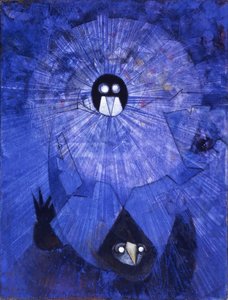
1935 94.0 x 114.0 cm
Impressions giclées ou sur toile de qualité musée, avec une production rapide et des finitions au choix. ( Commander la reproduction peinte à la main Télécharger l'image haute résolution)
Choisissez parmi nos formats prédéfinis qui respectent les proportions originales de l’œuvre.

Vous pouvez saisir vos propres dimensions pour vous adapter à un cadre ou à un espace spécifique. Si la taille sélectionnée ne correspond pas aux proportions de l'image originale, nous recadrerons l'œuvre ou étendrons l'image avec une bordure en miroir ou une couleur unie. Une maquette numérique vous sera envoyée pour approbation avant le début de la production.
Veuillez noter que l'aperçu à l'écran ne reflète pas le recadrage ou l'extension réelle. Seule la maquette montrera avec précision la composition finale.
Bien que des tailles personnalisées soient disponibles, nous vous recommandons de choisir une dimension dans la liste prédéfinie afin de préserver les proportions originales.
Livraison dans le monde entier () en 2 semaines au lieu des 4/5 semaines habituelles. (18 août)


Night Piece
Format de la reproduction

The artistic legacy of John Maxwell (1905-1962) is a profound testament to the power of light, texture, and emotional resonance. Born in the rugged, spiritual landscape of Roanoke, Virginia, Maxwell’s early life was deeply influenced by his father, Reverend John Maxwell Sr., a clergyman whose presence instilled in the young artist an appreciation for both the beauty of the natural world and the solemnity of contemplative thought. This duality—the ability to see the divine within the mundane—would become the cornerstone of his creative vision. After honing his technical skills at the prestigious Corcoran School and the Art Students League, Maxwell embarked on a career that would bridge the gap between commercial illustration and fine art, capturing the literary essence of giants such as Pearl Buck, Edna Ferber, and John Steinbeck with unparalleled sensitivity.
As his career matured, Maxwell found himself at the heart of a transformative era in modern art. His journey became inextricably linked with the burgeoning Edinburgh School movement, a collective that sought to redefine Scottish painting through bold experimentation. Influenced by the vibrant palettes of Oskar Kokoschka and the raw, expressive energy of German Expressionists like Ernst Ludwig Kirchner and Emil Nolde, Maxwell developed a style that was both structurally sound and emotionally fluid. He did not merely imitate these masters; rather, he synthesized their lessons into a unique aesthetic language. His work began to dance between the boundaries of reality and abstraction, drawing inspiration from the dreamlike imagery of Marc Chagall and the geometric precision of Paul Klee.
Maxwell’s oeuvre is most celebrated for its intimate exploration of still lifes and landscapes, works that serve as lyrical meditations on the passage of time. In his still lifes, one finds a meticulous arrangement of flora, fruit, and drapery, all seemingly suspended in a moment of eternal grace. He possessed a rare ability to use glazing techniques to create luminous, translucent surfaces that appear to glow from within, much like the innovations seen in the works of Fernand Léger or Piet Mondrian. These compositions are rarely static; instead, they are imbued with a sense of movement through the play of diffused sunlight and the subtle interplay of shadow.
His landscapes and interiors further reflect this mastery of atmosphere. By incorporating stylized trees and abstracted geometric shapes, Maxwell subtly echoed the principles of Constructivism and Cubism, lending his natural scenes a structured, almost architectural quality. This marriage of organic form and geometric abstraction allowed him to depict the world not just as it appears to the eye, but as it is felt by the soul. His paintings often evoke a sense of profound tranquility, inviting the viewer into a space where the boundaries between the physical environment and the internal psyche begin to dissolve.
The significance of John Maxwell lies in his ability to navigate the complex currents of 20th-century modernism while maintaining a deeply personal, emotive core. He stood at a crossroads where the traditions of representational painting met the radical shifts of the avant-garde. Through his work, the heavy textures of Expressionism and the structural rigor of abstraction were softened by a uniquely Scottish sensibility—one that prioritized light, color, and a quiet, observant beauty.
Today, Maxwell is remembered as a pivotal figure whose works continue to resonate with collectors and scholars alike. His contributions to the Edinburgh School helped cement a period of immense creativity in British art, leaving behind a body of work that remains:

1947 -


Restez informé(e) des dernières actualités artistiques, des offres exclusives et des idées de décoration.
Parlez-nous de votre projet et nos experts en art vous proposeront 3 suggestions d'œuvres personnalisées.
Laissez-nous sélectionner 3 œuvres rien que pour vous – Gratuit !


 Aperçu en situation
 Envoyer
 Partager
 Détails de l'œuvre

 Télécharger
 Articles similaires
 Radiographie
 Diaporama
 Lire la suite




































 L'option verre n'est disponible que pour les dimensions inférieures à 110 cm.