x


 Commander la reproduction Acheter l'image haute résolution
 Partager
 Détails de l'œuvre
 Ajouter aux favoris
 Télécharger
 Articles similaires
 Radiographie
 Diaporama
Impression giclée ou sur toile de qualité musée, avec une production rapide et des finitions au choix.





























Choisissez parmi nos formats prédéfinis qui respectent les proportions originales de l’œuvre.

Vous pouvez saisir vos propres dimensions pour vous adapter à un cadre ou à un espace spécifique. Si la taille sélectionnée ne correspond pas aux proportions de l'image originale, nous recadrerons l'œuvre ou étendrons l'image avec une bordure en miroir ou une couleur unie. Une maquette numérique vous sera envoyée pour approbation avant le début de la production.
Veuillez noter que l'aperçu à l'écran ne reflète pas le recadrage ou l'extension réelle. Seule la maquette montrera avec précision la composition finale.
Bien que des tailles personnalisées soient disponibles, nous vous recommandons de choisir une dimension dans la liste prédéfinie afin de préserver les proportions originales.
Livraison dans le monde entier () en 2 semaines au lieu des 4/5 semaines habituelles. (23 juillet)


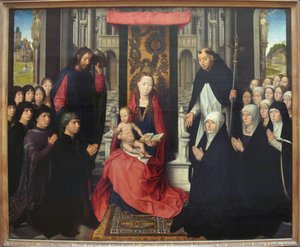
The Trinity
Format de reproduction
Lucas Cranach the Elder's “The Trinity,” painted around 1515, stands as a cornerstone of Northern Renaissance art—a testament to both masterful craftsmanship and profound theological contemplation. More than just a depiction of biblical scripture, this monumental altarpiece embodies the spirit of its time, reflecting the anxieties and aspirations surrounding the burgeoning Protestant Reformation while simultaneously showcasing Cranach’s unparalleled ability to convey emotion and psychological nuance.
Created during a turbulent era marked by religious reform and political maneuvering, “The Trinity” reflects the intellectual fervor of its time. Cranach’s patronage by Frederick III underscores the importance of royal commissions in shaping artistic trends—demonstrating how art served as a vehicle for conveying ideological messages. The painting's subject matter – the Holy Trinity – resonated deeply with Protestant theologians who sought to reaffirm faith in God’s unity and transcendence amidst the challenges posed by papal authority.
"The Trinity" transcends mere visual representation; it aspires to evoke a profound emotional response in the viewer. Cranach’s masterful use of color—particularly blues and golds—creates an atmosphere of solemn grandeur, fostering contemplation and reverence. The painting's stillness contrasts sharply with the dynamism of the crucifixion scene itself, prompting reflection on themes of faith, sacrifice, and divine love. It remains a powerful reminder of humanity’s yearning for spiritual connection and understanding.


1472 - 1553 , Allemagne

Explorez la Renaissance septentrionale et l'éclosion du réalisme flamand avec Most-Famous-Paintings. Découvrez Jan van Eyck, Robert Campin et les techniques révolutionnaires de cette période artistique majeure.

Plongez au cœur de la peinture flamande ! Découvrez les 10 chefs-d'œuvre de Jan van Eyck, Campin & Memling. Histoire, symbolisme et réalisme : trouvez l'inspiration déco et achetez des reproductions d'art exceptionnelles sur Most-Famous-Paintings.com.

Explorez l'histoire fascinante de la peinture à l'huile sur bois ! Découvrez les techniques des maîtres flamands, l'impact esthétique et les défis de la conservation. Expertise Most-Famous-Paintings.

Plongez au cœur de la Renaissance néerlandaise avec 10 chefs-d'œuvre incontournables ! Découvrez Jan van Eyck, Robert Campin et les secrets de la peinture flamande. Trouvez l'inspiration déco et achetez des reproductions d'art de qualité muséale sur Most-Famous-Paintings.com.
Plongez dans l'univers de Raphaël avec les 25 œuvres incontournables du maître italien. Découvrez l'histoire, la technique et la beauté intemporelle de ses chefs-d'œuvre Renaissance. Reproductions de qualité muséale sur Most-Famous-Paintings.com.


Restez informé(e) des dernières actualités artistiques, des offres exclusives et des idées de décoration.
Parlez-nous de votre projet et nos experts en art vous proposeront 3 suggestions d'œuvres personnalisées.
Laissez-nous sélectionner 3 œuvres rien que pour vous – Gratuit !


 Partager


 Afficher la suite







 L'option verre n'est disponible que pour les dimensions inférieures à 110 cm.