


x


Impression giclée ou sur toile de qualité musée, avec une production rapide et des finitions au choix. ( Switch to hand made Painting Switch to Image)





























Choisissez parmi nos formats prédéfinis qui respectent les proportions originales de l’œuvre.

Vous pouvez saisir vos propres dimensions pour vous adapter à un cadre ou à un espace spécifique. Si la taille sélectionnée ne correspond pas aux proportions de l'image originale, nous recadrerons l'œuvre ou étendrons l'image avec une bordure en miroir ou une couleur unie. Une maquette numérique vous sera envoyée pour approbation avant le début de la production.
Veuillez noter que l'aperçu à l'écran ne reflète pas le recadrage ou l'extension réelle. Seule la maquette montrera avec précision la composition finale.
Bien que des tailles personnalisées soient disponibles, nous vous recommandons de choisir une dimension dans la liste prédéfinie afin de préserver les proportions originales.
Livraison dans le monde entier () en 2 semaines au lieu des 4/5 semaines habituelles. (30 juillet)


Untitled 76
Format de reproduction
Mark Rothko (1903 – 1970), born Markus Yakovlevich Rothkowitz in Dvinsk, Latvia, stands as one of the most influential figures in Abstract Expressionism. His artistic life began amidst considerable hardship—the anxieties surrounding his family’s Jewish heritage within the Pale of Settlement and the trauma of losing his father during immigration to Portland, Oregon—experiences that instilled a profound empathy for human suffering and shaped his unwavering commitment to exploring existential questions.
His signature style involved layering rectangles of saturated hues – predominantly crimson, orange, yellow, and blue – onto canvases of monumental scale. These blocks of color weren’t merely decorative; they were meticulously crafted to evoke profound emotional responses in the viewer. Rothko believed that color itself possessed inherent expressive power, capable of conveying feelings without resorting to explicit depiction.
The symbolism embedded within Rothko’s paintings is deliberately ambiguous. Critics have interpreted his works as meditations on spirituality, grief, and the sublime—representations of inner landscapes rather than external realities. The rectangles themselves can be seen as symbols of containment and illumination, encapsulating vastness while simultaneously radiating warmth and serenity. Ultimately, Rothko sought to create art that resonated with viewers on a visceral level, prompting contemplation and fostering a connection to something beyond oneself.
“Color is my passion,” Rothko declared repeatedly throughout his career. “It’s the most direct route to the human soul.” His legacy continues to inspire artists and collectors alike—a testament to the enduring power of art to communicate emotion, provoke thought, and illuminate the mysteries of existence.
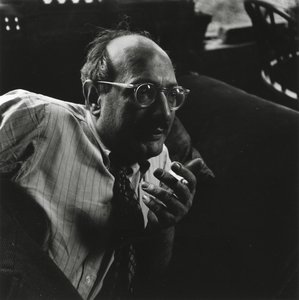
1903 - 1970 , Lettonie

Explorez l'histoire et l'impact du Color Field Painting avec Most-Famous-Paintings. Découvrez les œuvres de Rothko, Newman et Still, leurs techniques innovantes et le marché actuel pour les collectionneurs avertis.

Explore the profound emotional depth of Mark Rothko's abstract expressionism. Discover the history, techniques & lasting impact of this pivotal Color Field painter. Expert insights for collectors and art enthusiasts.

Explore the vibrant world of Gene Davis and the Washington Color School. Discover his iconic stripe paintings, innovative techniques, and lasting impact on American abstract art. A deep dive for collectors & enthusiasts.

Explore the groundbreaking abstract expressionism of Morris Louis, a pioneer of Color Field painting. Discover his innovative techniques, influential series & lasting legacy in post-war American art. Learn more at Most-Famous-Paintings.

Explore the profound world of Color Field painting with Most-Famous-Paintings. Discover key artists like Rothko & Newman, its philosophical roots, and lasting impact on modern art. Expert insights for collectors.


Restez informé(e) des dernières actualités artistiques, des offres exclusives et des idées de décoration.
Parlez-nous de votre projet et nos experts en art vous proposeront 3 suggestions d'œuvres personnalisées.
Laissez-nous sélectionner 3 œuvres rien que pour vous – Gratuit !


 Preview
 Partager
 Partager
 Détails de l'œuvre

 Télécharger
 Articles similaires
 Radiographie
 Diaporama
 Afficher la suite







 L'option verre n'est disponible que pour les dimensions inférieures à 110 cm.


