


x

 Oil On CanvasWallArtAbstract Expressionism
 1946Modern
 108.0 x 76.0 cm
Impressions giclées ou sur toile de qualité musée, avec une production rapide et des finitions au choix. ( Commander la reproduction peinte à la main Télécharger l'image haute résolution)





























Choisissez parmi nos formats prédéfinis qui respectent les proportions originales de l’œuvre.

Vous pouvez saisir vos propres dimensions pour vous adapter à un cadre ou à un espace spécifique. Si la taille sélectionnée ne correspond pas aux proportions de l'image originale, nous recadrerons l'œuvre ou étendrons l'image avec une bordure en miroir ou une couleur unie. Une maquette numérique vous sera envoyée pour approbation avant le début de la production.
Veuillez noter que l'aperçu à l'écran ne reflète pas le recadrage ou l'extension réelle. Seule la maquette montrera avec précision la composition finale.
Bien que des tailles personnalisées soient disponibles, nous vous recommandons de choisir une dimension dans la liste prédéfinie afin de préserver les proportions originales.
Livraison dans le monde entier () en 2 semaines au lieu des 4/5 semaines habituelles. (21 août)


Untitled
Format de la reproduction
To stand before Mark Rothko’s Untitled 67 is not merely to view a painting, but to enter into a profound, silent dialogue with the infinite. Created in 1946, this monumental canvas serves as a cornerstone of Abstract Expressionism, a movement that fundamentally redefined the boundaries of American art. Measuring approximately 108 x 76 cm, the work transcends its physical dimensions to offer an immersive experience designed to provoke deep contemplation and elicit visceral emotion. In an era where art often sought to represent the external world, Rothko turned his gaze inward, crafting a visual language that prioritizes raw feeling over literal representation, inviting the viewer to lose themselves in an expanse of color that breathes and vibrates with life.
The technical mastery behind this piece lies in Rothko’s pioneering "color field" technique. Eschewing traditional perspective and sharp outlines, he meticulously applied thin, translucent washes of pigment onto primed linen. Using a tool like a squeegee to distribute the paint, Rothko achieved a remarkably smooth yet dynamic texture where rectangular blocks of color appear to bleed softly into one another. This method creates a subtle illusion of depth, as if the layers of crimson, muted orange, and reddish-brown are floating within the canvas itself. The resulting effect is one of luminous weight; the colors do not sit static upon the surface but seem to hover, creating a rhythmic pulse that draws the eye into the heart of the composition.
Every hue in Untitled 67 carries the heavy imprint of Rothko’s personal history. The dominant palette—a somber arrangement of deep reddish-browns punctuated by flashes of fiery crimson—reflects the artist's preoccupation with themes of grief, mortality, and spiritual yearning. Born Markus Yakovlev and raised amidst the political unrest and displacement of Latvia, Rothko’s early life was shadowed by the anxieties of a Jewish family navigating a changing world. The loss of his father during the turbulent years surrounding World War I left an indelible mark on his psyche, fueling a lifelong exploration of existential trauma. In this painting, the subtle gradations of color act as metaphors for the ebb and flow of human suffering and resilience.
For the discerning collector or interior designer, this artwork offers more than just aesthetic beauty; it provides a focal point of profound emotional gravity. The way the colors interact—the soft edges where shadow meets light—creates an atmosphere of quiet sanctuary. Whether placed in a contemporary gallery setting or as a commanding centerpiece in a sophisticated residential space, Untitled 67 commands attention through its restraint. It is a piece that does not demand attention through frantic movement, but rather through a gravitational pull that invites the observer to pause, breathe, and reflect. Owning a high-quality reproduction of such a masterpiece allows one to bring this sense of meditative stillness and historical depth into any environment, transforming a room into a space of profound artistic encounter.
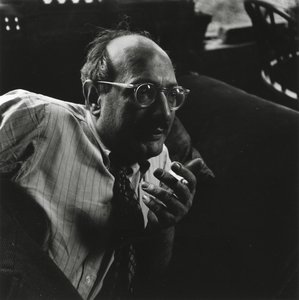
1903 - 1970 , Lettonie

Explore the profound emotional depth of Color Field painting. Discover the history of mid-century abstraction, from Rothko to Newman, and learn how pure color transforms the viewer's experience through our expert art history guide.

Explore the profound emotional depth of Color Field painting. Our expert guide delves into the post-war origins of Abstract Expressionism, analyzing masterpieces by Rothko and Newman. Discover museum-grade, hand-painted oil reproductions that bring art history to your walls.

Explore the profound history and emotional depth of Color Field painting. From Mark Rothko to Barnett Newman, discover how pure color redefined modern art through our expert-led guide for students and collectors alike.

Explore the profound history and emotional depth of Abstract Expressionism. From Jackson Pollock to Mark Rothko, master the nuances of the New York School through our expert art history guide. Discover museum-quality hand-painted reproductions for your collection.
Explore the profound emotional depth of Lyrical Abstraction. Discover how masters like Raymond Parker used color and form to bridge Impressionism and Abstract Expressionism. Learn about this pivotal movement through our expert-led art history guide.


Restez informé(e) des dernières actualités artistiques, des offres exclusives et des idées de décoration.
Parlez-nous de votre projet et nos experts en art vous proposeront 3 suggestions d'œuvres personnalisées.
Laissez-nous sélectionner 3 œuvres rien que pour vous – Gratuit !


 Aperçu en situation
 Envoyer
 Partager
 Détails de l'œuvre

 Télécharger
 Articles similaires
 Radiographie
 Diaporama
 Lire la suite







 L'option verre n'est disponible que pour les dimensions inférieures à 110 cm.


