x


 Commander l'impression Acheter l'image haute résolution
 Partager
 Détails de l'œuvre
 Ajouter aux favoris
 Télécharger
 Articles similaires
 Radiographie
 Diaporama
 Acrylic On CanvasWallArtSurrealist Movement
 1913Modern
 80.0 x 54.0 cm
Huile sur toile peinte à la main, avec cadre et dimensions personnalisés, réalisée sur commande par nos artistes.





























Choisissez parmi nos formats prédéfinis qui respectent les proportions originales de l’œuvre.

Vous pouvez saisir vos propres dimensions pour l'adapter à un cadre ou à un espace spécifique. Si la taille sélectionnée ne correspond pas aux proportions de l'image d'origine, nous recadrerons l'œuvre ou prolongerons la peinture avec des éléments peints à la main supplémentaires. Une maquette numérique vous sera envoyée pour approbation avant le début de la production.
Veuillez noter que l'aperçu à l'écran ne reflète pas le recadrage ou l'extension réels. Seule la maquette montrera fidèlement la composition finale.
Bien que des tailles personnalisées soient disponibles, nous vous recommandons de sélectionner une dimension dans la liste prédéfinie afin de préserver les proportions d'origine.
Livraison dans le monde entier () en 3 à 4 semaines au lieu des 5 semaines habituelles. (23 juillet). Aucune concession sur la qualité.


Immortality
Format de reproduction
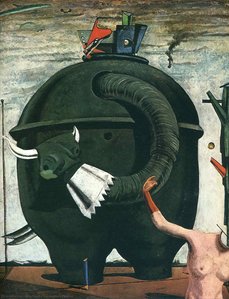
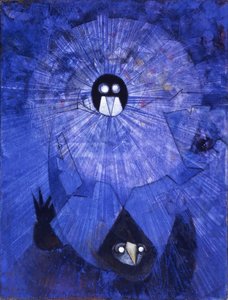
Max Ernst’s “Immortality,” painted in 1913, is not merely a depiction of a scene; it’s an invitation to contemplate the precarious nature of existence and the unsettling allure of oblivion. This surrealist masterpiece, rendered at a compact 80 x 54 cm, immediately commands attention with its stark composition – a group of figures perched precariously on a cliff edge, gazing down upon a miniature town below. The painting’s power resides in its ambiguity; it refuses easy interpretation, prompting the viewer to confront questions about mortality, memory, and the human condition.
Born in Brühl, Germany, in 1891, Max Ernst was a pivotal figure at the genesis of surrealist art. His formative years were marked by an intense intellectual curiosity, fueled by studies in philosophy, psychology, and literature – disciplines that profoundly shaped his artistic approach. Unlike many of his contemporaries who sought to replicate reality, Ernst deliberately distorted it, employing techniques like frottage (rubbing textures) and decalcomania (spreading paint on a surface) to tap into the subconscious mind. “Immortality” exemplifies this process; the seemingly random arrangement of figures and objects suggests an intuitive exploration rather than a calculated design.
Ernst’s masterful use of color—muted earth tones punctuated by flashes of grey and blue—contributes to the painting's melancholic mood. The brushwork is loose and expressive, conveying a sense of movement and unease. The overall effect is one of profound psychological depth, inviting viewers to engage with their own anxieties about mortality and the search for meaning in a chaotic world. “Immortality” remains a powerfully evocative work, demonstrating Ernst’s ability to translate complex philosophical ideas into a visually arresting and emotionally resonant image. This hand-painted reproduction captures not just the visual elements of the original but also its inherent sense of mystery and timeless contemplation.


1891 - 1976 , Allemagne
Plongez dans l'univers surréaliste de Max Ernst ! Découvrez les 25 œuvres les plus emblématiques du maître allemand, entre frottage, collage et rêves éveillés. Inspirez votre décoration intérieure avec Most-Famous-Paintings : reproductions de tableaux de qualité muséale et collection d'art unique. Explorez la co

Plongez au cœur du Metropolitan Museum of Art avec notre sélection des 25 œuvres les plus emblématiques. Découvrez l'histoire de Van Gogh, Monet et d'autres maîtres, et trouvez l'inspiration pour une décoration intérieure raffinée. Reproductions de qualité muséale sur Most-Famous-Paintings.com.

Plongez au cœur du MoMA avec les 25 œuvres incontournables de Van Gogh à Warhol. Découvrez l'histoire et la magie de chefs-d'œuvre impressionnistes, cubistes & abstraits. Trouvez votre inspiration déco sur Most-Famous-Paintings.com !

Plongez dans l'univers fascinant de Dante Gabriel Rossetti ! Découvrez les 25 œuvres majeures du préraphaélisme : symbolisme, poésie et beauté victorienne. Reproductions d'art exceptionnelles sur Most-Famous-Paintings.com.

Plongez dans l'univers de Georges Braque avec les 25 œuvres incontournables du cubisme. Découvrez l'histoire, les techniques et l'impact de ce maître de l'art moderne. Reproductions d'art exceptionnelles sur Most-Famous-Paintings.com.


Restez informé(e) des dernières actualités artistiques, des offres exclusives et des idées de décoration.
Parlez-nous de votre projet et nos experts en art vous proposeront 3 suggestions d'œuvres personnalisées.
Laissez-nous sélectionner 3 œuvres rien que pour vous – Gratuit !


 Partager

 Afficher la suite







 L'option verre n'est disponible que pour les dimensions inférieures à 110 cm.