x
Huile sur toile peinte à la main, avec cadre et dimensions personnalisés, réalisée sur commande par nos artistes. ( Commander l'impression Télécharger l'image haute résolution)





























Choisissez parmi nos formats prédéfinis qui respectent les proportions originales de l’œuvre.

Vous pouvez saisir vos propres dimensions pour l'adapter à un cadre ou à un espace spécifique. Si la taille sélectionnée ne correspond pas aux proportions de l'image d'origine, nous recadrerons l'œuvre ou prolongerons la peinture avec des éléments peints à la main supplémentaires. Une maquette numérique vous sera envoyée pour approbation avant le début de la production.
Veuillez noter que l'aperçu à l'écran ne reflète pas le recadrage ou l'extension réels. Seule la maquette montrera fidèlement la composition finale.
Bien que des tailles personnalisées soient disponibles, nous vous recommandons de sélectionner une dimension dans la liste prédéfinie afin de préserver les proportions d'origine.
Livraison dans le monde entier () en 3 à 4 semaines au lieu des 5 semaines habituelles. (16 août). Aucun compromis sur la qualité.


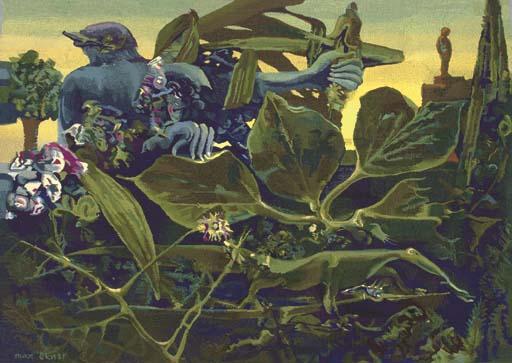
Nature at Dawn
Format de la reproduction
Max Ernst’s “Nature at Dawn,” painted in 1924, stands as an arresting emblem of the Surrealist movement—a visual manifesto born from a profound questioning of rationality and fueled by dreams and subconscious impulses. More than just a depiction of a landscape bathed in nascent sunlight, it's a meticulously crafted allegory that delves into themes of power, vulnerability, and the interconnectedness of humanity and nature.
Ernst’s artistic approach was characterized by an embrace of chance—a deliberate rejection of traditional compositional rules in favor of spontaneous experimentation. He achieved this through a masterful technique of collage, meticulously assembling fragments of printed matter – newspapers, maps, botanical illustrations – onto canvas. These disparate elements weren't merely glued together; they were interwoven with meticulous care, creating textures and patterns that defied linear perspective.
“Nature at Dawn” emerged from the turbulent aftermath of Dada—the nihilistic anti-art movement that challenged bourgeois values. Dada artists deliberately undermined logic and reason, seeking to expose the absurdity of societal conventions. Ernst swiftly transitioned into Surrealism, championed by André Breton, who sought to liberate creativity from conscious control. This artistic lineage reflects a broader intellectual preoccupation with psychoanalysis, particularly Sigmund Freud’s theories on dreams and unconscious desire.
The painting’s symbolism is layered and evocative. At its core is a solitary man perched atop a monumental statue—a figure embodying both strength and confinement. The statue itself represents authority and tradition, while the man’s posture conveys vulnerability beneath the weight of expectation. Above him floats a bird, symbolizing freedom and transcendence – an aspirational element juxtaposed against the static grandeur below. Furthermore, the inclusion of plants sprouting from his back speaks to themes of regeneration and the merging of human and natural realms.
"Nature at Dawn" isn't merely aesthetically pleasing; it compels viewers to confront unsettling questions about identity and perception. The surreal juxtaposition of elements generates a palpable tension—a feeling that something fundamental is shifting beneath the surface. Ultimately, Ernst’s masterpiece invites contemplation on the transformative power of dreams and the enduring allure of exploring the hidden depths of consciousness. It remains an unforgettable testament to Surrealism's ambition to capture the elusive essence of human experience.

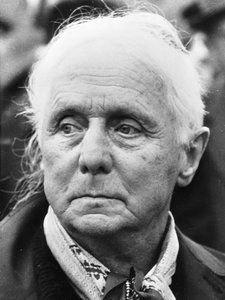
1891 - 1976 , Allemagne

Explore the profound history of sculpture, from classical realism to modern abstraction. Discover the mastery of form, texture, and medium through an expert art-historical lens designed for discerning collectors and enthusiasts.


Restez informé(e) des dernières actualités artistiques, des offres exclusives et des idées de décoration.
Parlez-nous de votre projet et nos experts en art vous proposeront 3 suggestions d'œuvres personnalisées.
Laissez-nous sélectionner 3 œuvres rien que pour vous – Gratuit !


 Aperçu en situation
 Envoyer
 Partager
 Détails de l'œuvre

 Télécharger
 Articles similaires
 Radiographie
 Diaporama
 Lire la suite







 L'option verre n'est disponible que pour les dimensions inférieures à 110 cm.