x


 Preview
 Commander la reproduction Acheter l'image haute résolution
 Partager
 Détails de l'œuvre
 Ajouter aux favoris
 Télécharger
 Articles similaires
 Radiographie
 Diaporama
Impression giclée ou sur toile de qualité musée, avec une production rapide et des finitions au choix.





























Choisissez parmi nos formats prédéfinis qui respectent les proportions originales de l’œuvre.

Vous pouvez saisir vos propres dimensions pour vous adapter à un cadre ou à un espace spécifique. Si la taille sélectionnée ne correspond pas aux proportions de l'image originale, nous recadrerons l'œuvre ou étendrons l'image avec une bordure en miroir ou une couleur unie. Une maquette numérique vous sera envoyée pour approbation avant le début de la production.
Veuillez noter que l'aperçu à l'écran ne reflète pas le recadrage ou l'extension réelle. Seule la maquette montrera avec précision la composition finale.
Bien que des tailles personnalisées soient disponibles, nous vous recommandons de choisir une dimension dans la liste prédéfinie afin de préserver les proportions originales.
Livraison dans le monde entier () en 2 semaines au lieu des 4/5 semaines habituelles. (24 juillet)


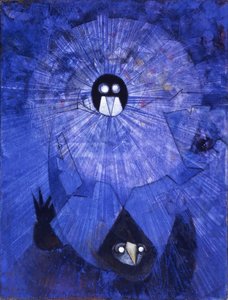
untitled (5196)
Format de reproduction
Max Ernst’s “Untitled (5196),” painted circa 1943, stands as a cornerstone of Surrealist art—a testament to the movement's fascination with dreams, subconscious impulses, and the liberation from rational thought. More than just an aesthetically striking image, it’s a complex tapestry woven with philosophical considerations and visual symbolism that continues to resonate with audiences today.
The painting immediately captivates with its dominant circular motif—a colossal moon or sun suspended in a desolate landscape. Ernst employed a technique known as “frottage,” meticulously rubbing a textured surface (often paper covered in wax) onto canvas, transferring the underlying pattern into an ethereal image. This method wasn’t merely about capturing texture; it was about accessing hidden layers of imagery residing beneath conscious awareness—a core principle of Surrealist methodology.
Beyond the technical prowess lies a profound symbolic narrative. The barren terrain surrounding the celestial orb speaks to anxieties surrounding postwar Europe, reflecting the psychological scars inflicted by conflict and occupation. Scattered figures – rendered in muted tones – embody vulnerability and disorientation, mirroring the experience of individuals grappling with trauma and uncertainty. Ernst deliberately eschewed realistic representation, prioritizing emotional resonance over factual accuracy.
“Untitled (5196)” transcends its immediate visual appeal; it compels viewers to confront unsettling truths about human experience—the fragility of identity, the power of imagination, and the enduring influence of unconscious forces. It remains a powerfully evocative artwork, prompting contemplation on themes of solitude, resilience, and the transformative potential of confronting one’s inner demons.


1891 - 1976 , Allemagne

Explore the captivating world of Remedios Varo, a pioneering Surrealist painter blending science, mysticism & feminist themes. Discover her unique style and enduring legacy with Most-Famous-Paintings.

Plongez dans l'univers fascinant du Surréalisme Expressionniste ! Découvrez 10 chefs-d’œuvre de Dali, Magritte et autres artistes emblématiques. Histoire, techniques & inspiration déco. Retrouvez des reproductions de qualité musée sur Most-Famous-Paintings.com
Plongez dans l'univers surréaliste de Max Ernst ! Découvrez les 25 œuvres les plus emblématiques du maître allemand, entre frottage, collage et rêves éveillés. Inspirez votre décoration intérieure avec Most-Famous-Paintings : reproductions de tableaux de qualité muséale et collection d'art unique. Explorez la co

Explorez l'évolution fascinante de la peinture surréaliste : des racines dadaïstes à l'influence de Freud, en passant par les techniques automatiques et les figures clés comme Dalí. Découvrez un mouvement artistique révolutionnaire.

Plongez dans l'univers fascinant du surréalisme avec Most-Famous-Paintings.com ! Découvrez 10 chefs-d'œuvre iconiques de Dalí, Magritte et Miró. Inspirez votre décoration intérieure avec ces tableaux célèbres et trouvez la reproduction parfaite pour sublimer votre espace. Explorez la collection complète en ligne


Restez informé(e) des dernières actualités artistiques, des offres exclusives et des idées de décoration.
Parlez-nous de votre projet et nos experts en art vous proposeront 3 suggestions d'œuvres personnalisées.
Laissez-nous sélectionner 3 œuvres rien que pour vous – Gratuit !


 Partager


 Afficher la suite







 L'option verre n'est disponible que pour les dimensions inférieures à 110 cm.