x


 Preview
 Commander l'impression Acheter l'image haute résolution
 Partager
 Détails de l'œuvre
 Ajouter aux favoris
 Télécharger
 Articles similaires
 Radiographie
 Diaporama
Huile sur toile peinte à la main, avec cadre et dimensions personnalisés, réalisée sur commande par nos artistes.





























Choisissez parmi nos formats prédéfinis qui respectent les proportions originales de l’œuvre.

Vous pouvez saisir vos propres dimensions pour l'adapter à un cadre ou à un espace spécifique. Si la taille sélectionnée ne correspond pas aux proportions de l'image d'origine, nous recadrerons l'œuvre ou prolongerons la peinture avec des éléments peints à la main supplémentaires. Une maquette numérique vous sera envoyée pour approbation avant le début de la production.
Veuillez noter que l'aperçu à l'écran ne reflète pas le recadrage ou l'extension réels. Seule la maquette montrera fidèlement la composition finale.
Bien que des tailles personnalisées soient disponibles, nous vous recommandons de sélectionner une dimension dans la liste prédéfinie afin de préserver les proportions d'origine.
Livraison dans le monde entier () en 3 à 4 semaines au lieu des 5 semaines habituelles. (27 juillet). Aucune concession sur la qualité.


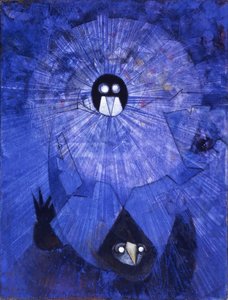
untitled (7055)
Format de reproduction
Max Ernst’s “untitled (7055)” isn't merely a painting; it’s an invitation into a dreamscape—a meticulously crafted tableau that embodies the core tenets of Surrealism. Created in 1943 during the tumultuous years of World War II, this artwork transcends chronological boundaries, speaking to universal themes of anxiety, hope, and the subconscious mind.
The style is undeniably surrealistic, characterized by illogical juxtapositions and dreamlike imagery. Ernst’s technique—primarily collage—is masterful in its ability to fuse disparate elements into a unified whole. Fragments of newspaper clippings, burlap fabric, and painted surfaces converge to form a textured surface that mimics the unpredictable nature of the subconscious. Ernst employed a layering process, applying paint over collage materials, creating depth and complexity within the composition.
Historically, Surrealism emerged as a reaction against rational thought and artistic conventions prevalent in Europe after World War I. Artists like Ernst sought to liberate creativity from the constraints of logic, tapping into the realm of fantasy and irrational impulses. Influenced by Sigmund Freud’s psychoanalytic theories—particularly his exploration of dreams—the movement aimed to depict inner psychological realities rather than external appearances.
Symbolism permeates every aspect of “untitled (7055).” The prominent moon dominates the upper portion of the canvas, representing femininity, intuition, and the unconscious. Above it floats a large circle resembling a sun, symbolizing illumination and enlightenment—a paradoxical element that underscores the Surrealist preoccupation with contradictions.
Below the celestial bodies sits a castle-like structure, rendered in muted tones, suggesting resilience amidst adversity. Surrounding it are figures—presumably people—who appear to be gazing upwards at the moonlit sky. This gesture conveys a sense of wonder and contemplation, hinting at humanity’s yearning for transcendence.
More than just aesthetically pleasing, “untitled (7055)” possesses an emotional resonance that lingers long after viewing it. The artwork evokes feelings of melancholy, apprehension, yet simultaneously inspires optimism—a testament to Ernst's ability to capture the complexities of human experience within a single frame. It’s a piece designed not merely to be observed but felt—a reminder that art can illuminate hidden depths of consciousness and offer glimpses into realms beyond our everyday perceptions.
A high-quality reproduction of “untitled (7055)” would allow collectors and interior designers alike to appreciate Ernst’s groundbreaking vision—bringing a touch of Surrealist magic into any space.

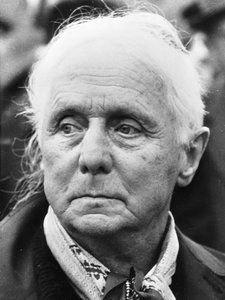
1891 - 1976 , Allemagne


Restez informé(e) des dernières actualités artistiques, des offres exclusives et des idées de décoration.
Parlez-nous de votre projet et nos experts en art vous proposeront 3 suggestions d'œuvres personnalisées.
Laissez-nous sélectionner 3 œuvres rien que pour vous – Gratuit !


 Partager


 Afficher la suite







 L'option verre n'est disponible que pour les dimensions inférieures à 110 cm.