x


Impression giclée ou sur toile de qualité musée, avec une production rapide et des finitions au choix. ( Switch to hand made Painting Switch to Image)





























Choisissez parmi nos formats prédéfinis qui respectent les proportions originales de l’œuvre.

Vous pouvez saisir vos propres dimensions pour vous adapter à un cadre ou à un espace spécifique. Si la taille sélectionnée ne correspond pas aux proportions de l'image originale, nous recadrerons l'œuvre ou étendrons l'image avec une bordure en miroir ou une couleur unie. Une maquette numérique vous sera envoyée pour approbation avant le début de la production.
Veuillez noter que l'aperçu à l'écran ne reflète pas le recadrage ou l'extension réelle. Seule la maquette montrera avec précision la composition finale.
Bien que des tailles personnalisées soient disponibles, nous vous recommandons de choisir une dimension dans la liste prédéfinie afin de préserver les proportions originales.
Livraison dans le monde entier () en 2 semaines au lieu des 4/5 semaines habituelles. (30 juillet)


Para III
Format de reproduction
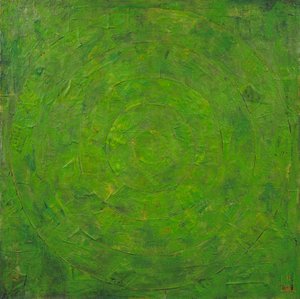
Morris Louis (1912–1962), an American Color Field painter, revolutionized abstract art in the mid-century with his groundbreaking approach to pigment application. His monumental canvases like “Para III,” created in 1959, exemplify this distinctive style—a deliberate rejection of traditional representation and a fervent embrace of pure color as expressive language.
“Para III” immediately captivates viewers with its overwhelming vibrancy. Dominating the canvas is a tapestry of crimson, scarlet, and magenta hues that bleed outwards from vertical bands of pigment, creating an illusion of flowing light and movement. The artist’s meticulous technique—the pioneering use of Magna paint—allowed for unprecedented control over color dispersion and layering, resulting in a surface texture that resembles solidified wax.
Louis's method involved pouring Magna onto unstretched canvas, allowing the pigment to spread organically across the surface. This process eschewed brushes entirely, prioritizing spontaneity and responding directly to the interplay of light and atmosphere. The resulting “silkscreen” effect is not merely accidental; it’s a calculated decision designed to convey an emotional state—a profound contemplation of nature and a yearning for transcendence.
Influenced by artists like Ralph Albert Blakelock and William James Glackens, Louis sought to capture the essence of feeling rather than depicting visual details. Blakelock's tonalist landscapes – particularly “Moonlight” – instilled in Louis a fascination with capturing subtle gradations of color and conveying mood through atmospheric perspective. Similarly, Glackens’ still lifes—such as “Still Life with Roses & Fruit”—demonstrated the power of color to evoke emotion and stimulate contemplation.
“Para III” resonates deeply with viewers due to its ability to bypass rational thought and tap into primal instincts. The bold colors pulsate with energy, mirroring the dynamism of the natural world—specifically, the forest setting depicted in Blakelock’s work. It's a piece that invites introspection and encourages contemplation on themes of beauty, solitude, and spiritual awakening.
Furthermore, Louis’s exploration of Magna paint represents a significant advancement in pigment technology. This acrylic emulsion, developed specifically for him by Leo Newman, offered superior adhesion and color stability compared to conventional oil paints, allowing for greater artistic freedom and expanding the possibilities of Color Field painting.


1912 - 1962 , États-Unis d'Amérique
Plongez dans l'univers révolutionnaire de Kazimir Malevich ! Découvrez les 25 œuvres clés du Suprématisme, de 'Carré Noir' à 'Blanc sur Blanc'. Inspirez votre décoration intérieure avec des reproductions d'art exceptionnelles. Explorez la collection complète sur Most-Famous-Paintings.com.

Explore the captivating world of Beatrice Parsons, a pioneering British abstract expressionist. Discover her journey from garden watercolors to evocative color field paintings and learn about her place within art history.

Explore the profound spiritual resonance of Color Field Painting with insights into Rothko, Newman & Still. Discover the techniques & legacy of this influential abstract art movement.
Plongez dans l'univers émotionnel de Mark Rothko avec les 25 œuvres clés du maître de l'abstraction. Découvrez l'histoire, la technique et le pouvoir des couleurs de ces tableaux iconiques. Reproductions d'art de qualité musée sur Most-Famous-Paintings.com
Plongez dans l'univers vibrant de Kandinsky ! Découvrez les 25 œuvres majeures du pionnier de l'art abstrait. Explorez son expressionnisme, ses couleurs audacieuses et l'histoire fascinante derrière chaque tableau. Reproductions d'exception sur Most-Famous-Paintings.com.


Restez informé(e) des dernières actualités artistiques, des offres exclusives et des idées de décoration.
Parlez-nous de votre projet et nos experts en art vous proposeront 3 suggestions d'œuvres personnalisées.
Laissez-nous sélectionner 3 œuvres rien que pour vous – Gratuit !


 Preview
 Partager
 Partager
 Détails de l'œuvre

 Télécharger
 Articles similaires
 Radiographie
 Diaporama


 Afficher la suite







 L'option verre n'est disponible que pour les dimensions inférieures à 110 cm.