x

Huile sur toile peinte à la main, avec cadre et dimensions personnalisés, réalisée sur commande par nos artistes. ( Passer au tirage Passer à l'image)





























Choisissez parmi nos formats prédéfinis qui respectent les proportions originales de l’œuvre.

Vous pouvez saisir vos propres dimensions pour l'adapter à un cadre ou à un espace spécifique. Si la taille sélectionnée ne correspond pas aux proportions de l'image d'origine, nous recadrerons l'œuvre ou prolongerons la peinture avec des éléments peints à la main supplémentaires. Une maquette numérique vous sera envoyée pour approbation avant le début de la production.
Veuillez noter que l'aperçu à l'écran ne reflète pas le recadrage ou l'extension réels. Seule la maquette montrera fidèlement la composition finale.
Bien que des tailles personnalisées soient disponibles, nous vous recommandons de sélectionner une dimension dans la liste prédéfinie afin de préserver les proportions d'origine.
Livraison dans le monde entier () en 3 à 4 semaines au lieu des 5 semaines habituelles. (10 août). Aucun compromis sur la qualité.


Ophelia
Format de la reproduction
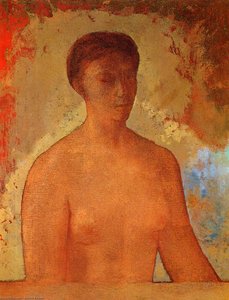
Odilon Redon's “Ophelia,” painted in 1903, stands as a haunting testament to the Symbolist movement’s fascination with psychological landscapes and the subconscious. More than just a depiction of Shakespeare’s tragic heroine—a young woman drowning in the Thames after rejecting Hamlet’s affections—the painting delves into realms beyond rational observation, presenting an ethereal vision steeped in melancholic beauty.
The Symbolist movement emerged in France around 1890 as a reaction against Impressionism’s focus on capturing fleeting sensory impressions. Artists like Redon sought to express profound psychological and spiritual truths—often obscured by conscious thought—through evocative imagery and symbolic motifs. Influenced by thinkers such as Nietzsche and Freud, Symbolists explored themes of death, decay, and the subconscious mind, reflecting anxieties about modernity and questioning traditional moral values.
Redon’s masterful use of symbolism elevates “Ophelia” beyond a simple narrative illustration. The scattered flowers—lilacs, poppies, roses—represent beauty intertwined with fragility and impending doom, mirroring Ophelia's own vulnerability as she succumbs to despair. Similarly, the bird perched in the upper right corner symbolizes hope amidst sorrow, albeit a hope tinged with melancholy. Most powerfully, however, is the overarching impression of sadness conveyed through Redon’s muted palette and hazy brushstrokes—a visual embodiment of Ophelia’s inner turmoil.
"Ophelia" doesn't merely depict a scene from Shakespeare; it invites viewers into the protagonist’s tormented psyche. Redon succeeds in capturing the essence of grief and disillusionment, presenting an image that lingers long after viewing—a poignant reminder of the human capacity for profound emotion and the enduring power of art to communicate experiences beyond words.


1840 - 1916 , France

Plongez dans l'univers fascinant des 10 chefs-d'œuvre de l'aquarelle qui ont marqué l'histoire de l'art. Découvrez Turner, Monet, Goya et bien d'autres ! Retrouvez ces œuvres emblématiques en reproductions exceptionnelles sur Most-Famous-Paintings.com.

Plongez dans l'univers fascinant des 10 plus beaux tableaux dominés par le bleu ardoise. Découvrez l'histoire, les artistes et les techniques de ces chefs-d'œuvre impressionnistes et contemporains. Inspirez votre décoration intérieure avec !

Explore the captivating world of watercolor painting! Discover its rich history, essential techniques, influential artists & collecting tips. A comprehensive guide for art enthusiasts from Most-Famous-Paintings.

Explorez l'histoire fascinante de l'aquarelle, des origines à nos jours. Découvrez les techniques, les artistes emblématiques et nos conseils d'experts pour collectionner ces œuvres éphémères. Most-Famous-Paintings.

Explorez l'histoire fascinante de l'aquarelle, des techniques ancestrales aux maîtres impressionnistes. Découvrez les artistes emblématiques et nos conseils pour apprécier et collectionner cette peinture lumineuse.


Restez informé(e) des dernières actualités artistiques, des offres exclusives et des idées de décoration.
Parlez-nous de votre projet et nos experts en art vous proposeront 3 suggestions d'œuvres personnalisées.
Laissez-nous sélectionner 3 œuvres rien que pour vous – Gratuit !


 Aperçu en situation
 Envoyer
 Partager
 Détails de l'œuvre

 Télécharger
 Articles similaires
 Radiographie
 Diaporama


 Lire la suite







 L'option verre n'est disponible que pour les dimensions inférieures à 110 cm.