Vendez vos œuvres
Ma liste de souhaits Panier Cart
Aperçu en situationAperçu en situation Visualiser en RAVisualiser en RA Commander l'impression Commander l'impressionCommander la reproduction peinte à la main Commander la reproduction peinte à la main EnvoyerEnvoyer
Détails de l'œuvreDétails de l'œuvre Ajouter aux favoris Ajouter aux favoris TéléchargerTélécharger Articles similairesArticles similaires RadiographieRadiographie DiaporamaDiaporama

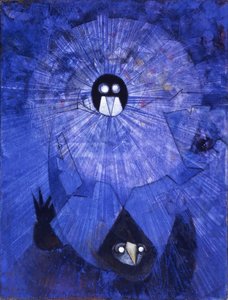
Untitled (320)

Explore Otto Mueller's evocative nudes & Romani subjects! A key Die Brücke Expressionist, his harmonious landscapes were condemned by the Nazis. Discover his art today.

Acquérez une image numérique haute résolution et optimisée, d'une qualité bien supérieure à l'aperçu en ligne.

Chaque fichier est méticuleusement préparé par nos spécialistes internes à l'aide d'outils avancés et d'une retouche manuelle experte. Nous garantissons que chaque image possède une clarté exceptionnelle, une précision des couleurs irréprochable et un niveau de détail fin.

Le fichier final est livré par e-mail sous 72 heures, optimisé pour une utilisation immédiate dans des contextes professionnels, éditoriaux et d'impression. Il offre la même qualité de confiance que celle utilisée par les plus grands studios de création, éditeurs et galeries.

Image numérique

Téléchargez un fichier haute résolution pour votre usage personnel, l'impression et vos projets créatifs. (Commander l'impression Commander l'impressionCommander la reproduction peinte à la main Commander la reproduction peinte à la main)

Prix total

$ 24,90

Inclus avec chaque commande d'image numérique

Livraison numérique experte, garantie.

En choisissant Most-Famous-Paintings.com, vous n'obtenez pas seulement une simple image : vous recevez une œuvre numérique sublimée avec professionnalisme, conçue avec précision et accompagnée d'une garantie de satisfaction. Voici tout ce qui accompagne automatiquement votre commande :

shipping_icon
Envoi rapide par e-mail

Votre fichier d'image numérique haute résolution vous sera envoyé par e-mail sous 72 heures après votre commande — prêt à un usage immédiat.

canvas_icon
Fichier numérique optimisé par l'IA

Votre œuvre d'art bénéficie d'une optimisation professionnelle grâce à des outils d'IA avancés et une retouche manuelle, garantissant un niveau maximal de détail, de clarté et de fidélité chromatique.

insurance_icon
Réexpédition gratuite à vie

Vous avez accidentellement supprimé ou perdu votre fichier ? Pas d'inquiétude — nous vous le renverrons gratuitement, quand vous le souhaitez.

tax_icon
Aucun frais de douane - À jamais

Profitez de votre œuvre d'art instantanément sans frais de douane ni de livraison — les téléchargements numériques sont toujours exonérés de taxes.

color_icon
Garantie de fidélité des couleurs

Nous garantissons que votre image numérique reproduit les couleurs de l'original aussi fidèlement que possible grâce à des outils professionnels et une gestion rigoureuse des couleurs.

return_icon
Garantie satisfaction 60 jours

Si vous n'êtes pas satisfait de votre image numérique, nous la retoucherons ou vous rembourserons 100% sous 60 jours — sans poser de questions.

guarantee_icon
Garantie de remboursement à 100%

Pas satisfait ? Obtenez un remboursement intégral dans les 60 jours suivant la réception de votre fichier numérique — sans aucune question posée.

discount_icon
Remises sur les commandes groupées

Achetez 3 images, économisez 10% - Achetez 5, économisez 15% - Achetez 10+, économisez 20%. Idéal pour les projets créatifs, les galeries et les agences.



Biographie de l'artiste

A Life Immersed in Color and Controversy: The World of Otto Müller

Otto Müller, a pivotal figure within the German Expressionist group Die Brücke (The Bridge), remains an artist whose work pulsates with raw emotion, spiritual yearning, and a profound connection to the natural world. Born in Liepāja, Latvia – then part of the Russian Empire – in 1874, his early life was marked by a restless spirit and a burgeoning artistic talent that quickly outgrew conventional academic training. He wasn’t drawn to meticulous realism but rather to capturing the *essence* of experience, a pursuit that would define his entire career. His father's profession as a merchant exposed him to diverse cultures and landscapes early on, fostering an openness to new perspectives which later manifested in his unique artistic style. Müller’s initial studies at the Düsseldorf Academy were short-lived; he found its rigid structure stifling, preferring instead to develop independently, absorbing influences from artists like Van Gogh, Gauguin, and Edvard Munch – masters who prioritized emotional intensity over precise representation. This rejection of academic norms was a crucial step in his journey toward becoming a founding member of Die Brücke in 1905.

The Bridge and the Search for Primal Expression

Die Brücke wasn’t merely an artistic collective; it was a brotherhood united by a shared desire to break free from societal constraints and explore the depths of human emotion through art. Müller, alongside Kirchner, Heckel, Schmidt-Rottluff, and Pechstein, sought to reconnect with a more primal form of expression, drawing inspiration from African sculpture, medieval woodcuts, and the uninhibited energy of folk art. This pursuit led to a distinctive aesthetic characterized by bold colors, distorted forms, and a deliberate rejection of traditional perspective. Müller’s contribution to Die Brücke was particularly notable for his depictions of nude figures – often set within lush, evocative landscapes – and his sensitive portrayals of Romani people (Gypsies). These subjects weren't simply representations; they embodied a longing for an authentic existence uncorrupted by modern civilization. His paintings from this period are imbued with a sense of melancholy and spiritual searching, reflecting the group’s broader anxieties about alienation and the loss of connection in an increasingly industrialized world. He wasn’t interested in portraying idyllic scenes but rather capturing the psychological weight of his subjects, their vulnerability and resilience.

A Unique Voice: Style and Symbolism

Müller's style evolved throughout his career, yet certain hallmarks remained consistent. His use of color was particularly striking – often employing jarring juxtapositions and intense hues to create a sense of emotional tension. He favored simplified forms and flattened perspectives, reminiscent of woodcuts, which contributed to the raw, almost visceral quality of his work. The landscapes in his paintings are rarely specific locations; they serve as psychological spaces, mirroring the inner states of his figures. The Romani people he depicted were not exoticized or romanticized but rather presented with dignity and empathy. He spent extended periods living amongst them, learning their customs and traditions, and striving to capture their unique worldview. Recurring motifs, such as trees, water, and the human body, held symbolic weight in his work. Trees often represented life force and connection to nature, while water symbolized purification and transformation. The nude figures, frequently depicted in poses of contemplation or vulnerability, embodied a longing for spiritual wholeness. His later works also reveal an interest in religious themes, particularly those related to the Passion of Christ, reflecting a lifelong fascination with spirituality and suffering.

Condemnation and Legacy: A Troubled Reception

Despite his artistic achievements, Müller’s career was marked by controversy and hardship. His work, along with that of other Expressionists, was deemed “degenerate” by the Nazi regime in 1937, and he was stripped of his professorship at the Breslau Academy. He was forbidden to paint and lived in relative isolation during World War II. This persecution, however, did not diminish his artistic vision; he continued to create art throughout this period, albeit with limited resources. After the war, Müller slowly regained recognition, but his work remained largely overlooked for many years. Today, Otto Müller is celebrated as one of the most important figures in German Expressionism. His paintings are admired for their emotional intensity, spiritual depth, and unique aesthetic sensibility. He paved the way for future generations of artists to explore the complexities of human experience through bold experimentation and uncompromising self-expression. His influence can be seen in the work of numerous contemporary painters who continue to grapple with themes of alienation, spirituality, and the search for meaning in a fragmented world. His comic strip series Ottifanten, created under a pseudonym during his later years, demonstrates an unexpected playful side to his artistic personality.