Vendez vos œuvres
Ma liste de souhaits Panier Cart
Aperçu en situationAperçu en situation Visualiser en RAVisualiser en RA Commander la reproduction peinte à la main Commander la reproduction peinte à la mainTélécharger l'image haute résolution Télécharger l'image haute résolution EnvoyerEnvoyer
Détails de l'œuvreDétails de l'œuvre Ajouter aux favoris Ajouter aux favoris TéléchargerTélécharger Articles similairesArticles similaires RadiographieRadiographie DiaporamaDiaporama

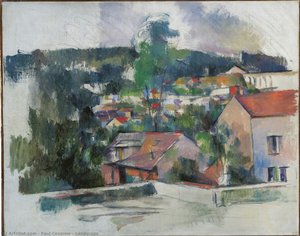
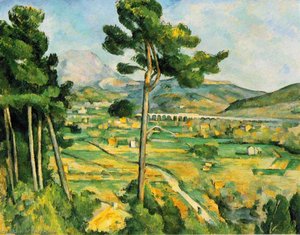
Paysage avec moulin à eau

Paysage avec moulin à eau de Paul Cézanne : une huile sur toile emblématique du mouvement postimpressionniste, capturant la sérénité de la vie rurale et influencée par Gauguin et Seurat.

Explorez l'art révolutionnaire de Paul Cézanne (1839-1906), un maître du post-impressionnisme qui a relié l'impressionnisme et le cubisme. Découvrez ses formes géométriques, ses coups de pinceau uniques, ses natures mortes et son impact durable sur l'art moderne. #Cézanne #PostImpressionnisme

Giclées et impressions d'art

Impressions giclées ou sur toile de qualité musée, avec une production rapide et des finitions au choix. (Commander la reproduction peinte à la main Commander la reproduction peinte à la mainTélécharger l'image haute résolution Télécharger l'image haute résolution)

P118B $10
P118H $10
P118W $10
P438Z $10
P508JH $12
P508YH $12
P805H $10
P805Z $10
P919BZ $10
P919G $10
P919XJ $10
P959ZH $10
P968JZ $12
W106C $8
W218G $10
W218JH $8
W218Y $10
W307PJ $10
W316G $10
W316PJ $8
W316Y $10
W398PJ $8
W4111J $10
W500HY $15
W500JH $15
W692G $12
W849H $8
W940BG $15
W953PJ $8

Standard
custom
CM
INCH

Choisissez parmi nos formats prédéfinis qui respectent les proportions originales de l’œuvre.

largeur
hauteur

Vous pouvez saisir vos propres dimensions pour vous adapter à un cadre ou à un espace spécifique. Si la taille sélectionnée ne correspond pas aux proportions de l'image originale, nous recadrerons l'œuvre ou étendrons l'image avec une bordure en miroir ou une couleur unie. Une maquette numérique vous sera envoyée pour approbation avant le début de la production.
Veuillez noter que l'aperçu à l'écran ne reflète pas le recadrage ou l'extension réelle. Seule la maquette montrera avec précision la composition finale.
Bien que des tailles personnalisées soient disponibles, nous vous recommandons de choisir une dimension dans la liste prédéfinie afin de préserver les proportions originales.

Livraison dans le monde entier () en 2 semaines au lieu des 4/5 semaines habituelles. (21 août)

why_choose_icon
Livraison express gratuite dans le monde entier
why_choose_icon
Toile de lin de qualité supérieure
why_choose_icon
Assurance transport complète
why_choose_icon
Garantie de remboursement des droits de douane
why_choose_icon
Garantie de fidélité des couleurs
why_choose_icon
Politique de retour de 60 jours (uniquement en cas de défaut)
why_choose_icon
Garantie de remboursement à 100%
why_choose_icon
Offre de tarifs dégressifs

Prix total

$ 68

reproduction

Paysage avec moulin à eau

Giclées et impressions d'art

Format de la reproduction

-

Prix total

$ 68

Informations clés

  • Location: Yale University Art Gallery
  • Artistic style: Characteristic of Post-Impressionism
  • Year: 1871
  • Subject or theme: Rural landscape
  • Movement: Post-Impressionism
  • Title: Landscape with Watermill
  • Influences: Impressionism

Quiz d'art

Chaque question ne comporte qu'une seule bonne réponse.

Question 1:
What artistic movement is Paul Cézanne primarily associated with?
Question 2:
Where is Landscape with Watermill currently housed?
Question 3:
What characterizes Cézanne’s style in Landscape with Watermill?
Question 4:
The painting depicts a scene featuring what prominent element?
Question 5:
Landscape with Watermill represents a pivotal moment in art history by bridging which two artistic styles?

Description de la pièce

Landscape with Watermill

Paul Cézanne's Landscape with Watermill stands as a cornerstone of Post-Impressionism, embodying Cézanne’s revolutionary approach to capturing the essence of rural France in 1871. Currently residing at the Yale University Art Gallery in Hartford, Connecticut, this painting transcends mere representation—it’s an invitation to contemplate the profound beauty of simplicity and the artist's unwavering dedication to exploring subjective experience.

Composition and Stylistic Innovation

The artwork immediately draws the eye with its horizontal orientation, emphasizing stability and tranquility. Cézanne skillfully employs a dirt road converging towards a watermill in the foreground, establishing a visual pathway that guides the viewer’s gaze. Scattered trees punctuate the background, layering depth and dimension onto the canvas—a deliberate departure from Impressionistic optical realism. Figures appear subtly integrated into the landscape, suggesting human presence without dominating the scene; they are not merely observed but absorbed into the overall atmosphere. Cézanne's technique is characterized by flattened perspective and simplified forms – a conscious rejection of Impressionist conventions that prioritized capturing fleeting light effects. Instead, he builds up layers of color and texture through repetitive brushstrokes, anticipating the geometric abstraction championed by Cubism decades later.

A Window Into Cézanne’s Artistic Vision

Paul Cézanne's artistic journey was marked by tireless experimentation with color and form, driven by a conviction that art should convey emotion as much as it depicts reality. He meticulously revisited motifs—often landscapes or still lifes—repeating forms and colors to imbue them with multiple layers of meaning and tactile richness. This methodical process wasn’t merely about meticulous observation; it was about distilling the visual world into its fundamental elements, reflecting Cézanne's belief in capturing not just what he saw but how he felt about it. His work profoundly influenced subsequent generations of artists, establishing a new visual language for the twentieth century and cementing his legacy as one of the most influential figures in modern art history.

Symbolism and Emotional Resonance

Beyond its formal innovations, Landscape with Watermill resonates with a palpable sense of serenity and contemplation. The muted palette—dominated by earthy tones—evokes the quiet grandeur of the French countryside, inviting viewers to immerse themselves in its tranquil beauty. Cézanne’s deliberate simplification of shapes contributes to this emotional impact, stripping away extraneous detail to focus on essential forms – a technique that speaks to a deeper yearning for connection with nature and an appreciation for its enduring power.

The Legacy of Cézanne's Influence

Landscape with Watermill represents a pivotal moment in artistic history—a decisive step away from Impressionistic optical realism toward subjective expression and formal exploration. Cézanne’s pioneering approach paved the way for Cubism and profoundly shaped the sensibilities of artists who followed him, establishing a new visual language that continues to inspire creativity today. For those seeking to experience the beauty and artistry of Cézanne's vision firsthand, Most-Famous-Paintings.com offers exceptional reproductions crafted with meticulous attention to detail—bringing this iconic masterpiece into your home.

Biographie de l'artiste

jeune vie et influences

paul cézanne, peintre français post-impressionniste, est né le 19 janvier 1839 à Aix-en-Provence, en France. Sa jeune vie a été marquée par un fort attachement à sa famille, dont l'entreprise bancaire lui assurait une sécurité financière. Cela lui a permis de se consacrer à ses aspirations artistiques sans être entravé par des soucis financiers. les nabis, néo-impressionnisme et symbolisme ont influencé le travail de Cézanne au début, qui se caractérisait par son accent sur les formes géométriques et une palette de couleurs limitée. Son intérêt pour les œuvres de paul gauguin et georges seurat a renforcé son style post-impressionniste.

style artistique et techniques

L'utilisation innovante de Cézanne des plans de couleurs et de petits coups de pinceau répétitifs a créé des champs complexes qui exprimaient son étude approfondie des sujets. Son approche souvent exploratoire de l'art a conduit au développement d'une nouvelle langue picturale, mettant l'accent sur la structure sous-jacente des objets dans une composition.

héritage et impact

Le travail pionnier de Cézanne en post-impressionnisme a ouvert la voie à divers mouvements avant-gardistes, notamment le cubisme, le fauvisme et le surréalisme. Son influence se retrouve dans les œuvres de pablo picasso, henri matisse et georges braque. L'héritage de Cézanne continue d’inspirer les artistes et les amateurs d’art, consolidant ainsi sa place en tant que figure centrale de l’histoire de l’art moderne.
Paul Cézanne

Paul Cézanne

1839 - 1906 , France

L'essentiel de l'artiste

  • Artistes Influents:
    • Paul Gauguin
    • Georges Seurat
  • Date De Décès: 22 octobre 1906
  • Date De Naissance: 19 janvier 1839
  • Influences Artistiques:
    • Pablo Picasso
    • Henri Matisse
    • Georges Braque
  • Lieu De Naissance: Aix-en-Provence, France
  • Mouvement Artistique: Post-impressionnisme
  • Nationalité: Français
  • Nom Complet: Paul Cézanne
  • Œuvres Notables:
    • Le Plan d'eau à Jas de Bouffan
    • Portrait d’Émile Zola
    • Forêt
    • Mont Sainte-Victoire
Explorez des œuvres d'art classées par thèmes, styles et caractéristiques.