x

Huile sur toile peinte à la main, avec cadre et dimensions personnalisés, réalisée sur commande par nos artistes. ( Passer au tirage Passer à l'image)





























Choisissez parmi nos formats prédéfinis qui respectent les proportions originales de l’œuvre.

Vous pouvez saisir vos propres dimensions pour l'adapter à un cadre ou à un espace spécifique. Si la taille sélectionnée ne correspond pas aux proportions de l'image d'origine, nous recadrerons l'œuvre ou prolongerons la peinture avec des éléments peints à la main supplémentaires. Une maquette numérique vous sera envoyée pour approbation avant le début de la production.
Veuillez noter que l'aperçu à l'écran ne reflète pas le recadrage ou l'extension réels. Seule la maquette montrera fidèlement la composition finale.
Bien que des tailles personnalisées soient disponibles, nous vous recommandons de sélectionner une dimension dans la liste prédéfinie afin de préserver les proportions d'origine.
Livraison dans le monde entier () en 3 à 4 semaines au lieu des 5 semaines habituelles. (5 août). Aucun compromis sur la qualité.


Réflexions dans l'eau
Format de la reproduction
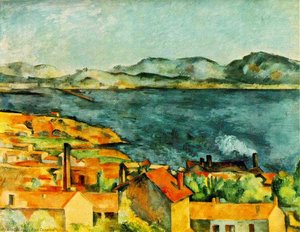
Paul Cézanne’s “Reflections in the Water,” painted in 1890, isn't merely a landscape; it’s an invitation. An invitation to step into a world of serene contemplation, where light dances on water and the very essence of nature is distilled onto canvas. This pivotal work, firmly rooted within the Post-Impressionist movement, represents a profound shift in artistic perception – moving beyond mere representation towards capturing the underlying structure and emotional resonance of the subject. It’s a painting that whispers secrets of form, color, and the quiet beauty of the natural world.
Cézanne's approach to landscape was revolutionary. He rejected the fleeting impressions favored by Impressionism, instead meticulously analyzing the geometry beneath the surface. “Reflections in the Water” exemplifies this shift brilliantly. The composition is built upon a foundation of interlocking planes – the solidity of the trees, the shimmering expanse of the water, and the subtle undulations of the distant hills. These elements aren’t simply depicted; they are constructed, as if Cézanne were sculpting with color and light. Notice how he uses short, broken brushstrokes to define these forms, creating a sense of depth and volume that transcends traditional perspective. The reflections themselves are not photographic copies but rather interpretations – distilled versions of the surrounding landscape, imbued with Cézanne’s unique vision.
Cézanne's masterful manipulation of color is central to the painting’s impact. He employs a palette dominated by blues, greens, and ochres, creating a harmonious yet dynamic atmosphere. The water isn’t rendered in a single shade; it shifts between turquoise, emerald, and deep indigo, reflecting the changing light and mood. The use of complementary colors – such as the vibrant yellows and oranges in the trees – intensifies these effects, adding visual excitement without disrupting the overall sense of tranquility. Cézanne wasn't interested in replicating the exact hues he observed; instead, he used color to convey feeling and structure. The light isn’t simply illuminating the scene; it’s shaping it, defining its contours, and imbuing it with a palpable energy.
"Reflections in the Water" stands as a crucial link between Impressionism and Cubism. While influenced by the Impressionists' focus on capturing fleeting moments of light and color, Cézanne moved beyond their emphasis on optical realism. He began to deconstruct objects into their fundamental geometric forms – cubes, cylinders, cones – laying the groundwork for Picasso’s revolutionary approach. The painting’s fragmented perspective and flattened planes foreshadow the Cubist explorations that would follow. It's a testament to Cézanne’s profound influence; he didn’t simply paint landscapes; he redefined how we *see* them.
Beyond its formal innovations, “Reflections in the Water” possesses a subtle yet powerful symbolic depth. The boat, positioned centrally within the composition, represents human presence – a fleeting interruption of the natural world. It invites us to contemplate our relationship with nature, our place within it, and the transient beauty of the moment. The water itself symbolizes fluidity, change, and perhaps even eternity. The painting’s overall mood is one of quiet contemplation and serenity—a refuge from the complexities of modern life. Cézanne wasn't simply depicting a scene; he was evoking an emotional response – a sense of peace, wonder, and connection to something larger than ourselves.
A hand-painted reproduction of this iconic artwork offers a unique opportunity to bring Cézanne’s vision into your home. Most-Famous-Paintings meticulously recreates the painting's intricate details, color palette, and textural nuances using traditional oil painting techniques. Each reproduction is created by skilled artists who are passionate about preserving the legacy of this masterpiece. Whether you’re an art enthusiast, a collector, or simply seeking to add a touch of timeless beauty to your interior space, a Most-Famous-Paintings reproduction of “Reflections in the Water” is a stunning addition to any collection.


1839 - 1906 , France

Explore the transformative era of Post-Impressionism. Discover how masters like Van Gogh moved beyond light to embrace emotion, structure, and vibrant color, redefining modern art history through expressive brushwork and symbolic depth.


Restez informé(e) des dernières actualités artistiques, des offres exclusives et des idées de décoration.
Parlez-nous de votre projet et nos experts en art vous proposeront 3 suggestions d'œuvres personnalisées.
Laissez-nous sélectionner 3 œuvres rien que pour vous – Gratuit !


 Aperçu en situation
 Envoyer
 Partager
 Détails de l'œuvre

 Télécharger
 Articles similaires
 Radiographie
 Diaporama

 Lire la suite







 L'option verre n'est disponible que pour les dimensions inférieures à 110 cm.