Wishlist Mon panier Cart
Commander l'impression Commander l'impressionAcheter l'image haute résolution Acheter l'image haute résolution PartagerPartager
Détails de l'œuvreDétails de l'œuvre Ajouter aux favoris Ajouter aux favoris TéléchargerTélécharger Articles similairesArticles similaires RadiographieRadiographie DiaporamaDiaporama

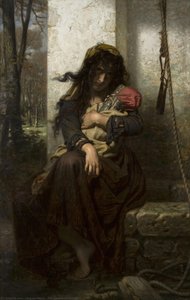
The Acrobats

Paul Gustave Doré’s "The Acrobats" captures a poignant scene of intimacy and quiet contemplation with masterful detail and dramatic lighting, reminiscent of the Romantic era – explore this captivating artwork and bring it into your home.

Explorez les gravures sur bois dramatiques et les illustrations de Gustave Doré (1832-1883). Maître du Romantisme, célèbre pour ses scènes bibliques, l'Enfer de Dante et les chefs-d'œuvre littéraires. Découvrez son art influent !

Reproduction à l'huile faite à la main

Huile sur toile peinte à la main, avec cadre et dimensions personnalisés, réalisée sur commande par nos artistes.


P118B $10
P118H $10
P118W $10
P438Z $10
P508JH $12
P508YH $12
P805H $10
P805Z $10
P919BZ $10
P919G $10
P919XJ $10
P959ZH $10
P968JZ $12
W106C $8
W218G $10
W218JH $8
W218Y $10
W307PJ $10
W316G $10
W316PJ $8
W316Y $10
W398PJ $8
W4111J $10
W500HY $15
W500JH $15
W692G $12
W849H $8
W940BG $15
W953PJ $8

Standard
custom
CM
INCH

Choisissez parmi nos formats prédéfinis qui respectent les proportions originales de l’œuvre.

largeur
hauteur

Vous pouvez saisir vos propres dimensions pour l'adapter à un cadre ou à un espace spécifique. Si la taille sélectionnée ne correspond pas aux proportions de l'image d'origine, nous recadrerons l'œuvre ou prolongerons la peinture avec des éléments peints à la main supplémentaires. Une maquette numérique vous sera envoyée pour approbation avant le début de la production.
Veuillez noter que l'aperçu à l'écran ne reflète pas le recadrage ou l'extension réels. Seule la maquette montrera fidèlement la composition finale.
Bien que des tailles personnalisées soient disponibles, nous vous recommandons de sélectionner une dimension dans la liste prédéfinie afin de préserver les proportions d'origine.

Exemples de personnalisation : remplacer un visage par la photo du client ; ajouter un animal de compagnie (par exemple, remplacer un chat par un chien) ; inclure un message caché en arrière-plan ; modifier le paysage ou les éléments de l'arrière-plan.
Après la commande, l’équipe Most-Famous-Paintings.com contactera le client par e-mail pour obtenir ses instructions et lui fournira une maquette d’aperçu.

Livraison dans le monde entier () en 3 à 4 semaines au lieu des 5 semaines habituelles. (18 juillet). Aucune concession sur la qualité.

why_choose_icon
Livraison express gratuite dans le monde entier
why_choose_icon
Toile de lin de haute qualité
why_choose_icon
Assurance transport complète
why_choose_icon
Garantie de remboursement des frais de douane
why_choose_icon
Garantie de fidélité des couleurs
why_choose_icon
Politique de retour de 60 jours (uniquement en cas de défaut)
why_choose_icon
Garantie de remboursement à 100%
why_choose_icon
Réduction sur les achats groupés

Prix total

-

reproduction

The Acrobats

Technique de reproduction

Format de reproduction

-

Prix total final

-

En bref

  • Artistic style: Realist illustration
  • Movement: Romanticism
  • Subject or theme: Acrobats, domesticity
  • Medium: Oil on canvas
  • Notable elements: Detailed scene, objects
  • Influences: Romanticism
  • Title: The Acrobats

Description de l'œuvre

A Moment Frozen in Time: Paul Gustave Doré’s “The Acrobats”

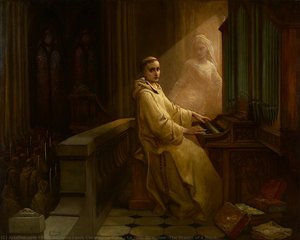
Paul Gustave Doré's "The Acrobats" is not merely a depiction of a scene; it’s an immersion into a world brimming with theatricality, melancholy, and the quiet drama of everyday life. Painted in his signature style – a masterful blend of Romanticism and burgeoning Realism – this work captures a fleeting moment, likely intended for illustration within a larger narrative, yet possessing a profound emotional resonance that transcends its original purpose. The scene unfolds with an almost photographic precision, meticulously rendered with Doré’s characteristic use of dramatic chiaroscuro, where pools of light illuminate the figures while deep shadows envelop them, intensifying their expressions and creating a palpable sense of atmosphere.

  • Subject Matter: The painting centers around a woman seated on the ground, her head nestled in an unseen lap – a posture that immediately evokes vulnerability and perhaps a longing for comfort. Surrounding her are other figures, including a standing performer and a seated companion, suggesting a troupe of acrobats or entertainers. A loyal dog adds to the domesticity of the scene, grounding the fantastical elements with a touch of familiar warmth.
  • Technique: Doré’s mastery is evident in his detailed rendering of textures – the rough fabric of the woman's dress, the polished surface of the clock, the worn leather of the books. His use of cross-hatching and stippling creates a remarkable sense of depth and volume, bringing the figures to life with an almost tactile quality.
  • Color Palette: The color scheme is dominated by muted tones – blues, browns, and grays – contributing to the painting’s somber mood. However, strategic highlights of brighter colors, such as the blue dress worn by the central figure, draw the viewer's eye and emphasize key elements within the composition.

A Window into Victorian Society

"The Acrobats" was created during a pivotal period in European history – the mid-19th century, a time of rapid industrialization, social upheaval, and artistic experimentation. Doré’s work reflects this era's fascination with both the grandeur of the aristocracy and the struggles of the urban poor. The presence of acrobats, often associated with entertainment and spectacle, speaks to the Victorian public’s appetite for diversion and escapism. Furthermore, the inclusion of objects like a clock and books hints at the growing importance of timekeeping and literacy in this era of increasing social complexity.

  • Historical Context: Doré's illustrations were frequently commissioned for novels and religious texts, reflecting the Victorian obsession with storytelling and moral instruction. His work often explored themes of good versus evil, faith versus doubt, and the human condition – all concerns that resonated deeply with his audience.
  • Literary Connections: While not explicitly linked to a specific text, the scene’s composition and mood align with the sensibilities of Victorian literature, particularly works exploring themes of social alienation and the search for meaning in a rapidly changing world.

Symbolism and Emotional Resonance

Beyond its realistic depiction, “The Acrobats” is rich in symbolic potential. The woman’s posture suggests a need for solace or perhaps a moment of reflection amidst the demands of her life. The clock hanging above her head serves as a poignant reminder of the passage of time – a recurring motif in Doré's work that often underscores themes of mortality and impermanence. The scattered objects—the books, the bowls—could represent forgotten knowledge, sustenance, or perhaps the fragments of a shattered dream.

  • Emotional Impact: The painting’s overall effect is one of quiet melancholy and understated drama. Doré masterfully evokes a sense of intimacy and vulnerability, inviting the viewer to contemplate the lives and emotions of these seemingly ordinary figures.
  • Compositional Elements: The careful arrangement of elements within the composition – the diagonal lines created by the woman’s posture, the converging lines of the clock and books – contributes to the painting's dynamic tension and visual interest.

A Timeless Masterpiece for Your Collection

Most-Famous-Paintings.com is proud to offer a meticulously crafted hand-painted reproduction of Paul Gustave Doré’s “The Acrobats,” capturing the essence of this iconic artwork with unparalleled detail and fidelity. Whether you are an art enthusiast, a collector seeking to expand your collection, or an interior designer looking for a statement piece, this reproduction provides a beautiful and authentic representation of Doré's genius. Experience the power and beauty of this timeless masterpiece in stunning detail – a true testament to the enduring legacy of one of history’s most celebrated illustrators.


Biographie de l'artiste

Paul Gustave Doré : Une Vie d'Illustrateur

Jeunesse et Débuts

  • Né le : 6 janvier 1832 à Strasbourg, en France.
  • Dès son plus jeune âge, Doré a fait preuve d'un talent artistique remarquable et d'une personnalité précoce. Des histoires racontent ses premières farces démontrant une maturité inhabituelle pour son âge.
  • Inclinaison Artistique Précoce : Il a commencé à dessiner très jeune, en montrant rapidement un talent exceptionnel.
  • À l'âge de 15 ans, Doré a entamé sa carrière professionnelle comme caricaturiste pour le journal français Le Journal pour rire.

Développement Artistique et Premières Œuvres

  • Commandes Initiales : Ses premières œuvres comprenaient des livres illustrés tels que Les Travaux d'Hercule (1847), Trois artistes incompris et mécontents (1851), et Les Dés-agréments d'un voyage d'agrément (1851).
  • Influences : Les illustrations de J.J. Grandville ont été une influence significative sur son style initial.
  • Doré a rapidement gagné la reconnaissance pour ses compositions dynamiques et son utilisation dramatique de la lumière et des ombres, même dans ses premières œuvres.
  • Il a commencé à recevoir des commandes pour illustrer la littérature classique, y compris les œuvres de Cervantes, Rabelais, Balzac, Milton et Dante.

Reconnaissance Internationale et Réalisations Majeures

  • Illustrant les Géants Littéraires : En 1853, il a été commandé pour illustrer les œuvres de Lord Byron, suivi d'un monumental projet d'illustration de la Bible.
  • Le Juif errant (1856) : Ce travail, bien que populaire, contenait des connotations antisémites reflétant l’époque.
  • Don Quichotte : Ses illustrations de 1860 pour Don Quixote de Cervantes ont profondément influencé les interprétations ultérieures des personnages et de l'histoire.
  • Le Corbeau (1883) : La grande édition de "Le Corbeau" de Edgar Allan Poe par Doré a rapporté 30 000 francs à Harper & Brothers.
  • Londres : Une Pèlerinage (1872) : Cette collaboration avec Blanchard Jerrold dépeignait les réalités crues de Londres victorienne et a suscité la controverse pour son accent sur la pauvreté.

Style et Techniques

  • Maîtrise de l'Gravure sur bois : Doré était un maître de la gravure sur bois, créant des images incroyablement détaillées et dramatiques.
  • Composition Dramatique : Son travail se caractérise par des compositions dynamiques, forts contrastes entre la lumière et les ombres (chiaroscuro) et un sentiment de grandeur.
  • Il a souvent employé une grande équipe de coupeurs de blocs pour traduire ses conceptions en gravures sur bois, permettant une production de masse.
  • Romantisme : Son style est fermement ancré dans la tradition romantique, mettant l'accent sur l'émotion, l'imagination et le sublime.

Héritage et Importance Historique

  • Prix et Hommages : Doré a été nommé Chevalier de la Légion d’honneur par le gouvernement français en 1861.
  • Ses illustrations ont eu un impact important sur la culture visuelle, influençant les artistes et les lecteurs pendant des générations.
  • Influence sur les Artistes Ultérieurs : Il a inspiré des artistes tels que Vincent van Gogh, qui admirait ses représentations de la souffrance et de la misère.
  • Malgré certaines critiques contemporaines, l'œuvre de Doré est aujourd’hui célébrée pour son mérite artistique et son importance historique. Ses illustrations continuent de façonner notre compréhension de la littérature classique et de la société victorienne.
  • Décès : Paul Gustave Doré est décédé le 23 janvier 1883, laissant derrière lui un vaste et durable héritage.
Paul Gustave Doré

Paul Gustave Doré

1832 - 1883 , France

En bref

  • Artistes Influents: ['J. J. Grandville']
  • Date De Décès: 23 janvier 1883
  • Date De Naissance: 6 janvier 1832
  • Influence Sur Les Artistes: ['Vincent van Gogh']
  • Lieu De Naissance: Strasbourg, France
  • Mouvement Artistique: Romantisme
  • Nationalité: Français
  • Nom Complet: Paul Gustave Doré
  • Oeuvres Notables:
    • Les Travaux d'Hercule
    • Don Quichotte (illustrations)
    • L'Enfer de Dante (illustrations)
    • Le Corbeau (illustrations)
    • London: A Pilgrimage
Explorez des œuvres d'art classées par thèmes, styles et caractéristiques.