x

Impressions giclées ou sur toile de qualité musée, avec une production rapide et des finitions au choix. ( Commander la reproduction peinte à la main Télécharger l'image haute résolution)





























Choisissez parmi nos formats prédéfinis qui respectent les proportions originales de l’œuvre.

Vous pouvez saisir vos propres dimensions pour vous adapter à un cadre ou à un espace spécifique. Si la taille sélectionnée ne correspond pas aux proportions de l'image originale, nous recadrerons l'œuvre ou étendrons l'image avec une bordure en miroir ou une couleur unie. Une maquette numérique vous sera envoyée pour approbation avant le début de la production.
Veuillez noter que l'aperçu à l'écran ne reflète pas le recadrage ou l'extension réelle. Seule la maquette montrera avec précision la composition finale.
Bien que des tailles personnalisées soient disponibles, nous vous recommandons de choisir une dimension dans la liste prédéfinie afin de préserver les proportions originales.
Livraison dans le monde entier () en 2 semaines au lieu des 4/5 semaines habituelles. (21 août)


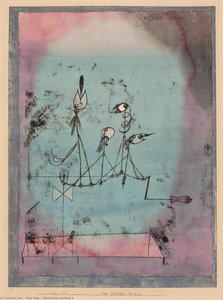
Parc près de Lu
Format de la reproduction
Paul Klee’s “Park near Lu,” painted in 1938, isn’t merely a depiction of a landscape; it’s an immersion into the artist’s uniquely subjective world. This vibrant abstract work, brimming with color and playful geometry, invites us to lose ourselves within its dreamlike atmosphere. Far from a straightforward representation of nature, Klee transforms familiar elements – trees, paths, and hints of buildings – into a constellation of shapes and hues that resonate with emotion and memory. The painting’s genesis lies in Klee's travels through Switzerland and France during this period, a time marked by both personal reflection and the looming shadow of impending war. He sought to capture not just what he *saw*, but how he *felt* about what he saw – a deeply internalized experience translated onto canvas.
Klee’s distinctive style, firmly rooted in Expressionism yet infused with Cubist influences and a touch of Surrealism, is immediately apparent. The trees aren't rendered realistically; instead, they are fragmented, simplified, and imbued with an almost childlike quality. Their forms twist and turn, suggesting movement and instability, while their coloration – ranging from delicate pinks and yellows to deep blues and oranges – creates a sense of joyous dissonance. Notice the deliberate use of overlapping planes and varying textures, reminiscent of his earlier explorations in collage techniques. This layering contributes significantly to the painting’s depth and invites multiple interpretations.
The color palette is central to “Park near Lu’s” impact. Klee was a meticulous color theorist, deeply fascinated by the psychological effects of hue and tone. He didn't simply apply colors; he orchestrated them, using complementary pairings – like blue and orange – to generate visual tension and excitement. The dominant pinks and yellows evoke feelings of warmth, optimism, and perhaps even nostalgia, while the blues introduce a sense of tranquility and introspection. The use of muted tones alongside brighter accents creates a dynamic balance, preventing the painting from becoming overly saccharine or chaotic.
Technically, Klee employed his signature technique of watercolor and gouache on paper. This combination allows for both delicate washes of color and bold, graphic strokes. The loose brushwork contributes to the painting’s sense of spontaneity and immediacy, as if it were created in a single, inspired burst. The slightly uneven surface adds to the work's tactile quality, inviting viewers to engage with its materiality.
Beyond its purely aesthetic qualities, “Park near Lu” is rich in symbolic potential. The fragmented trees can be interpreted as representations of memory – fleeting, distorted glimpses of the past. The paths suggest journeys, both literal and metaphorical, while the indistinct buildings hint at a sense of isolation or detachment. Klee often used his art to explore themes of loneliness, mortality, and the human condition, and these underlying currents are subtly present in this work.
Interestingly, the title itself – “Park near Lu” – is deliberately ambiguous. "Lu" was actually the name of a small village where Klee spent time during his travels. However, the painting isn't a literal depiction of that place; it’s a distilled emotional response to the experience. It’s a testament to Klee’s ability to transform personal encounters into universal symbols of human feeling.
Most-Famous-Paintings offers exquisite, hand-painted reproductions of Paul Klee's “Park near Lu,” meticulously crafted to capture the essence of this iconic artwork. Whether you’re an art enthusiast, a collector seeking to expand your collection, or simply someone looking to infuse your home with beauty and inspiration, our reproductions provide a stunning way to experience Klee’s genius firsthand. Each reproduction is created using archival-quality materials, ensuring that it will retain its vibrancy and integrity for generations to come. Bring the evocative power of “Park near Lu” into your world – a timeless masterpiece that speaks directly to the heart.

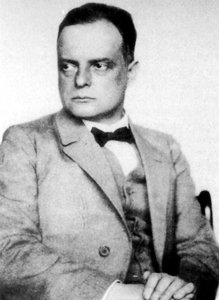
1879 - 1940 , Suisse
Explore the profound emotional depth of Lyrical Abstraction. Discover how masters like Raymond Parker used color and form to bridge Impressionism and Abstract Expressionism. Learn about this pivotal movement through our expert-led art history guide.

Explore the profound emotional depth of Color Field painting. Discover the history of mid-century abstraction, from Rothko to Newman, and learn how pure color transforms the viewer's experience through our expert art history guide.


Restez informé(e) des dernières actualités artistiques, des offres exclusives et des idées de décoration.
Parlez-nous de votre projet et nos experts en art vous proposeront 3 suggestions d'œuvres personnalisées.
Laissez-nous sélectionner 3 œuvres rien que pour vous – Gratuit !


 Aperçu en situation
 Envoyer
 Partager
 Détails de l'œuvre

 Télécharger
 Articles similaires
 Radiographie
 Diaporama

 Lire la suite







 L'option verre n'est disponible que pour les dimensions inférieures à 110 cm.