


x
Acquérez une image numérique haute résolution et optimisée, d'une qualité bien supérieure à l'aperçu en ligne.
Chaque fichier est méticuleusement préparé par nos spécialistes internes à l'aide d'outils avancés et d'une retouche manuelle experte. Nous garantissons que chaque image possède une clarté exceptionnelle, une précision des couleurs irréprochable et un niveau de détail fin.
Le fichier final est livré par e-mail sous 72 heures, optimisé pour une utilisation immédiate dans des contextes professionnels, éditoriaux et d'impression. Il offre la même qualité de confiance que celle utilisée par les plus grands studios de création, éditeurs et galeries.
Téléchargez un fichier haute résolution pour votre usage personnel, l'impression et vos projets créatifs. ( Commander l'impression Commander la reproduction peinte à la main)
En choisissant Most-Famous-Paintings.com, vous n'obtenez pas seulement une simple image : vous recevez une œuvre numérique sublimée avec professionnalisme, conçue avec précision et accompagnée d'une garantie de satisfaction. Voici tout ce qui accompagne automatiquement votre commande :

Votre fichier d'image numérique haute résolution vous sera envoyé par e-mail sous 72 heures après votre commande — prêt à un usage immédiat.

Votre œuvre d'art bénéficie d'une optimisation professionnelle grâce à des outils d'IA avancés et une retouche manuelle, garantissant un niveau maximal de détail, de clarté et de fidélité chromatique.

Vous avez accidentellement supprimé ou perdu votre fichier ? Pas d'inquiétude — nous vous le renverrons gratuitement, quand vous le souhaitez.

Profitez de votre œuvre d'art instantanément sans frais de douane ni de livraison — les téléchargements numériques sont toujours exonérés de taxes.

Nous garantissons que votre image numérique reproduit les couleurs de l'original aussi fidèlement que possible grâce à des outils professionnels et une gestion rigoureuse des couleurs.

Si vous n'êtes pas satisfait de votre image numérique, nous la retoucherons ou vous rembourserons 100% sous 60 jours — sans poser de questions.

Pas satisfait ? Obtenez un remboursement intégral dans les 60 jours suivant la réception de votre fichier numérique — sans aucune question posée.

Achetez 3 images, économisez 10% - Achetez 5, économisez 15% - Achetez 10+, économisez 20%. Idéal pour les projets créatifs, les galeries et les agences.
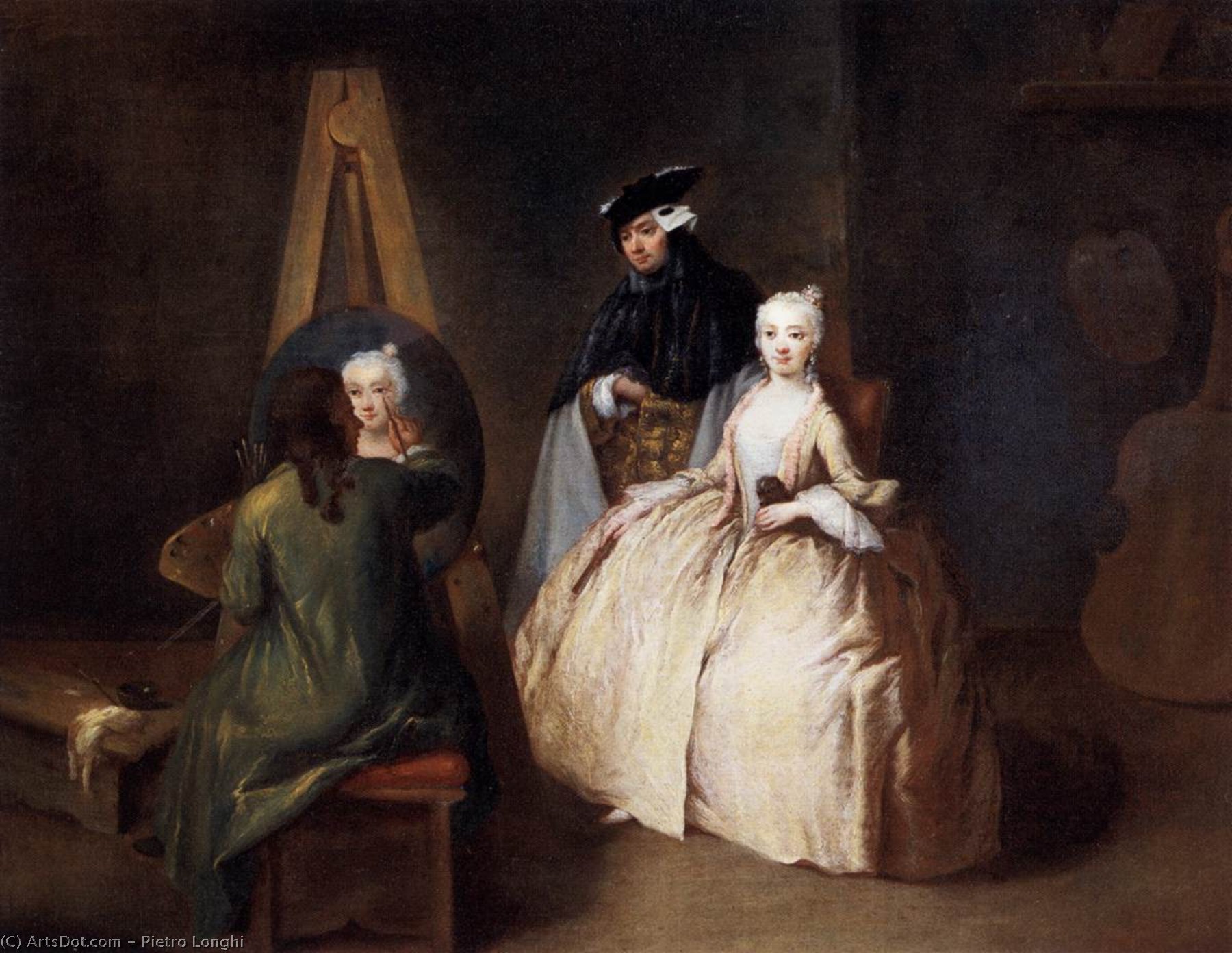
Pietro Longhi, born Pietro Falca in Venice in 1701, wasn't a painter of grand historical narratives or mythological epics. Instead, he meticulously captured the quiet dramas unfolding within the vibrant heart of his city – Venice. He became renowned for his witty and remarkably intimate genre paintings, offering viewers glimpses into the lives of Venetian bourgeois society during the Rococo era. These weren’t sweeping landscapes or heroic portraits; they were snapshots of everyday life: masked balls, lively conversations in cafes, family gatherings, and the subtle rituals of a thriving mercantile republic. Longhi's genius lay not just in his technical skill but in his ability to imbue these seemingly mundane scenes with a captivating charm and a keen observational eye – earning him the affectionate moniker “the Venetian Hogarth” by art historians.
Longhi’s artistic journey began under the tutelage of Antonio Balestra, a respected Veronese painter who recognized and nurtured the young artist's talent. This foundation in traditional technique provided a solid base for his later innovations. He adopted the surname “Longhi,” a symbolic shedding of his father’s trade – a silversmith – to fully embrace his artistic aspirations. His career blossomed during a period when Venetian painting was largely dominated by grand historical and religious works; Longhi's focus on domestic scenes and social interactions offered a refreshing and distinctly human perspective.
"The Painter in His Studio," painted around 1740-1745, stands as perhaps Longhi’s most ambitious and captivating work. This oil on canvas isn't merely a portrait; it’s an intricate allegory – a layered exploration of the artistic process itself, interwoven with social commentary and a subtle celebration of Venetian culture. The scene unfolds within the artist’s studio, a meticulously rendered space filled with objects that speak to his craft and his world. At the center stands Longhi himself, diligently painting a landscape depicting the Loue River valley in Franche-Comté – a region deeply connected to his own origins.
Around him are figures representing various facets of artistic life: a young boy observing intently, a nude female model (a deliberate nod to the academic tradition of “contrapposto” and the debate over the superiority of male versus female models), and a white cat curled up on a table. The background reveals partially obscured paintings – remnants of unfinished works, hinting at the challenges and rewards of artistic creation. A map of the Seventeen Provinces of the Netherlands hangs prominently on the wall, adorned with miniature depictions of Dutch cities, reflecting Venice’s historical ties to its northern neighbors. The inclusion of these details isn't arbitrary; they serve as symbolic markers, inviting viewers to contemplate the interconnectedness of art, knowledge, and society.
Beyond its technical brilliance, “The Painter in His Studio” is rich with symbolism. The presence of a "crucified figure" on the left side of the painting has been interpreted as a representation of the death of the Royal Academy’s artistic standards – a critique of the rigid conventions that Longhi sought to challenge. The map itself holds multiple layers of meaning, referencing both historical connections and the pursuit of knowledge. The inclusion of figures representing Parisian society—including Charles Baudelaire, Champfleury, and Alfred Bruyas—highlights Longhi's engagement with contemporary intellectual currents.
Longhi’s meticulous attention to detail – from the textures of the fabrics to the play of light on the objects in the studio – creates a remarkably immersive experience for the viewer. The painting isn’t just *about* art; it *is* an artwork, demonstrating Longhi's mastery of technique and his profound understanding of how to capture both the physical reality and the emotional essence of his subject matter. It offers a rare glimpse into the world of a Venetian artist at work, revealing not only his craft but also his perspective on society and the creative process.
Pietro Longhi's legacy extends far beyond the confines of his studio. His paintings provide invaluable insights into 18th-century Venetian life, capturing a world of social customs, artistic trends, and intellectual debates with remarkable wit and precision. His work stands as a testament to the power of genre painting – its ability to illuminate the everyday experiences of ordinary people. Today, Longhi’s art continues to resonate with audiences, offering a captivating blend of realism, symbolism, and human insight. Reproductions of “The Painter in His Studio” provide a beautiful and accessible way to experience this remarkable masterpiece, bringing a touch of Venetian charm into any space.


1701 - 1785 , Italie


Restez informé(e) des dernières actualités artistiques, des offres exclusives et des idées de décoration.
Parlez-nous de votre projet et nos experts en art vous proposeront 3 suggestions d'œuvres personnalisées.
Laissez-nous sélectionner 3 œuvres rien que pour vous – Gratuit !


 Aperçu en situation
 Envoyer
 Partager
 Détails de l'œuvre

 Télécharger
 Articles similaires
 Radiographie
 Diaporama


 Lire la suite


