x

Impressions giclées ou sur toile de qualité musée, avec une production rapide et des finitions au choix. ( Commander la reproduction peinte à la main Télécharger l'image haute résolution)





























Choisissez parmi nos formats prédéfinis qui respectent les proportions originales de l’œuvre.

Vous pouvez saisir vos propres dimensions pour vous adapter à un cadre ou à un espace spécifique. Si la taille sélectionnée ne correspond pas aux proportions de l'image originale, nous recadrerons l'œuvre ou étendrons l'image avec une bordure en miroir ou une couleur unie. Une maquette numérique vous sera envoyée pour approbation avant le début de la production.
Veuillez noter que l'aperçu à l'écran ne reflète pas le recadrage ou l'extension réelle. Seule la maquette montrera avec précision la composition finale.
Bien que des tailles personnalisées soient disponibles, nous vous recommandons de choisir une dimension dans la liste prédéfinie afin de préserver les proportions originales.
Livraison dans le monde entier () en 2 semaines au lieu des 4/5 semaines habituelles. (18 août)


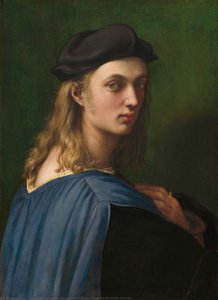
Portrait de Perugino
Format de la reproduction
Raffaello Sanzio da Urbino’s “Portrait of Pietro Vannucci,” more commonly known as Perugino, stands as a testament to the artistic ideals of the High Renaissance. Executed around 1504 and housed in the Uffizi Gallery of Florence, this tempera on wood painting transcends mere representation; it embodies a profound understanding of human dignity and harmonious beauty—qualities that define Raphael’s signature style.
Artist Background: Raffaello (1483-1520) emerged from Urbino's artistic crucible, nurtured by his father Giovanni Santi’s patronage and steeped in humanist scholarship. His formative years were spent absorbing the influences of Piero della Francesca and Andrea Mantegna, artists who championed geometric precision and idealized forms. This early training would prove crucial in shaping Raphael’s distinctive approach to painting.
The Painting's Technique: Raphael skillfully employed tempera on wood—a technique favored for its luminosity and durability—to achieve remarkable detail and tonal subtlety. The artist meticulously blended colors, creating a serene palette dominated by muted blues and browns that convey an atmosphere of contemplative calm. Observe the delicate brushstrokes, which contribute to the painting’s velvety surface texture.
Historical Context: Perugino's portrait reflects the intellectual fervor of Florence during Raphael’s formative years. The humanist movement championed reason and observation as paths to knowledge, influencing artists like Raphael to strive for accuracy and clarity in their depictions of human subjects. Furthermore, the painting aligns with the broader Renaissance preoccupation with portraying idealized beauty—a concept rooted in classical ideals.
Symbolism & Emotional Impact: The portrait’s gaze directs towards the viewer, establishing a connection between artist and observer—a gesture that speaks to Raphael's belief in the importance of human interaction. Perugino’s dignified posture conveys composure and wisdom, embodying the humanist ideal of virtue and moral excellence. The painting invites contemplation on themes of honor, intellect, and spiritual reflection.
Conclusion: “Portrait of Perugino” remains an enduring symbol of Renaissance artistic achievement—a masterpiece that continues to inspire admiration for its elegance, precision, and profound psychological insight. Its presence in the Uffizi Gallery ensures that this iconic artwork will continue to captivate audiences for generations to come.


1483 - 1520 , Italie

Explore the profound history of sculpture, from classical realism to modern abstraction. Discover the mastery of form, texture, and medium through an expert art-historical lens designed for discerning collectors and enthusiasts.

Explore the profound genius of the Renaissance Trinity. Delve into a comparative study of Leonardo da Vinci, Michelangelo, and Raphael, uncovering their unique contributions to art history, technique, and the enduring legacy of Italian High Renaissance mastery.


Restez informé(e) des dernières actualités artistiques, des offres exclusives et des idées de décoration.
Parlez-nous de votre projet et nos experts en art vous proposeront 3 suggestions d'œuvres personnalisées.
Laissez-nous sélectionner 3 œuvres rien que pour vous – Gratuit !


 Aperçu en situation
 Envoyer
 Partager
 Détails de l'œuvre

 Télécharger
 Articles similaires
 Radiographie
 Diaporama

 Lire la suite







 L'option verre n'est disponible que pour les dimensions inférieures à 110 cm.