x


Impression giclée ou sur toile de qualité musée, avec une production rapide et des finitions au choix. ( Switch to hand made Painting Switch to Image)





























Choisissez parmi nos formats prédéfinis qui respectent les proportions originales de l’œuvre.

Vous pouvez saisir vos propres dimensions pour vous adapter à un cadre ou à un espace spécifique. Si la taille sélectionnée ne correspond pas aux proportions de l'image originale, nous recadrerons l'œuvre ou étendrons l'image avec une bordure en miroir ou une couleur unie. Une maquette numérique vous sera envoyée pour approbation avant le début de la production.
Veuillez noter que l'aperçu à l'écran ne reflète pas le recadrage ou l'extension réelle. Seule la maquette montrera avec précision la composition finale.
Bien que des tailles personnalisées soient disponibles, nous vous recommandons de choisir une dimension dans la liste prédéfinie afin de préserver les proportions originales.
Livraison dans le monde entier () en 2 semaines au lieu des 4/5 semaines habituelles. (28 juillet)


L'éclair
Format de reproduction
René Magritte's "The Flash," painted in 1959, is not merely a depiction of a tree and its blossoms; it’s an arresting invitation to question the very nature of reality. This seemingly simple still life, rendered with Magritte’s signature meticulous detail and unsettling juxtapositions, embodies the core tenets of Surrealism – a movement dedicated to unlocking the subconscious mind and challenging conventional ways of seeing. The painting immediately draws the viewer in with its vibrant palette: the deep purple hues of the leaves contrast sharply with the luminous white of the flowers, while the cool blues of the sky peek through the gaps in the foliage, creating an almost dreamlike atmosphere.
Magritte’s technique is deceptively straightforward. He employs a precise, almost photographic realism, meticulously rendering each leaf and petal as if capturing them with a camera. However, this technical mastery serves to heighten the painting's surreal effect. The tree itself appears slightly off-kilter, its branches reaching towards the sky in an unnatural manner. More significantly, the inclusion of the open blue sky behind the foliage is profoundly disorienting. It suggests that what we perceive as a solid, contained natural scene is actually an illusion, a window into something beyond our immediate understanding. This deliberate disruption of spatial relationships is characteristic of Magritte’s work and reflects his broader interest in exposing the constructed nature of visual representation.
“The Flash” is laden with symbolic meaning, deeply rooted in Magritte's personal experiences and philosophical leanings. The recurring motif of obscured faces – a hallmark of his oeuvre – subtly echoes the trauma he experienced as a child when his mother’s body was recovered from the River Sambre, her face hidden beneath her dress. This event instilled within him a fascination with what remains unseen, with the mysteries that lie just beyond our perception. In "The Flash," this theme is manifested through the fragmented nature of the tree and flowers; they are not presented as whole entities but rather as partial representations, hinting at something incomplete or obscured.
Furthermore, the title itself – “The Flash” – carries a double meaning. It refers to both the speed of light and the fleeting nature of perception. Magritte seems to be suggesting that our experience of reality is inherently transient and unstable, constantly shifting and subject to interpretation. The white flowers, often associated with purity and innocence, are presented in this context as vulnerable and exposed, further emphasizing the fragility of our understanding.
Created during the height of the Surrealist movement, “The Flash” aligns perfectly with the group’s core principles. Surrealism sought to liberate art from the constraints of logic and reason, exploring the realm of dreams, fantasies, and the unconscious mind. Magritte, along with artists like Salvador Dalí and Max Ernst, embraced this approach, creating works that defied conventional expectations and provoked viewers to reconsider their assumptions about the world.
Magritte’s work was influenced by a diverse range of sources, including Symbolism, Cubism, and Dadaism. However, he developed a unique style characterized by meticulous detail, precise composition, and a deliberate use of incongruity. “The Flash” exemplifies this approach, seamlessly blending realism with surrealism to create an image that is both familiar and unsettling.
“The Flash” remains one of René Magritte’s most iconic works, captivating viewers with its enigmatic beauty and profound philosophical implications. It's a testament to the artist's ability to transform the mundane into the extraordinary, prompting us to question our perceptions and consider the hidden realities that lie beneath the surface of everyday life. A reproduction of this piece offers a unique opportunity to bring this thought-provoking artwork into your home or office, serving as a constant reminder of the power of art to challenge and inspire.

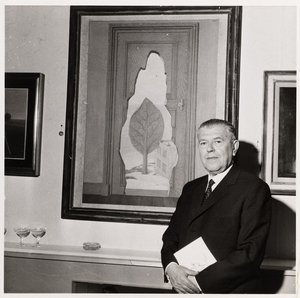
1898 - 1967 , Belgique
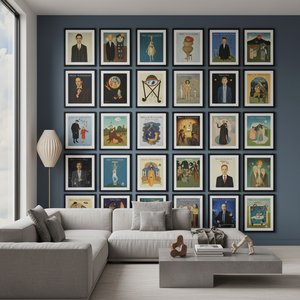
Plongez dans l'univers fascinant de René Magritte avec les 25 œuvres incontournables du maître surréaliste. Découvrez l'histoire, les techniques et la magie de tableaux célèbres comme 'L'Empire des Lumières'. Reproductions d'art de qualité muséale sur Most-Famous-Paintings.com.

Plongez dans l'univers fascinant des 10 plus beaux tableaux blancs de l'histoire de l'art ! Découvrez Monet, Whistler, Kandinsky et d'autres maîtres. Inspirez votre décoration intérieure avec : reproductions de qualité muséale en ligne.
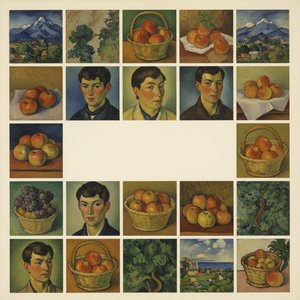
Plongez dans l'univers de Paul Cézanne avec les 25 œuvres incontournables du maître post-impressionniste. Découvrez l'histoire, la technique et l'émotion derrière ses tableaux iconiques comme 'Les Baigneuses' ou 'Mont Sainte-Victoire'. Reproductions d'art haute qualité sur Most-Famous-Paintings.com.

Explore the rich history of trees in painting! Discover symbolism, Romantic masterpieces by Caspar David Friedrich & beyond. A curated journey for art enthusiasts.

Explore the rich history of trees in painting! Discover symbolism, Romantic masterpieces by Caspar David Friedrich & beyond. A curated journey for art enthusiasts.


Restez informé(e) des dernières actualités artistiques, des offres exclusives et des idées de décoration.
Parlez-nous de votre projet et nos experts en art vous proposeront 3 suggestions d'œuvres personnalisées.
Laissez-nous sélectionner 3 œuvres rien que pour vous – Gratuit !


 Preview
 Partager
 Partager
 Détails de l'œuvre

 Télécharger
 Articles similaires
 Radiographie
 Diaporama

 Afficher la suite







 L'option verre n'est disponible que pour les dimensions inférieures à 110 cm.