x

 Acrylic On CanvasWallArtSurrealist Manifestation
 1920Modern
 83.0 x 64.0 cm
Impressions giclées ou sur toile de qualité musée, avec une production rapide et des finitions au choix. ( Commander la reproduction peinte à la main Télécharger l'image haute résolution)





























Choisissez parmi nos formats prédéfinis qui respectent les proportions originales de l’œuvre.

Vous pouvez saisir vos propres dimensions pour vous adapter à un cadre ou à un espace spécifique. Si la taille sélectionnée ne correspond pas aux proportions de l'image originale, nous recadrerons l'œuvre ou étendrons l'image avec une bordure en miroir ou une couleur unie. Une maquette numérique vous sera envoyée pour approbation avant le début de la production.
Veuillez noter que l'aperçu à l'écran ne reflète pas le recadrage ou l'extension réelle. Seule la maquette montrera avec précision la composition finale.
Bien que des tailles personnalisées soient disponibles, nous vous recommandons de choisir une dimension dans la liste prédéfinie afin de préserver les proportions originales.
Livraison dans le monde entier () en 2 semaines au lieu des 4/5 semaines habituelles. (15 août)


Landscape
Format de la reproduction
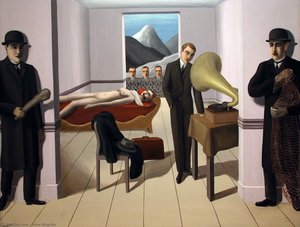
René Magritte's “Landscape,” painted in 1920, is not merely a depiction of a scene; it’s an immersion into the subconscious, a meticulously crafted puzzle designed to challenge our very understanding of reality. Measuring 83 x 64 cm, this intimate work embodies the nascent surrealism that would define Magritte's career and profoundly influence generations of artists. The painting immediately arrests the viewer with its unsettling juxtaposition: a nude figure emerges from a dark, almost oppressive background, their back intertwined with the gnarled branches of trees that possess distinctly human faces. These arboreal figures, rendered in meticulous detail, are not simply decorative elements; they represent a potent symbol of memory and perhaps, the lingering presence of trauma – a direct echo of Magritte’s own childhood experience following his mother's death.
Painted in 1920, “Landscape” represents a crucial moment in Magritte’s artistic development, firmly establishing his interest in exploring the realms beyond rational perception. The year coincides with his move to Brussels and his increasing engagement with avant-garde movements. However, this work transcends simple categorization; it's deeply rooted in personal experience. The image of his mother’s corpse, recovered from the Sambre River, became a recurring motif, symbolizing not just grief but also the impossibility of truly knowing or representing the past. This early trauma fueled Magritte’s lifelong preoccupation with illusion and deception – the idea that what we perceive is often far removed from objective reality. The two birds subtly placed within the composition—one at the top left, one at the bottom right—add another layer of ambiguity, perhaps symbolizing fleeting thoughts or lost opportunities.
The symbolism within “Landscape” is layered and deliberately ambiguous. The naked figure can be interpreted as a representation of vulnerability, mortality, or even the artist himself confronting his own subconscious. The trees with faces are arguably the most compelling element, representing memory, judgment, or perhaps the silent witnesses to human suffering. Magritte’s masterful use of dark tones amplifies this sense of unease and invites viewers to confront uncomfortable questions about perception, identity, and the nature of reality. The overall effect is profoundly unsettling, prompting a deep engagement with the artwork's emotional core.
“Landscape” stands as an early example of Magritte’s mature style, foreshadowing his later explorations of surrealist themes. Created during a period of significant artistic experimentation—with movements like Dadaism and Futurism challenging traditional notions of art—Magritte's work quickly distinguished itself through its intellectual rigor and unsettling imagery. This painting demonstrates the artist's early commitment to disrupting conventional representations and inviting viewers to question their assumptions about the world around them. Its meticulous detail and haunting atmosphere continue to captivate audiences today, solidifying Magritte’s place as one of the 20th century’s most influential artists.

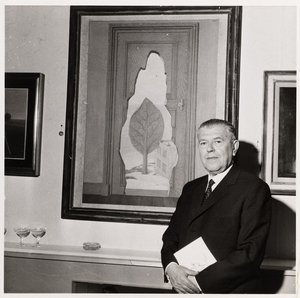
1898 - 1967 , Belgique
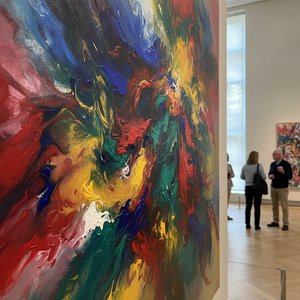
Explore the profound emotional depth of Lyrical Abstraction. Discover how masters like Raymond Parker used color and form to bridge Impressionism and Abstract Expressionism. Learn about this pivotal movement through our expert-led art history guide.

Explore the profound mystery of René Magritte’s 'The Treachery of Images.' Dive into an expert analysis of his Surrealist philosophy, the paradox of representation, and how he challenged reality through the interplay of language and visual perception.


Restez informé(e) des dernières actualités artistiques, des offres exclusives et des idées de décoration.
Parlez-nous de votre projet et nos experts en art vous proposeront 3 suggestions d'œuvres personnalisées.
Laissez-nous sélectionner 3 œuvres rien que pour vous – Gratuit !


 Aperçu en situation
 Envoyer
 Partager
 Détails de l'œuvre

 Télécharger
 Articles similaires
 Radiographie
 Diaporama
 Lire la suite







 L'option verre n'est disponible que pour les dimensions inférieures à 110 cm.