x


Huile sur toile peinte à la main, avec cadre et dimensions personnalisés, réalisée sur commande par nos artistes. ( Switch to Print Switch to Image)





























Choisissez parmi nos formats prédéfinis qui respectent les proportions originales de l’œuvre.

Vous pouvez saisir vos propres dimensions pour l'adapter à un cadre ou à un espace spécifique. Si la taille sélectionnée ne correspond pas aux proportions de l'image d'origine, nous recadrerons l'œuvre ou prolongerons la peinture avec des éléments peints à la main supplémentaires. Une maquette numérique vous sera envoyée pour approbation avant le début de la production.
Veuillez noter que l'aperçu à l'écran ne reflète pas le recadrage ou l'extension réels. Seule la maquette montrera fidèlement la composition finale.
Bien que des tailles personnalisées soient disponibles, nous vous recommandons de sélectionner une dimension dans la liste prédéfinie afin de préserver les proportions d'origine.
Livraison dans le monde entier () en 3 à 4 semaines au lieu des 5 semaines habituelles. (29 juillet). Aucune concession sur la qualité.


The secunder
Format de reproduction
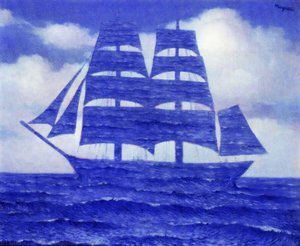
René Magritte’s “The Secunder” isn't merely a depiction of a ship on the ocean; it’s an invitation to question the very nature of reality and representation. Painted in 1928, during his intensely productive period exploring the boundaries of surrealism, this work embodies Magritte’s signature style – a deliberate disruption of familiar imagery designed to unsettle the viewer's assumptions. The painting presents a blue vessel sailing across a seemingly limitless expanse of water, beneath a sky punctuated by indistinct clouds. While superficially resembling a traditional pirate ship, its details are subtly off-kilter, hinting at an unreality that lies just beneath the surface. Notice the lack of detail in the ship’s construction; it feels almost constructed from fragments, as if assembled from memory rather than direct observation.
Magritte's fascination with the mechanics of perception is central to “The Secunder.” He wasn’t interested in simply replicating what he saw; instead, he aimed to expose the gap between our conscious experience and the underlying processes that shape it. The ship itself becomes a symbol of this disconnect – a recognizable form rendered ambiguous through its simplified features and the unsettling stillness of the scene. This deliberate ambiguity is further reinforced by the muted color palette, dominated by blues and greys, contributing to an atmosphere of quiet contemplation and subtle unease.
Understanding Magritte’s artistic journey requires acknowledging the profound impact of his early life. Born in Lessines, Belgium, in 1898, he experienced a deeply formative event at the age of thirteen – the suicide of his mother. The image of her body being recovered from the River Sambre, with her dress obscuring her face, became a recurring motif throughout his work, representing loss, mystery, and the hidden aspects of human experience. This trauma instilled within him a lifelong preoccupation with what remains unseen, concealed, or deliberately obscured – a theme powerfully realized in “The Secunder.” The veiled faces, the simplified forms, all contribute to this sense of something being withheld from direct comprehension.
This early experience isn’t simply a biographical detail; it fundamentally shaped Magritte's artistic approach. He wasn’t interested in creating beautiful or easily digestible images. Instead, he sought to provoke thought and challenge the viewer’s expectations, mirroring the unsettling nature of his own memories. His exploration of perception can be seen as an attempt to grapple with the unresolved grief and questions surrounding his mother’s death – a subconscious desire to bring something hidden into view.
Magritte's technique in “The Secunder” is characterized by meticulous detail combined with a calculated disregard for realism. He employed oil paints on canvas, building up layers of color and texture to create the illusion of depth and atmosphere. However, he deliberately avoided creating a convincing representation of space or light. The horizon line is flat, the clouds are amorphous, and the ship lacks any sense of dynamism. This deliberate disruption of traditional artistic conventions serves to further emphasize the painting’s surreal quality.
The composition itself is carefully balanced, with the ship positioned slightly off-center, drawing the viewer's eye across the canvas. The vastness of the ocean and sky creates a sense of isolation and loneliness, while the subtle details – such as the faint reflection on the water’s surface – add to the painting’s complexity. Magritte’s control over his materials is evident in every brushstroke, yet it's precisely this control that contributes to the work’s unsettling effect.
“The Secunder” resists easy interpretation, inviting viewers to project their own meanings onto the scene. The ship itself can be seen as a symbol of exploration, adventure, or even oblivion – a vessel adrift in an unknown sea. The obscured faces suggest a loss of identity, a questioning of selfhood, and perhaps a yearning for something beyond the visible world. The painting’s emotional impact is one of quiet contemplation, tinged with melancholy and a sense of mystery.
Ultimately, “The Secunder” isn't about providing answers; it’s about raising questions. It’s a testament to Magritte’s genius – his ability to create images that are both familiar and profoundly unsettling, prompting us to reconsider our assumptions about the world around us. A hand-painted reproduction of this iconic work offers a unique opportunity to experience the depth and complexity of Magritte's vision, bringing this enigmatic mariner into your home or studio.

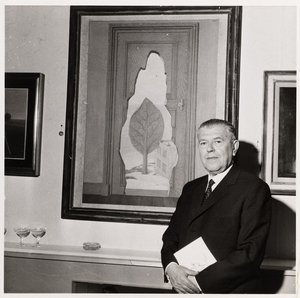
1898 - 1967 , Belgique
Plongez dans l'univers surréaliste de Max Ernst ! Découvrez les 25 œuvres les plus emblématiques du maître allemand, entre frottage, collage et rêves éveillés. Inspirez votre décoration intérieure avec Most-Famous-Paintings : reproductions de tableaux de qualité muséale et collection d'art unique. Explorez la co

Explorez la vie fascinante et l'œuvre poignante de Frida Kahlo : surréalisme, autoportraits emblématiques, relation avec Diego Rivera et héritage artistique durable. Une analyse approfondie pour les passionnés d'art.

Plongez dans l'univers fascinant des bateaux à travers 10 œuvres d'art emblématiques ! Découvrez Monet, Manet et Turner… histoires, techniques & inspiration déco marine. Reproductions de qualité musée sur Most-Famous-Paintings.com.

Explore the rich history of ocean art! Discover Romantic seascapes, renowned artists like Aivazovsky & Harris, and expert guidance for collectors at Most-Famous-Paintings.com.

Plongez dans l'univers fascinant des 10 plus beaux tableaux dominés par le bleu ardoise. Découvrez l'histoire, les artistes et les techniques de ces chefs-d'œuvre impressionnistes et contemporains. Inspirez votre décoration intérieure avec !


Restez informé(e) des dernières actualités artistiques, des offres exclusives et des idées de décoration.
Parlez-nous de votre projet et nos experts en art vous proposeront 3 suggestions d'œuvres personnalisées.
Laissez-nous sélectionner 3 œuvres rien que pour vous – Gratuit !


 Preview
 Partager
 Partager
 Détails de l'œuvre

 Télécharger
 Articles similaires
 Radiographie
 Diaporama
 Afficher la suite







 L'option verre n'est disponible que pour les dimensions inférieures à 110 cm.