Liste de souhaits Mon panier Cart
Commander la reproduction Commander la reproductionAcheter l'image haute résolution Acheter l'image haute résolution PartagerPartager
Détails de l'œuvreDétails de l'œuvre Ajouter aux favoris Ajouter aux favoris TéléchargerTélécharger Articles similairesArticles similaires RadiographieRadiographie DiaporamaDiaporama

Annunciation

Experience Sandro Botticelli's masterpiece, 'Annunciation,' showcasing serene beauty and masterful composition within a Florentine loggia. Explore its symbolism of faith and grace.

Explorez l'art captivant de Sandro Botticelli (1445-1510), un maître de la peinture de la Renaissance primitive. Connu pour sa ligne élégante, ses œuvres emblématiques telles que 'La Naissance de Vénus' & 'Le Printemps', et pour avoir relié les styles gothique et renaissance. Découvrez son héritage !

Giclée / Impression d'art

Impression giclée ou sur toile de qualité musée, avec une production rapide et des finitions au choix.

Standard
custom
CM
INCH

Choisissez parmi nos formats prédéfinis qui respectent les proportions originales de l’œuvre.

largeur
hauteur

Vous pouvez saisir vos propres dimensions pour vous adapter à un cadre ou à un espace spécifique. Si la taille sélectionnée ne correspond pas aux proportions de l'image originale, nous recadrerons l'œuvre ou étendrons l'image avec une bordure en miroir ou une couleur unie. Une maquette numérique vous sera envoyée pour approbation avant le début de la production.
Veuillez noter que l'aperçu à l'écran ne reflète pas le recadrage ou l'extension réelle. Seule la maquette montrera avec précision la composition finale.
Bien que des tailles personnalisées soient disponibles, nous vous recommandons de choisir une dimension dans la liste prédéfinie afin de préserver les proportions originales.

Livraison dans le monde entier () en 2 semaines au lieu des 4/5 semaines habituelles. (23 juillet)

why_choose_icon
Livraison express gratuite dans le monde entier

why_choose_icon
Toile de lin de haute qualité
why_choose_icon
Assurance transport complète
why_choose_icon
Garantie de remboursement des frais de douane
why_choose_icon
Garantie de fidélité des couleurs
why_choose_icon
Politique de retour de 60 jours (uniquement en cas de défaut)
why_choose_icon
Garantie de remboursement à 100%
why_choose_icon
Réduction sur les achats groupés

Prix total

-

reproduction

Annunciation

Giclée / Impression d'art

Format de reproduction

-

Prix total final

-

En bref

  • Notable elements or techniques: Linear perspective, graceful figures
  • Location: Private Collection
  • Subject or theme: Religious
  • Medium: Oil on canvas
  • Year: 1500
  • Artist: Sandro Botticelli
  • Movement: Early Renaissance

Quiz d'art

Chaque question ne comporte qu'une seule bonne réponse.

Question 1:
What is the primary subject matter depicted in Sandro Botticelli’s ‘Annunciation’?
Question 2:
Botticelli’s style is characterized by:
Question 3:
The architectural setting in ‘Annunciation’ contributes to the artwork's mood by:
Question 4:
What color palette dominates Botticelli’s use in ‘Annunciation’?
Question 5:
Botticelli employed linear perspective to:

Description de l'œuvre

A Moment Frozen in Time: Botticelli’s Annunciation

The Annunciation, painted circa 1500 by Sandro Botticelli, stands as an emblem of Renaissance Florence—a testament to humanist ideals intertwined with profound religious devotion. More than just a depiction of biblical narrative, it embodies the burgeoning spirit of artistic innovation that characterized the era and continues to captivate audiences today. Examining its composition, color palette, technique, and symbolic resonance reveals layers of meaning beyond its surface beauty.

Composition and Spatial Harmony

Botticelli’s masterful use of perspective establishes a serene architectural setting—a loggia or arcade—that frames the central figures of Mary and Gabriel. Symmetry reigns supreme; Mary occupies the apex of balance, seated gracefully on a bench beneath a delicately arched doorway. The angel Gabriel kneels before her, creating an immediate visual dialogue that underscores the momentousness of the event. Two additional figures flank the principal subjects, subtly reinforcing the sense of order and grandeur. This deliberate arrangement wasn’t merely aesthetically pleasing; it mirrored the humanist preoccupation with rational harmony—a cornerstone of Renaissance thought.

Color Palette and Light

The painting's color scheme eschews vibrant hues in favor of muted earth tones – ochres, browns, creams, and soft greens – reflecting the prevailing artistic sensibilities of the time. A single crimson cushion beneath Mary’s seat punctuates the palette with a splash of warmth, symbolizing divine grace and highlighting her maternal role. Botticelli skillfully employs diffused lighting, casting gentle illumination across the scene without harsh shadows. This subdued luminescence contributes significantly to the artwork's contemplative mood, fostering an atmosphere of reverence and tranquility.

Technique: Oil on Canvas – Precision and Detail

Botticelli’s technique—oil paint applied onto canvas—allowed for unparalleled subtlety in tonal gradations and nuanced color blending. The artist meticulously rendered drapery folds with painstaking precision, capturing the flowing movement of fabric while simultaneously conveying a sense of ethereal beauty. Close observation reveals an astonishing level of detail – from the delicate embroidery on Mary's robe to the subtle expressions etched upon Gabriel’s face—demonstrating Botticelli’s unwavering commitment to realism tempered by idealized form.

Symbolism and Spiritual Significance

The Annunciation transcends its literal portrayal of biblical scripture; it is laden with symbolic significance. The lily, prominently displayed in Mary’s hand, represents purity and virginity – virtues revered throughout Christian tradition. Gabriel's outstretched hand signifies divine communication and the proclamation of God’s plan for salvation. Botticelli’s depiction of Mary embodies humility and acceptance—a reflection of her unwavering faith as she receives the news of her miraculous conception. The entire scene speaks to themes of grace, hope, and divine providence – concepts central to Renaissance spirituality.

Emotional Resonance: A Legacy of Beauty

Botticelli's Annunciation continues to resonate with viewers centuries later due to its profound emotional impact. It captures a moment of transformative beauty—a serene tableau imbued with spiritual contemplation. The artwork’s graceful figures, harmonious composition, and luminous color palette evoke feelings of reverence and wonder, transporting the viewer back to Renaissance Florence and reminding us of the enduring power of art to inspire awe and illuminate the human condition. Its timeless appeal ensures that Botticelli's masterpiece will endure as an icon of artistic excellence for generations to come.

Biographie de l'artiste

jeune vie et formation

Sandro Botticelli, né Alessandro di Mariano di Vanni Filipepi vers 1445, est une figure clé de la Renaissance italienne précoce. Initialement relégué à l'arrière-plan après sa mort, l'œuvre de Botticelli a été revitalisée au XIXe siècle par les préréfables, conduisant à une réévaluation de ses contributions artistiques. Botticelli est né à Florence, en Italie, et y a vécu toute sa vie dans le même quartier. Sa famille, dont son père Mariano di Vanni d'Amadeo Filipepi, était impliquée dans diverses professions, ce qui leur a permis de se rencontrer avec des artistes. Giorgio Vasari rapportait que Botticelli avait initialement été formé comme orfèvre.

style artistique et œuvres notables

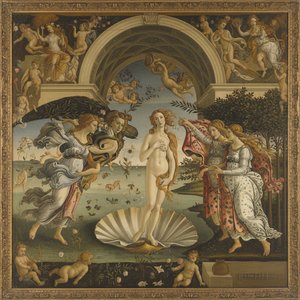
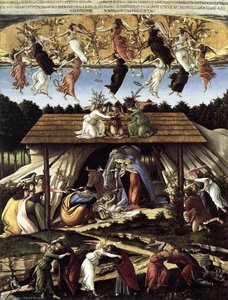
L'œuvre de Botticelli est caractérisée par une élégante linéarité, reliant le gothique italien tardif à la Renaissance précoce. Ses œuvres les plus célèbres, La Naissance de Vénus et *Primavera*, sont exposées à la Galerie des Offices à Florence, qui abrite une importante collection de ses œuvres. * La Naissance de Vénus (voir sur Most-Famous-Paintings) * *Primavera* (explorer l'art de Sandro Botticelli sur Most-Famous-Paintings) * Nativité mystique (National Gallery, Londres), datée 1501, est la seule œuvre de Botticelli avec une date claire.

héritage et influence

Le style de Botticelli a évolué vers une approche plus personnelle dans les années 1490, s'écartant des contemporains comme Léonard de Vinci et du style de la Renaissance haute émergente. Son œuvre a été reconnue comme une contribution significative au mouvement artistique de la Renaissance italienne. * le mouvement artistique de la Renaissance italienne * Sandro Botticelli sur Wikipédia
  • Des artistes notables de la Renaissance italienne comprennent Sandro Botticelli, Léonard de Vinci, Michel-Ange et Titien.
  • La Galerie des Offices à Florence abrite une importante collection d'œuvres de Botticelli.
  • L'œuvre de Botticelli a été reconnue comme une figure clé de la Renaissance italienne précoce.
**Dates clés :** * 1445 : Sandro Botticelli est né à Florence, en Italie. * 1474 : a passé du temps à Pise. * 1481-1482 : a travaillé sur la Chapelle Sixtine à Rome. * 1501 : Nativité mystique (National Gallery, Londres) a été datée.
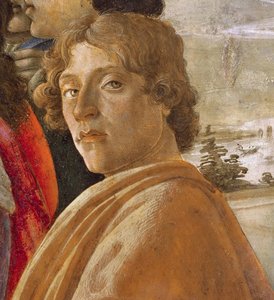
Sandro Botticelli

Sandro Botticelli

1445 - 1510 , Italie

En bref

  • Artistes Influents:
    • Fra Angelico
    • Paolo Uccello
  • Date De Décès: 1510
  • Date De Naissance: c. 1445
  • Lieu De Naissance: Florence, Italie
  • Mouvement Artistique: Renaissance italienne
  • Nationalité: Italienne
  • Nom Complet: Sandro Botticelli
  • Oeuvres Notables:
    • La Naissance de Vénus
    • Primavera
    • Nativité mystique
Explorez des œuvres d'art classées par thèmes, styles et caractéristiques.