x

 Commander l'impression Acheter l'image haute résolution
 Partager
 Détails de l'œuvre
 Ajouter aux favoris
 Télécharger
 Articles similaires
 Radiographie
 Diaporama
 Acrylique sur toileDécoration muraleEarly Renaissance
 1490
1490 140.0 x 207.0 cm
Huile sur toile peinte à la main, avec cadre et dimensions personnalisés, réalisée sur commande par nos artistes.





























Choisissez parmi nos formats prédéfinis qui respectent les proportions originales de l’œuvre.

Vous pouvez saisir vos propres dimensions pour l'adapter à un cadre ou à un espace spécifique. Si la taille sélectionnée ne correspond pas aux proportions de l'image d'origine, nous recadrerons l'œuvre ou prolongerons la peinture avec des éléments peints à la main supplémentaires. Une maquette numérique vous sera envoyée pour approbation avant le début de la production.
Veuillez noter que l'aperçu à l'écran ne reflète pas le recadrage ou l'extension réels. Seule la maquette montrera fidèlement la composition finale.
Bien que des tailles personnalisées soient disponibles, nous vous recommandons de sélectionner une dimension dans la liste prédéfinie afin de préserver les proportions d'origine.
Livraison dans le monde entier () en 3 à 4 semaines au lieu des 5 semaines habituelles. (22 juillet). Aucune concession sur la qualité.


Pity
Format de reproduction
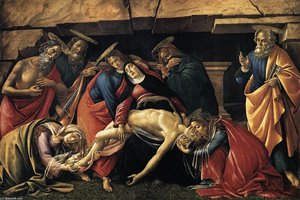
“Lamentation over the Dead Christ” stands as a poignant emblem of Renaissance piety and artistic innovation—a masterpiece executed by Sandro Botticelli around 1490-1492. Currently housed in the Alte Pinakothek museum in Munich, Germany, this painting transcends mere depiction; it embodies an emotional depth that continues to resonate with viewers centuries later.
Botticelli’s stylistic approach firmly anchors itself within the Early Renaissance tradition, characterized by graceful lines and idealized forms—a deliberate departure from the more rigid conventions of Gothic art. Influenced profoundly by humanist ideals emerging in Florence during Lorenzo de' Medici’s reign, Botticelli sought to convey spiritual contemplation through meticulously crafted imagery.
The composition centers on the crucified Christ, positioned at the heart of a sorrowful tableau populated by figures representing grief and compassion. Mary Magdalene dominates the foreground, cradling Jesus’s lifeless body with unwavering tenderness—a gesture laden with symbolism reflecting maternal devotion and profound sorrow. Surrounding her are St. Peter, St. John the Evangelist, St. Jerome and St. Paul, each rendered in a similarly expressive manner.
Botticelli's masterful technique employed tempera on wood panel, a medium favored for its luminosity and ability to capture subtle tonal variations. The artist’s meticulous attention to detail—evident in the drapery folds, facial expressions, and anatomical accuracy—demonstrates his unwavering commitment to realism tempered by artistic idealism. This careful rendering underscores Botticelli's desire to portray not merely what was seen but also what was felt.
Beyond its aesthetic beauty, “Lamentation” carries significant theological weight. It reflects the Christian belief in resurrection and commemorates the sacrifice of Jesus Christ—a central pillar of faith. The painting’s emotive power derives from Botticelli's ability to capture the universal experience of grief and loss—themes that continue to inspire artists and viewers alike. Its enduring legacy testifies to Botticelli’s profound understanding of human emotion and his mastery of artistic expression.
Consider commissioning a museum-quality reproduction of “Lamentation over the Dead Christ” by Sandro Botticelli – available at Most-Famous-Paintings.

1445 - 1510 , Italie
Plongez dans l'univers de Botticelli ! Découvrez les 25 œuvres majeures du maître florentin : La Naissance de Vénus, Primavera et bien plus. Histoire, technique & inspiration déco. Reproductions d'art haute qualité sur Most-Famous-Paintings.com.
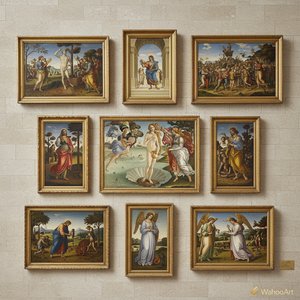
Plongez au cœur de la Renaissance italienne ! Découvrez les 10 chefs-d'œuvre de Botticelli, Léonard de Vinci et Raphaël. Histoire, techniques & inspiration déco. Reproductions tableaux sur
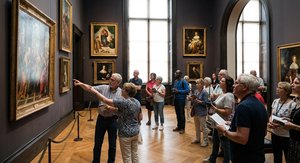
Plongez au cœur de l'Alte Pinakothek, Munich ! Découvrez 25 chefs-d'œuvre de Dürer à Rembrandt. Explorez l'art Renaissance et baroque, leurs couleurs & histoires fascinantes. Reproductions de qualité sur Most-Famous-Paintings.com.

Plongez au cœur du Metropolitan Museum of Art avec notre sélection des 25 œuvres les plus emblématiques. Découvrez l'histoire de Van Gogh, Monet et d'autres maîtres, et trouvez l'inspiration pour une décoration intérieure raffinée. Reproductions de qualité muséale sur Most-Famous-Paintings.com.
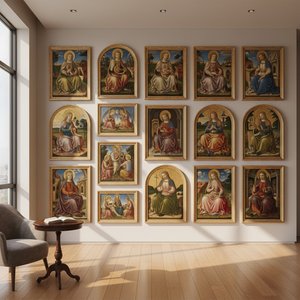
Plongez dans l'univers spirituel de Fra Angelico avec les 25 œuvres incontournables du maître italien. Découvrez l'histoire, la technique et la beauté intemporelle de ses fresques Renaissance. Reproductions d'art exceptionnelles sur Most-Famous-Paintings.com.


Restez informé(e) des dernières actualités artistiques, des offres exclusives et des idées de décoration.
Parlez-nous de votre projet et nos experts en art vous proposeront 3 suggestions d'œuvres personnalisées.
Laissez-nous sélectionner 3 œuvres rien que pour vous – Gratuit !


 Partager

 Afficher la suite







 L'option verre n'est disponible que pour les dimensions inférieures à 110 cm.