x

 Oil On CanvasWallArtFrench Baroque
 1640Early Modern
 393.0 x 250.0 cm
 Musée du Louvre
Impressions giclées ou sur toile de qualité musée, avec une production rapide et des finitions au choix. ( Acheter la peinture faite à la main Acheter l'image)





























Choisissez parmi nos formats prédéfinis qui respectent les proportions originales de l’œuvre.

Vous pouvez saisir vos propres dimensions pour vous adapter à un cadre ou à un espace spécifique. Si la taille sélectionnée ne correspond pas aux proportions de l'image originale, nous recadrerons l'œuvre ou étendrons l'image avec une bordure en miroir ou une couleur unie. Une maquette numérique vous sera envoyée pour approbation avant le début de la production.
Veuillez noter que l'aperçu à l'écran ne reflète pas le recadrage ou l'extension réelle. Seule la maquette montrera avec précision la composition finale.
Bien que des tailles personnalisées soient disponibles, nous vous recommandons de choisir une dimension dans la liste prédéfinie afin de préserver les proportions originales.
Livraison dans le monde entier () en 2 semaines au lieu des 4/5 semaines habituelles. (23 août)


Presentation in the Temple
Format de la reproduction
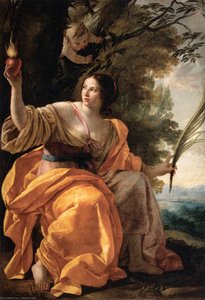
To stand before this magnificent depiction of Presentation in the Temple is to be enveloped by a palpable sense of sacred drama. The air itself seems thick with reverence, capturing that pivotal moment when the divine narrative unfolds for all to witness. Simon Vouet, masterfully channeling the energy of the Baroque era, has gifted us a scene teeming with life—a vibrant confluence of human emotion and celestial wonder. One cannot help but feel the weight of history and faith pressing down from the richly colored atmosphere surrounding Mary and Jesus as they are presented within the hallowed walls of the temple.
The sheer scale, measuring 393 x 250 cm, commands attention, much like a grand fresco adorning a palazzo wall. Vouet’s handling of light is nothing short of breathtaking; it does not merely illuminate the figures but seems to emanate from the spiritual core of the event itself. Observe the composition: it is a carefully orchestrated ballet of humanity and the supernatural. From the foreground, where intimate exchanges occur, the eye is drawn back through layers of activity—the surrounding observers, engaged in hushed conversation or rapt attention. Above them all, angels drift like luminous thoughts across the upper register, their presence suggesting an unseen, heavenly approval.
Every element within this canvas whispers a story of profound meaning. The gathering itself is rich with symbolic weight; it marks not just a ritual observance but the public acknowledgment of Christ’s divine status. Notice the inclusion of the dog near the bottom left corner—a subtle yet potent detail that often symbolizes fidelity and unwavering devotion, grounding the ethereal drama in tangible loyalty. Vouet populates this scene with at least thirteen figures, each playing a role in the grand tapestry of faith. The interplay between these numerous characters creates a dynamic tension, allowing the viewer to meditate on themes of witness, piety, and divine revelation.
As a pioneer of French Baroque painting, Simon Vouet imbued this work with an emotional intensity that transcends mere depiction. His style moves beyond the cool detachment of earlier periods; here, we feel the warmth of Mary’s concern, the solemnity of the priests, and the awe of the onlookers. The rich palette, characteristic of the period around 1640, utilizes deep jewel tones juxtaposed with brilliant highlights, giving the entire scene a luxurious, almost tactile quality. Owning or displaying a reproduction of this piece is to invite a masterpiece of emotional resonance into your space—a constant reminder of art’s power to elevate the everyday moment into something eternal.

Simon Vouet fut une figure essentielle dans la transition de la peinture française du maniérisme au style baroque. Né au sein d'une famille artistique – son père Laurent était peintre et son frère Aubin a également embrassé l'art – Vouet reçut une formation précoce qui posa les bases de son succès futur. Son petit-fils, Ludovico Dorigny, poursuivrait l’héritage artistique familial.
Durant son passage en Italie, Vouet absorba diverses influences. Il étudia les techniques d'éclairage dramatique pionniérées par Caravage, embrassa des éléments du maniérisme italien et analysa méticuleusement les palettes de couleurs et la perspective di sotto in su employée par Paolo Veronese. Il puisait également son inspiration dans les œuvres de Carracci, Guercino, Lanfranco et Guido Reni, synthétisant ces styles diversifiés en une vision artistique unique.
L'héritage de Simon Vouet repose sur son rôle essentiel de pont entre l’art italien et français. Il importa avec succès le dynamisme et la grandeur du baroque italien, le transformant en un style qui résonnait avec les goûts de la cour et de l'aristocratie françaises. Son influence est indéniable dans le développement de la peinture française au XVIIe siècle, et ses contributions continuent d’être reconnues par les historiens de l’art aujourd’hui.

1590 - 1649 , France

Explore the profound elegance of Baroque Classicism. Discover how 17th-century masters synthesized dramatic emotion with classical order through the lens of the Counter-Reformation and the works of legends like Carlo Maratta and Andrea Sacchi.

Explore the dramatic power of Baroque art through an expert guide to light, shadow, and emotion. Discover how the Counter-Reformation shaped 17th-century masterpieces and learn about the profound techniques used by the Old Masters to inspire awe.

Explore the dramatic evolution from Mannerist distortion to Baroque grandeur. Discover how light, shadow, and emotion redefined art history through a masterclass in technical mastery and religious fervor.

Explore the profound differences between Baroque drama and Rococo elegance. Our expert guide delves into art history, chiaroscuro, and the evolution of European masterpieces for collectors and enthusiasts seeking deep historical context.

Explore the profound drama of 17th-century Baroque art. Discover how masters used chiaroscuro, movement, and emotional intensity to redefine history through the lens of the Counter-Reformation. An expert guide for art historians and collectors seeking deep cultural insight.


Restez informé(e) des dernières actualités artistiques, des offres exclusives et des idées de décoration.
Parlez-nous de votre projet et nos experts en art vous proposeront 3 suggestions d'œuvres personnalisées.
Laissez-nous sélectionner 3 œuvres rien que pour vous – Gratuit !


 Aperçu en situation
 Partager
 Partager
 Détails

 Télécharger l'image
 Articles similaires
 Radiographie
 Voir le diaporama
 Afficher la suite







 L'option verre n'est disponible que pour les dimensions inférieures à 110 cm.